Unlock optimal health through restorative sleep for enhanced vitality and longevity.
Many people struggle with the overwhelming connection between sleep and health, feeling trapped in a cycle of restless nights and fatigue. This persistent lack of quality sleep can lead to a cascade of physical and emotional challenges, leaving individuals feeling drained and frustrated. The desire for rejuvenation and vitality often clashes with the harsh reality of sleeplessness, creating a deep yearning for solutions that can restore balance and enhance overall well-being.
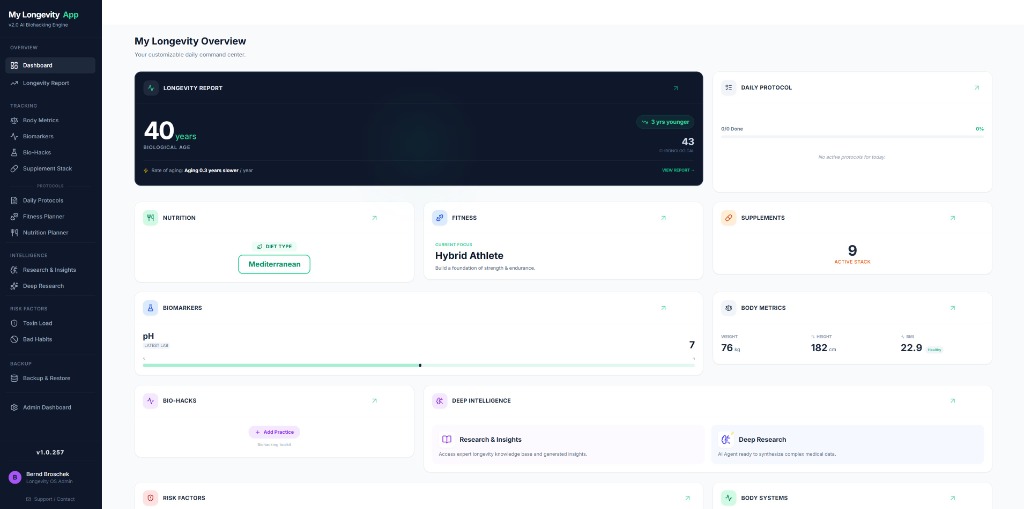
Advanced biohacking tools at your fingertips.
10 integrated modules working together.
Create your account in 30 seconds. No credit card required.
Upload blood work, track body metrics, or start with our AI questionnaire.
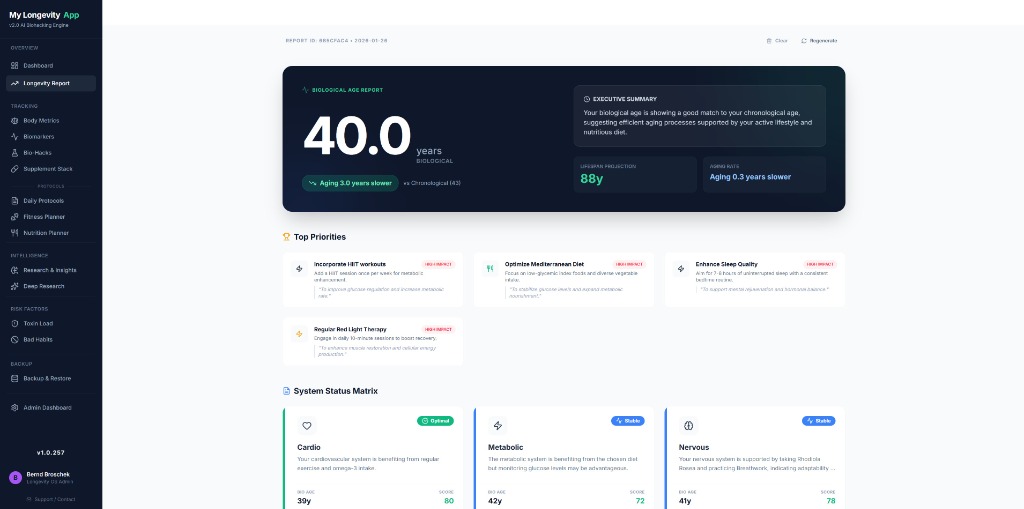
Receive your biological age score, personalized reports, and action plan.
Choose the plan that fits your biohacking journey.
Establish a consistent bedtime routine to improve sleep quality, crucial for overall sleep and health.
Ensure your bedroom is dark, quiet, and cool to enhance comfort and promote better sleep.
Reduce exposure to screens at least an hour before bed to support restful sleep and health.
Join thousands of biohackers optimizing their health.
"MyLongevityApp helped me lower my biological age by 5 years. The biomarker tracking is a game-changer."
"Finally one app that combines supplements, blood work, and daily protocols. I love the weekly planner."
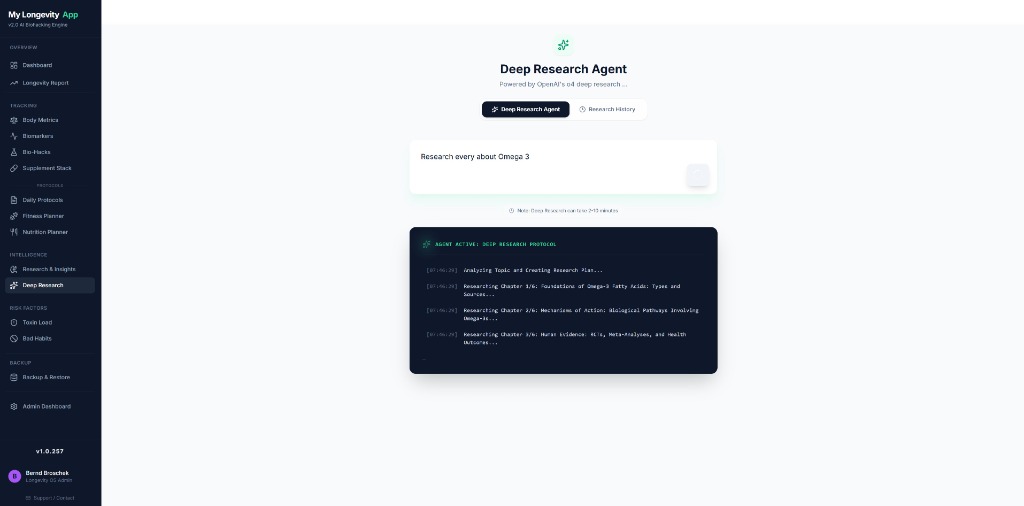
"The AI research agent alone is worth the subscription. It saves me hours of reading every week."
Sleep is a critical component of overall health, encompassing various physiological processes that occur in distinct stages. These stages include non-REM sleep (NREM) and REM sleep, each playing a unique role in maintaining bodily functions and promoting longevity.
During NREM sleep, which consists of three stages, the body undergoes restorative processes. In the first stage, light sleep, the body begins to relax, and brain activity slows. As one progresses to deeper NREM stages, vital functions such as tissue repair, muscle growth, and immune system strengthening occur. Growth hormone is released during this phase, facilitating cellular regeneration and recovery. This restorative process is essential for maintaining a healthy metabolism and preventing chronic diseases, underscoring the link between sleep and health.
REM sleep, occurring roughly 90 minutes after falling asleep, is marked by rapid eye movement and heightened brain activity. This stage is crucial for cognitive functions, including memory consolidation, emotional regulation, and problem-solving skills. During REM sleep, the brain processes information from the day, integrating learning and experiences. Insufficient REM sleep can impair cognitive abilities and lead to emotional instability, affecting overall well-being and longevity.
To enhance your sleep quality and promote better health, consider tracking your sleep patterns using tools like MyLongevityApp. This can help you identify areas for improvement, such as establishing a more consistent sleep schedule or optimizing your sleep environment. Prioritizing both NREM and REM sleep stages can significantly impact your overall health trajectory and longevity. Aim for 7-9 hours of quality sleep to reap these benefits.
Sleep quality plays a crucial role in both cognitive function and emotional well-being, particularly as individuals age. Research indicates that inadequate sleep can impair various cognitive processes, including attention, memory, and problem-solving abilities. Older adults are particularly vulnerable to the effects of poor sleep, which can exacerbate age-related cognitive decline. Insufficient restorative sleep may disrupt key neurochemical processes, leading to difficulties in information retention and slower processing speeds.
Moreover, the relationship between sleep and health extends to emotional regulation. Quality sleep contributes to a more stable mood and better stress management. Individuals who experience chronic sleep disturbances often report heightened feelings of anxiety and depression. For older adults, this can create a cycle where emotional distress further impairs sleep quality, leading to a compounded effect on overall well-being.
In the evolving landscape of longevity and biohacking, tools like MyLongevityApp can assist individuals in tracking their sleep patterns and making informed adjustments to improve sleep quality. This proactive approach can enhance cognitive function and emotional resilience, allowing older adults to maintain a higher quality of life.
To foster better sleep and health, older adults should prioritize establishing a consistent sleep schedule, create a relaxing bedtime routine, and limit exposure to screens before sleep. Simple lifestyle changes can significantly impact sleep quality, thereby supporting cognitive function and emotional well-being as they age.
Maintaining a consistent sleep schedule is vital for overall sleep and health. Our bodies thrive on rhythm, and a regular sleep pattern helps regulate the circadian clock, which governs various physiological processes. When you go to bed and wake up at the same time daily, you enhance the quality of your sleep, making it easier to fall asleep and wake up refreshed. This consistency can lead to improved cognitive function, emotional stability, and better immune responses.
Chronic sleep disruption, on the other hand, can have significant long-term health implications. Research shows that irregular sleep patterns are associated with increased risks of obesity, diabetes, cardiovascular diseases, and even some types of cancer. Sleep deprivation can also lead to mental health issues, such as anxiety and depression, which can create a vicious cycle of further sleep disturbances. For those interested in longevity and biohacking, understanding the importance of sleep is crucial, as inadequate rest can undermine even the most diligent health efforts.
Using tools like MyLongevityApp can help track your sleep patterns and identify areas for improvement. By analyzing your sleep data, you can make informed adjustments to your routine, ensuring that you prioritize consistent sleep.
To foster better sleep and health, aim to establish a relaxing bedtime routine and stick to a regular sleep schedule. Set a specific bedtime and wake-up time, even on weekends, to enhance your overall well-being.
Improving sleep hygiene is essential for enhancing sleep quality and, consequently, overall health. Several lifestyle changes can lead to significant improvements in sleep patterns, thereby positively influencing sleep and health.
First, establishing a consistent sleep schedule is vital. Going to bed and waking up at the same time each day helps regulate the body's internal clock, making it easier to fall asleep and wake up refreshed. This regularity can improve mood, cognitive function, and even metabolic health.
Next, creating a calming bedtime routine can signal to the body that it’s time to wind down. Activities such as reading, meditation, or gentle stretching can reduce stress and promote relaxation. Limiting screen time at least an hour before bed is also crucial, as the blue light emitted by devices can interfere with the production of melatonin, the hormone responsible for regulating sleep.
Additionally, optimizing the sleep environment contributes significantly to sleep hygiene. A dark, cool, and quiet room can enhance sleep quality. Consider using blackout curtains, white noise machines, or fans to create an ideal sleeping atmosphere.
Dietary choices play a role as well; avoiding caffeine and heavy meals close to bedtime can prevent disruptions in sleep. Instead, consider light snacks that promote sleep, such as those rich in magnesium or tryptophan.
Utilizing tools like MyLongevityApp can help track your sleep patterns and identify habits that may need adjustment. By incorporating these changes, you can create a more conducive environment for rest, ultimately leading to better health outcomes. Aim to implement at least one of these adjustments this week to begin enhancing your sleep hygiene.
Sleep is a fundamental pillar of overall well-being, directly influencing both physical and mental health. The optimal time to seek professional help for sleep disorders is when sleep disturbances persist for more than a few weeks and begin to interfere with daily life. Symptoms such as chronic insomnia, excessive daytime sleepiness, loud snoring, or episodes of stopped breathing during sleep warrant an evaluation by a healthcare professional. Ignoring these signs can lead to significant health risks.
Untreated sleep issues can contribute to a multitude of health problems. Research indicates that poor sleep quality can lead to cardiovascular diseases, obesity, diabetes, and weakened immune function. Additionally, mental health can suffer, as sleep deprivation is closely linked to anxiety and depression. Sleep and health are intertwined; inadequate rest can impair cognitive function, affecting concentration and decision-making abilities. Over time, these effects can accumulate, leading to a decreased quality of life.
Utilizing tools like MyLongevityApp can help you track sleep patterns and identify issues early on. By monitoring your sleep habits, you can gain insights into how lifestyle choices affect your rest and overall health, making it easier to communicate with healthcare providers.
If you're experiencing persistent sleep issues, take the proactive step to consult a healthcare professional. Early intervention can prevent a cascade of health problems and pave the way for a more vibrant, balanced life. Prioritize your sleep; your health depends on it.
Join 10,000+ biohackers optimizing their health with AI.
Start Your 7-Day Free TrialNo credit card required. Cancel anytime.