Unlock your health potential with precise blood work targets for enhanced longevity and vitality.
When you're on a journey to enhance your health and extend your lifespan, navigating the complexities of blood work can feel overwhelming. You may find yourself grappling with confusing medical jargon and uncertain about which values truly matter for your longevity goals. The search for clarity often leads to frustration, leaving you longing for a resource like an "optimal blood work for longevity target values guide" to empower your decisions and help you take control of your health destiny.
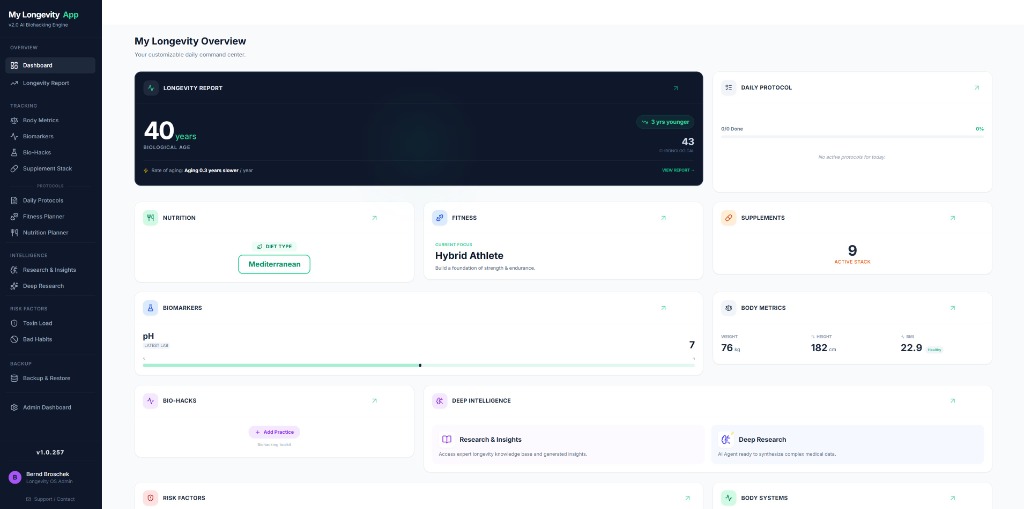
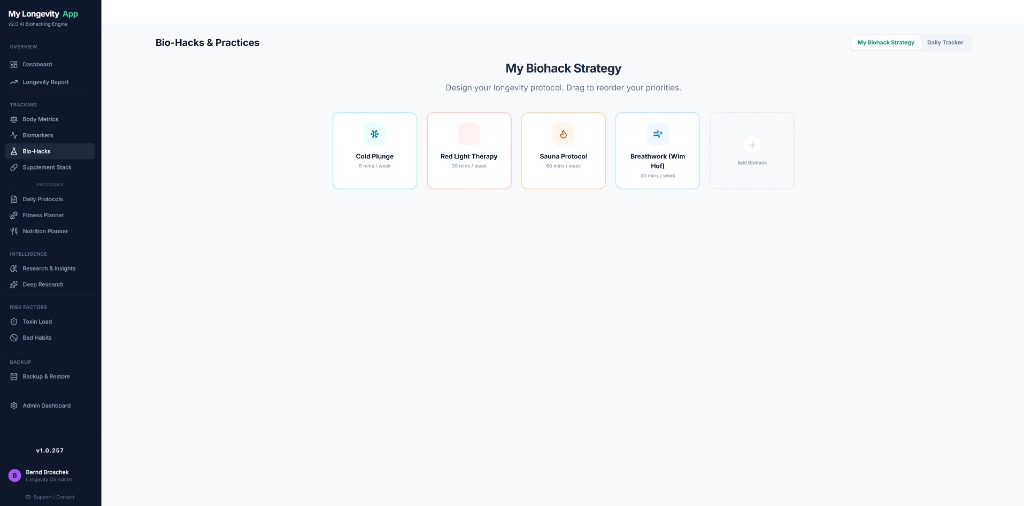
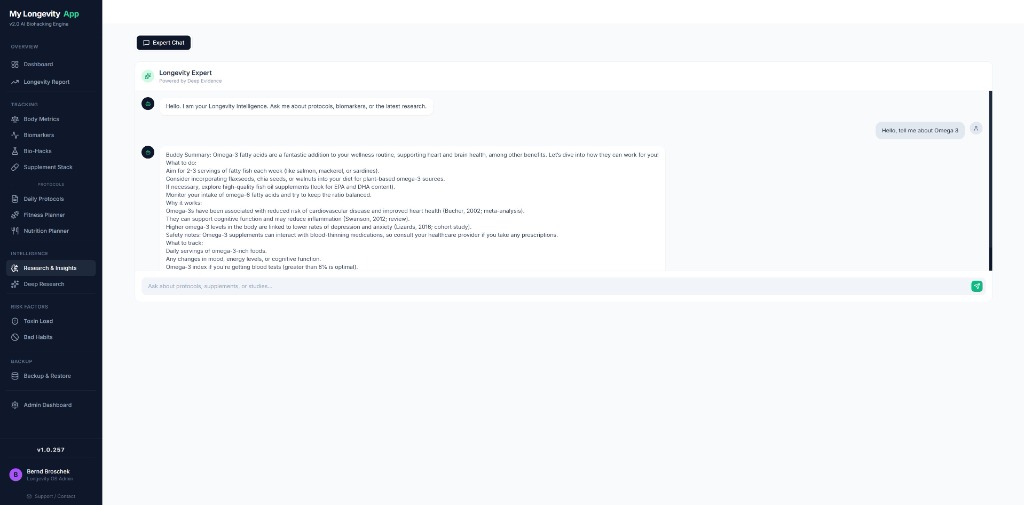
Advanced biohacking tools at your fingertips.
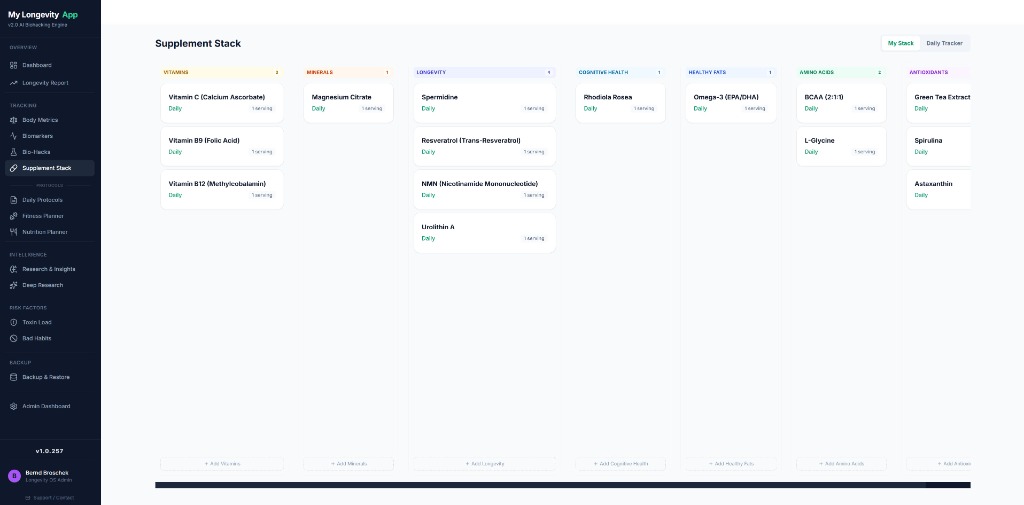
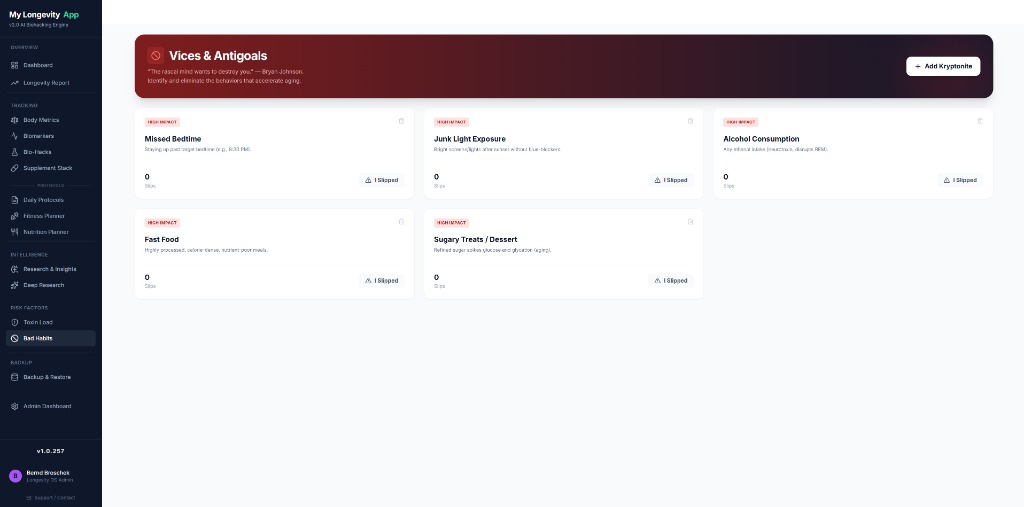
10 integrated modules working together.
Create your account in 30 seconds. No credit card required.
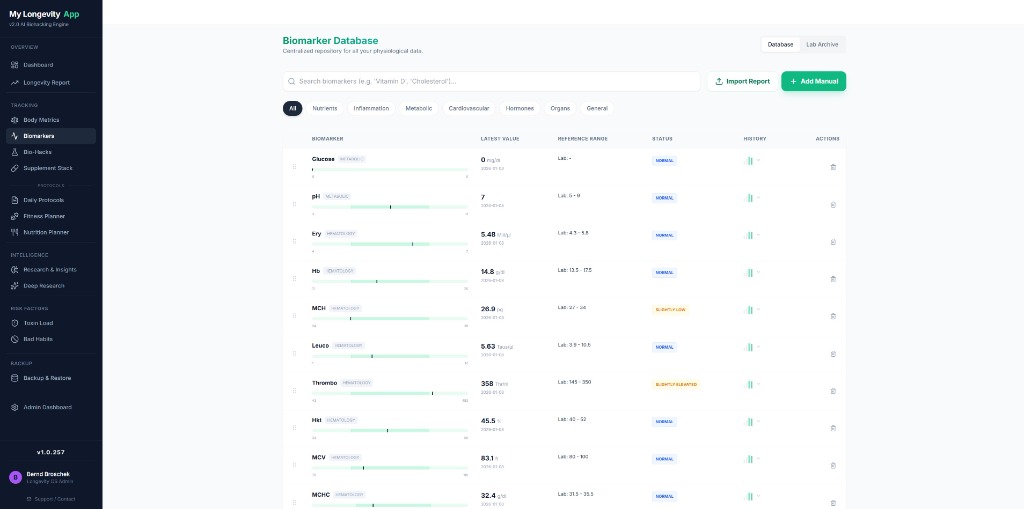
Upload blood work, track body metrics, or start with our AI questionnaire.
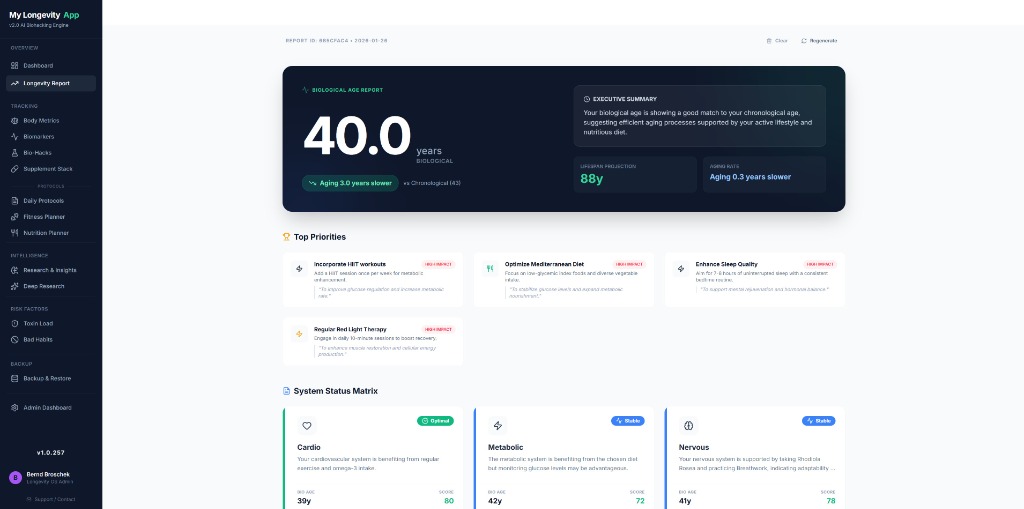
Receive your biological age score, personalized reports, and action plan.
Choose the plan that fits your biohacking journey.
Focus on essential biomarkers like cholesterol, glucose, and inflammation levels to assess your health effectively.
Use the optimal blood work for longevity target values guide to establish personalized target ranges for your biomarkers.
Schedule routine blood tests to track changes and adjust your health strategies for long-term wellness.
Join thousands of biohackers optimizing their health.
"MyLongevityApp helped me lower my biological age by 5 years. The biomarker tracking is a game-changer."
"Finally one app that combines supplements, blood work, and daily protocols. I love the weekly planner."
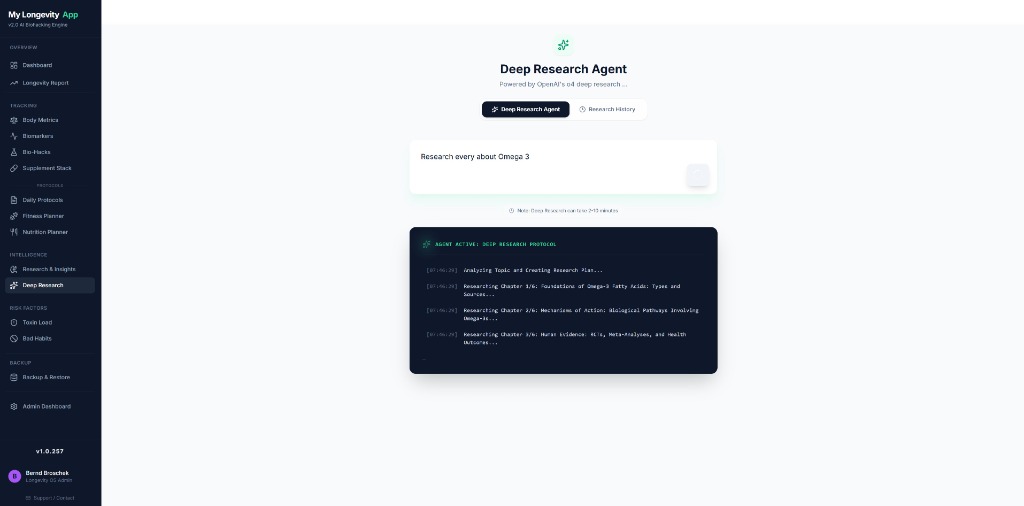
"The AI research agent alone is worth the subscription. It saves me hours of reading every week."
When considering optimal blood work for longevity, certain biomarkers should be prioritized to gain insights into overall health and aging processes. Key biomarkers include lipid profiles, inflammatory markers, hormone levels, and metabolic indicators. Each of these plays a unique role in understanding an individual's longevity potential.
Lipid profiles, including total cholesterol, LDL, HDL, and triglycerides, are critical. Target values for LDL cholesterol may range from less than 100 mg/dL for younger individuals to even lower levels for older adults, particularly those at higher cardiovascular risk. Inflammatory markers like C-reactive protein (CRP) also merit attention; lower levels are generally desirable, with values under 1 mg/L often associated with a reduced risk of chronic diseases across all age groups.
Hormonal balance is crucial for longevity. Testosterone levels in men, for instance, typically decline with age, with optimal levels varying from 300 to 1,000 ng/dL for younger adults, while older men might see benefits with levels around 400-600 ng/dL. For women, estrogen levels fluctuate significantly, making it essential to assess individual symptoms and health status when interpreting results.
Metabolic indicators like fasting glucose and insulin sensitivity are vital for longevity. Aim for fasting glucose levels under 100 mg/dL, with even lower targets encouraged for older adults to mitigate diabetes risk.
Using resources like MyLongevityApp can help individuals track these biomarkers and compare them against the optimal blood work for longevity target values guide, tailored to their age group.
An actionable takeaway is to prioritize these biomarkers in your next blood work and consult with a healthcare provider to interpret the results in the context of your age and health goals. This proactive approach can empower you to make informed decisions that enhance your longevity.
Interpreting blood work results is a critical step for individuals interested in longevity. These results provide insights into various biomarkers that can indicate overall health, disease risk, and metabolic efficiency. By understanding these metrics, individuals can tailor their lifestyle choices for improved longevity. A comprehensive approach involves comparing personal results against the optimal blood work for longevity target values guide, which offers benchmarks for key indicators like cholesterol levels, glucose, and inflammation markers.
Firstly, it’s essential to focus on specific biomarkers. For instance, elevated LDL cholesterol levels might suggest a need for dietary adjustments or increased physical activity. Similarly, high fasting glucose can indicate insulin resistance, prompting individuals to consider their carbohydrate intake or stress management techniques. Tracking these values over time allows for better understanding of personal health trends and the effectiveness of any interventions.
Tools like MyLongevityApp can facilitate this process by providing personalized feedback based on blood work results. Users can input their data and receive insights tailored to their health goals, thereby making informed decisions about their diets, exercise regimens, and supplementation.
An actionable step is to create a personal health plan that addresses any anomalies found in blood tests. This plan should include regular follow-ups with healthcare professionals to monitor changes and adjust strategies as necessary. By actively engaging with their blood work data, individuals can take significant strides toward enhancing their longevity and overall well-being.
Lifestyle factors play a crucial role in determining the optimal blood work for longevity target values. Key areas include nutrition, physical activity, sleep quality, and stress management. Each of these elements contributes to the biochemical balance within the body, influencing markers such as cholesterol levels, inflammation, and blood sugar.
Nutrition is foundational; a diet rich in whole foods, healthy fats, lean proteins, and plenty of fruits and vegetables can positively affect lipid profiles and inflammatory markers. For instance, omega-3 fatty acids from fish or flaxseeds can lower triglycerides, while antioxidants from plant-based foods combat oxidative stress. Individuals should aim for a Mediterranean-style diet, which has been linked to improved longevity.
Regular physical activity is another critical factor. Engaging in both aerobic and strength-training exercises can help maintain healthy body composition and improve cardiovascular health. Studies show that even moderate exercise can lead to better blood sugar control and lower blood pressure, which are vital for maintaining optimal blood work for longevity target values.
Sleep quality significantly impacts hormonal balance and recovery. Aim for 7-9 hours of restorative sleep per night, as inadequate sleep can lead to increased cortisol levels, adversely affecting health markers. Implementing a consistent sleep routine and creating a restful environment can enhance sleep quality.
Stress management techniques, such as mindfulness, meditation, or yoga, can also contribute to better blood work outcomes by regulating stress hormones. Tools like MyLongevityApp can assist individuals in tracking these lifestyle factors, providing personalized insights for optimizing blood work.
To effectively manage these lifestyle factors, set specific, measurable goals. For instance, begin with small dietary changes, increase physical activity gradually, prioritize sleep, and incorporate stress-reduction practices into your daily routine.
Regularly updating optimal blood work target values is crucial for individuals focused on longevity because our understanding of health markers is continually evolving. Scientific research frequently unveils new insights into how specific biomarkers affect aging and overall well-being. For instance, recent studies may redefine what constitutes healthy cholesterol levels or optimal vitamin D concentrations, thereby influencing how we approach health management. Staying informed about these changes allows individuals to make better decisions regarding their lifestyle, diet, and supplementation strategies, ultimately enhancing their longevity.
The frequency of testing can vary based on individual health conditions and lifestyle factors. However, for most people aiming to optimize their health, a routine blood test every six months is advisable. This timeframe ensures that any changes in health status can be detected early, allowing for timely interventions. Individuals with specific health concerns or those engaged in rigorous biohacking practices might benefit from more frequent testing, such as quarterly, to closely monitor their progress against the optimal blood work for longevity target values guide.
Utilizing tools like MyLongevityApp can further streamline this process, helping users track their blood work results and stay aligned with the latest optimal values. By actively engaging with these metrics, individuals can adjust their health strategies in real-time, thereby optimizing their potential for longevity.
Take actionable steps by scheduling your next blood test and reviewing the latest research on blood work markers that pertain to your health goals.
When considering optimal blood work for longevity, understanding genetic predispositions is crucial for interpreting target values effectively. Each individual’s genetic makeup can significantly influence metabolic functions, hormone levels, and how the body processes nutrients. For instance, certain genetic variations may predispose someone to higher cholesterol levels or altered inflammatory responses. This means that standard target values for blood work may not adequately reflect what is optimal for every person. Instead, a nuanced interpretation that considers these genetic factors is essential for achieving longevity.
Personalized medicine plays a pivotal role in this process by tailoring health recommendations based on an individual’s unique genetic profile. Rather than relying solely on generalized reference ranges, personalized medicine allows healthcare providers to adjust target values according to the patient’s specific genetic markers. This approach can lead to more effective intervention strategies and enhance overall health outcomes. Tools like MyLongevityApp can assist individuals in understanding their genetic predispositions, making it easier to navigate the complexities of optimal blood work for longevity target values guide.
A concrete takeaway is to engage with healthcare professionals who specialize in personalized medicine and genetic testing. By obtaining a comprehensive genetic profile, you can gain insights that inform your blood work interpretations and health strategies. This proactive approach can empower you to make informed decisions that align with your unique biological needs, ultimately supporting your longevity journey.
Join 10,000+ biohackers optimizing their health with AI.
Start Your 7-Day Free TrialNo credit card required. Cancel anytime.