Unlock the secrets of longevity with clear definitions to enhance your biohacking knowledge.
When you're diving into the world of longevity, it can feel overwhelming to navigate the complex terminology and concepts that surround it. You may find yourself frustrated, yearning for clear explanations that don’t require a degree in science to understand. That’s why having a resource with longevity glossary terms explained simply is essential for empowering your journey toward a healthier, longer life, allowing you to engage fully without the confusion that can often accompany this fascinating field.
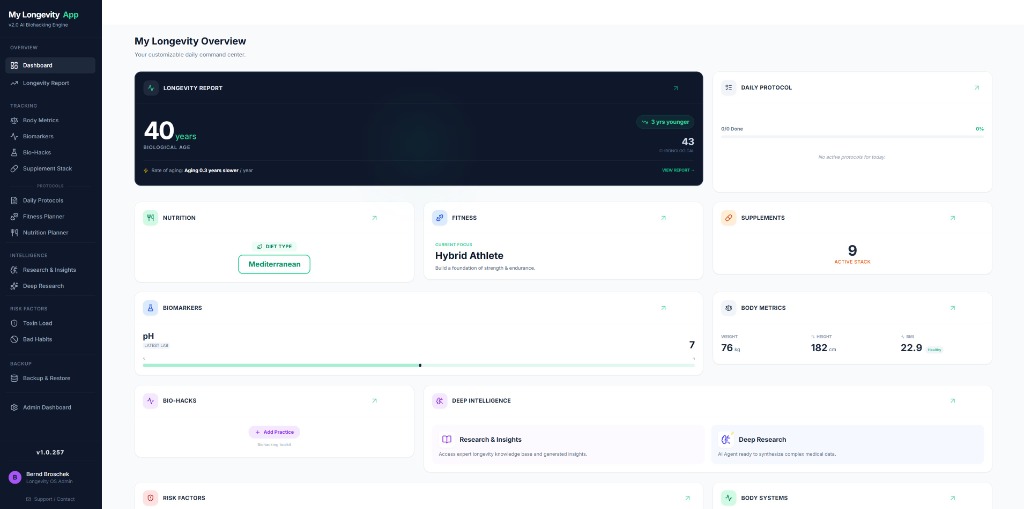
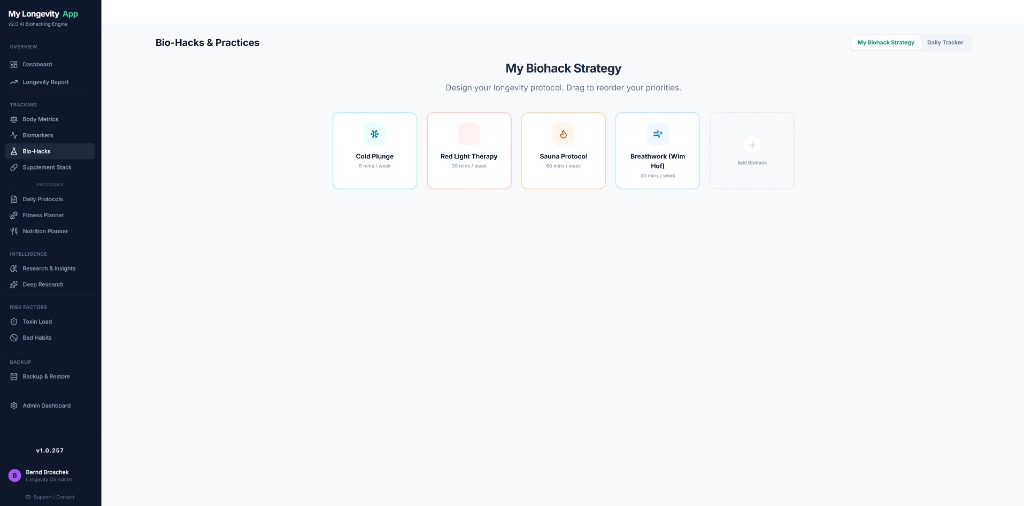
Advanced biohacking tools at your fingertips.
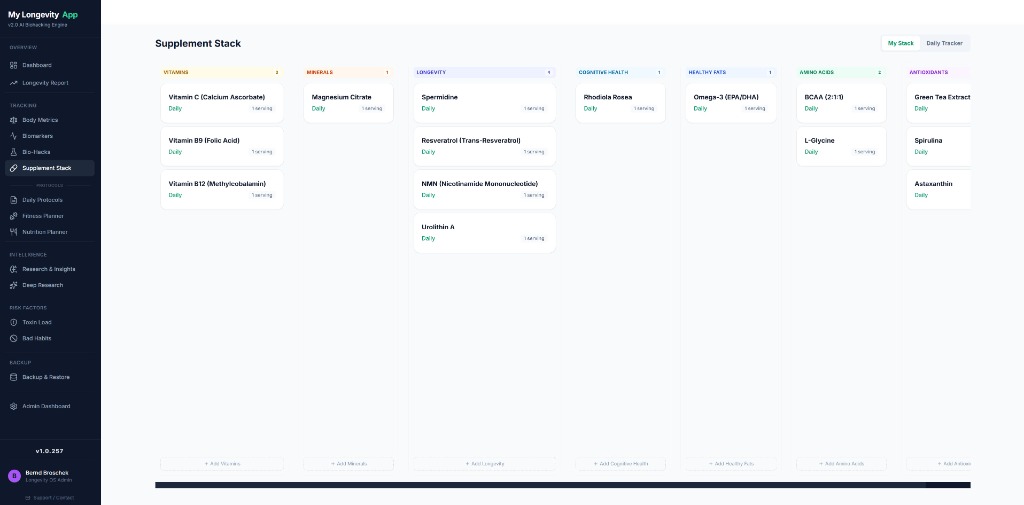
10 integrated modules working together.
Create your account in 30 seconds. No credit card required.
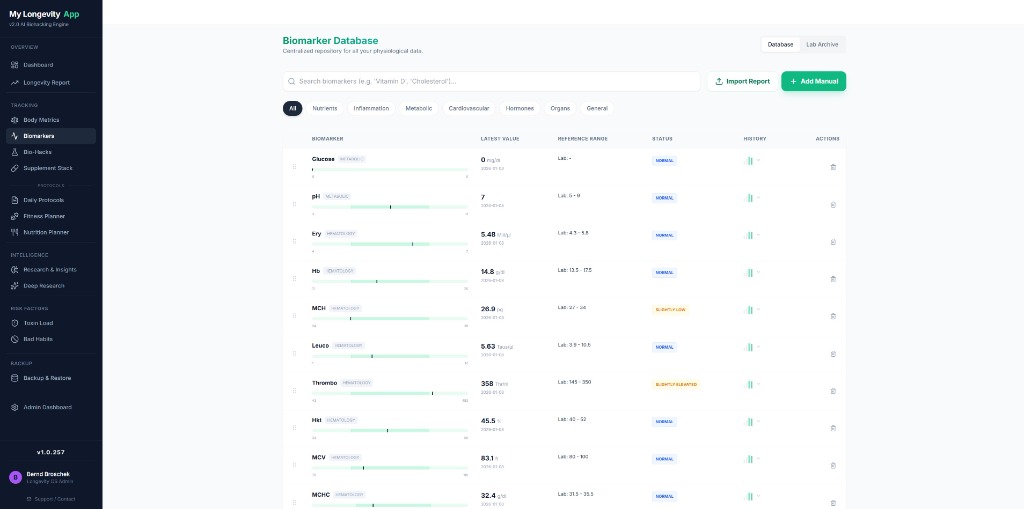
Upload blood work, track body metrics, or start with our AI questionnaire.
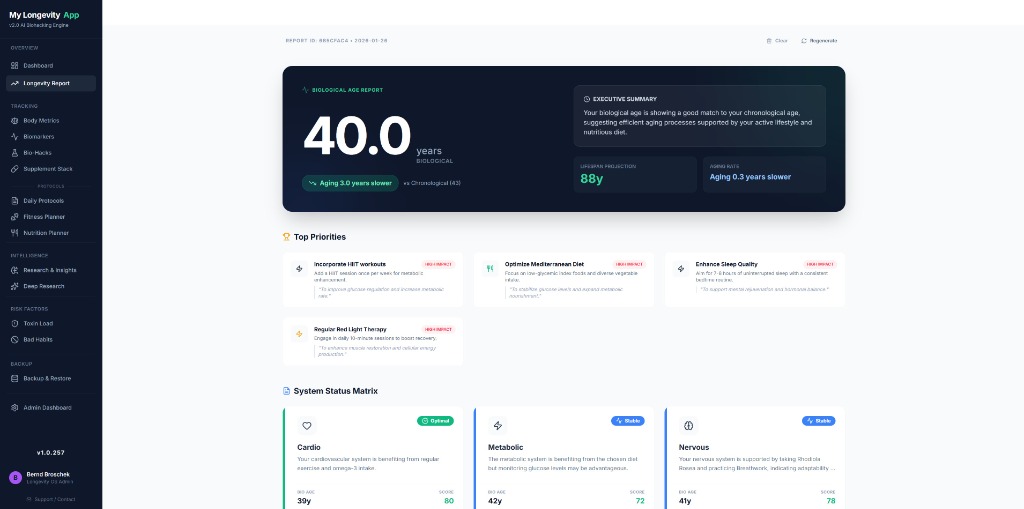
Receive your biological age score, personalized reports, and action plan.
Choose the plan that fits your biohacking journey.
Learn key concepts in the longevity field, making complex ideas more accessible through a longevity glossary terms explained simply.
Familiarize yourself with essential terms like biohacking, cellular aging, and epigenetics to better navigate longevity discussions.
Apply these terms in your daily life to enhance your understanding and improve your longevity strategy.
Join thousands of biohackers optimizing their health.
"MyLongevityApp helped me lower my biological age by 5 years. The biomarker tracking is a game-changer."
"Finally one app that combines supplements, blood work, and daily protocols. I love the weekly planner."
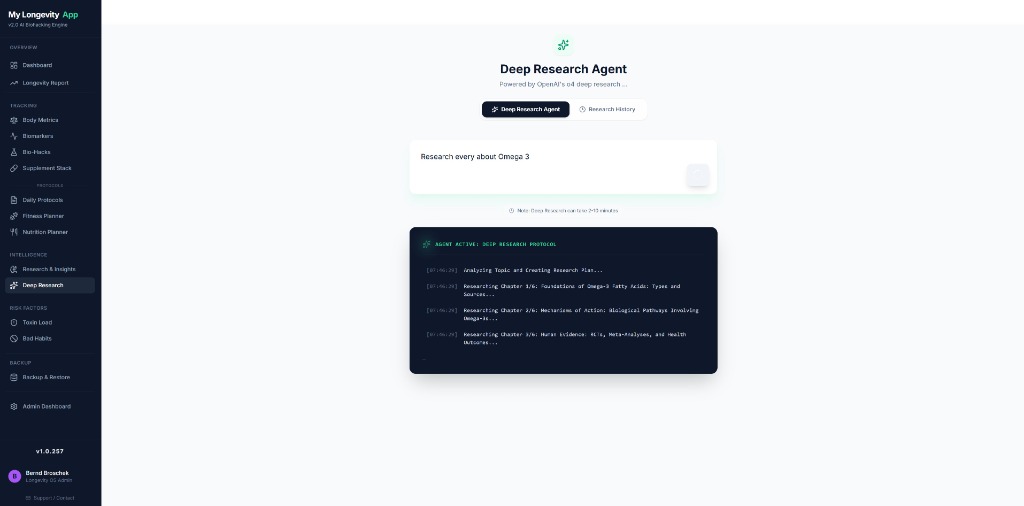
"The AI research agent alone is worth the subscription. It saves me hours of reading every week."
Understanding key concepts in the longevity and biohacking fields is essential for anyone looking to optimize their health and extend their lifespan. Here are some essential longevity glossary terms explained simply:
**Biohacking** refers to the practice of using science and technology to optimize biological functions. This can involve anything from dietary changes to more advanced interventions like genetic editing. Biohackers aim to enhance their physical and mental performance through a combination of lifestyle adjustments and innovative techniques.
**Senescence** is a term that describes the process where cells lose their ability to divide and function properly. This phenomenon contributes to aging and is linked to various age-related diseases. Recognizing senescence is crucial for those interested in how cellular aging affects overall health.
**Telomeres** are protective caps at the ends of chromosomes that shorten as cells divide. Once telomeres reach a critically short length, cells can no longer divide, entering a state of senescence or apoptosis. Understanding telomeres is fundamental for grasping how cellular aging impacts longevity.
**NAD+ (Nicotinamide adenine dinucleotide)** is a coenzyme found in every living cell and plays a critical role in energy metabolism and DNA repair. Research shows that boosting NAD+ levels can enhance cellular function and potentially slow the aging process.
Lastly, **mTOR (mechanistic target of rapamycin)** is a protein that regulates cell growth and metabolism. Its role in aging has attracted attention, as inhibiting mTOR can mimic the effects of caloric restriction, which is associated with increased lifespan in various organisms.
For those eager to dive deeper, MyLongevityApp offers a platform to explore these terms and their implications for health.
To enhance your longevity journey, familiarize yourself with these terms to make informed
Understanding the biological mechanisms that underpin aging is crucial for developing effective longevity strategies, and concepts like telomeres and senescence play pivotal roles in this discourse. Telomeres, the protective caps at the ends of chromosomes, shorten with each cell division. When they become critically short, cells enter a state known as senescence, where they cease to divide but remain metabolically active. This accumulation of senescent cells is linked to age-related diseases and contributes to the aging process itself.
These longevity glossary terms explained simply offer insights into why managing cellular health is essential for extending lifespan and improving healthspan. Research indicates that interventions targeting telomere lengthening and the clearance of senescent cells can potentially delay the onset of age-related conditions. For instance, lifestyle choices such as a balanced diet, regular exercise, and stress management have been shown to positively influence telomere length and reduce cellular senescence.
Incorporating these concepts into daily life can lead to practical applications. Tools like MyLongevityApp can help track lifestyle factors that impact telomeres and senescence, providing personalized recommendations based on cutting-edge research.
An actionable takeaway is to adopt a proactive approach to your health by focusing on habits that support cellular integrity. Regular physical activity, a diet rich in antioxidants, and mindfulness practices can positively influence your telomeres and reduce the effects of senescence, ultimately promoting longevity and enhancing your quality of life.
Understanding the nuances between lifespan and healthspan is crucial in the context of longevity. Lifespan refers to the total number of years a person lives, while healthspan focuses on the period during which an individual remains healthy and free from chronic diseases. This distinction is vital because simply extending lifespan does not guarantee a high quality of life.
In the longevity field, discussions about lifespan often overshadow the importance of healthspan. Many people may live longer due to medical advancements, but this doesn’t automatically equate to an improved quality of life. By emphasizing healthspan, we prioritize not just living longer, but living well. This shift in focus encourages a holistic approach to aging that incorporates physical, mental, and emotional well-being, which is essential for achieving optimal longevity.
For those navigating this complex terrain, a clear understanding of longevity glossary terms explained simply can enhance one’s ability to make informed decisions about health and wellness strategies. Tools like MyLongevityApp can support this understanding by providing personalized insights that help users focus on both lifespan and healthspan.
To enhance your healthspan, consider integrating lifestyle changes such as regular exercise, a balanced diet, and mindfulness practices. These strategies can significantly improve your quality of life as you age, ensuring that the years you gain are filled with vitality and well-being.
The longevity field is rapidly evolving, driven by several emerging technologies that promise to enhance our understanding of aging and healthspan. Key developments include artificial intelligence (AI), biotechnology, and regenerative medicine. AI is increasingly used for data analysis in genomics and personalized medicine, allowing for tailored health interventions. Biotechnology, particularly in areas like CRISPR gene editing, is enabling scientists to target age-related diseases at their genetic roots. Regenerative medicine, which focuses on repairing or replacing damaged tissues and organs, is creating new possibilities for extending life and improving quality of life.
When discussing these technologies, it’s essential to familiarize yourself with certain longevity glossary terms explained simply. Terms like "telomeres" refer to the protective caps at the ends of chromosomes that shorten as we age, while "senolytics" are compounds designed to eliminate senescent cells, which contribute to aging-related decline. Understanding these terms can help facilitate more informed conversations about the advancements shaping the longevity landscape.
Organizations like MyLongevityApp are leveraging these technologies to provide personalized health insights, allowing users to monitor and optimize their longevity strategies effectively. As these innovations continue to grow, staying abreast of the terminology and concepts will be crucial for anyone interested in longevity.
To engage with these emerging technologies, consider exploring online platforms that offer educational resources on longevity. Participating in webinars or community discussions can also provide deeper insights into how these innovations can be applied to your own health journey.
Understanding key terms in longevity research is essential for accurately interpreting scientific findings and making informed decisions about health and aging. The terminology used in this field can be complex and often laden with jargon that can obscure the underlying concepts. By familiarizing ourselves with these terms, we can engage more critically with the research and apply the knowledge to our own lives.
For example, concepts such as "telomeres," "senescence," and "metabolism" are frequently encountered in longevity studies. A clear understanding of these longevity glossary terms explained simply allows individuals to grasp how they relate to aging processes and potential interventions. This comprehension is crucial when evaluating studies on supplements, lifestyle changes, or emerging therapies that claim to enhance lifespan or healthspan.
Moreover, a shared vocabulary facilitates better communication with healthcare providers and researchers. This can help individuals advocate for their health needs and explore personalized approaches to longevity. MyLongevityApp is an excellent resource that offers insights and definitions, helping users navigate the complex landscape of longevity research.
To effectively leverage the wealth of information available, it is recommended to create a personal glossary of key terms encountered in readings and discussions. This active engagement with the material not only deepens understanding but also empowers individuals to make evidence-based choices regarding their health and well-being.
Join 10,000+ biohackers optimizing their health with AI.
Start Your 7-Day Free TrialNo credit card required. Cancel anytime.