Unlock the secrets of longevity research to extend your lifespan and enhance your vitality.
For many, the quest for vitality and a longer life begins with a sense of urgency and concern. As individuals seek answers in longevity research, they often feel overwhelmed by the sheer volume of information, leaving them anxious about making the right choices for their health. The fear of aging, losing loved ones, or facing chronic illness can weigh heavily, making the journey toward understanding and optimizing one’s lifespan feel daunting and lonely.
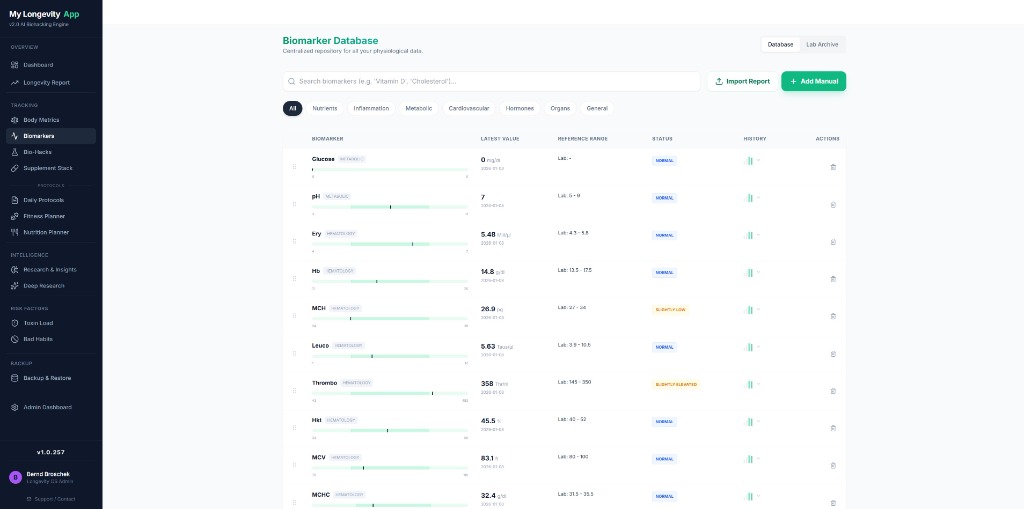
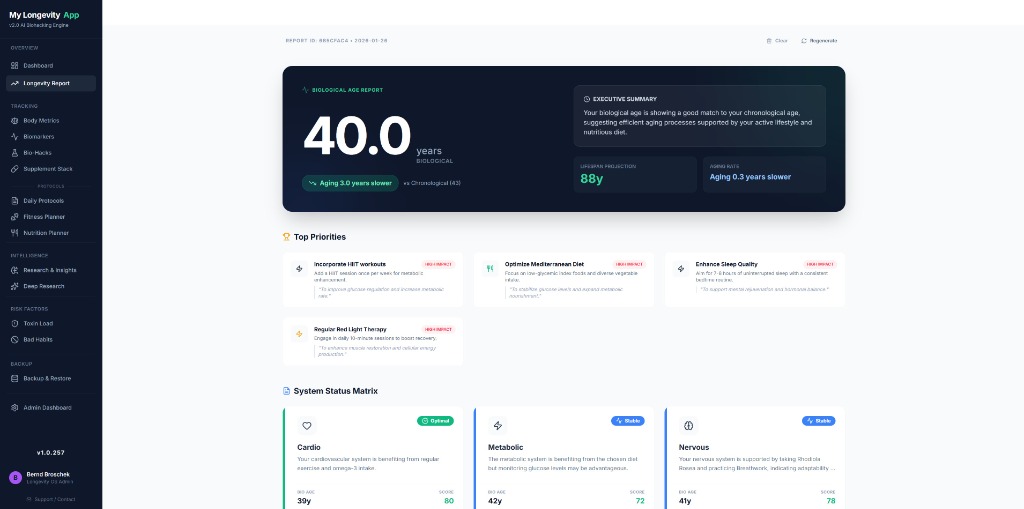
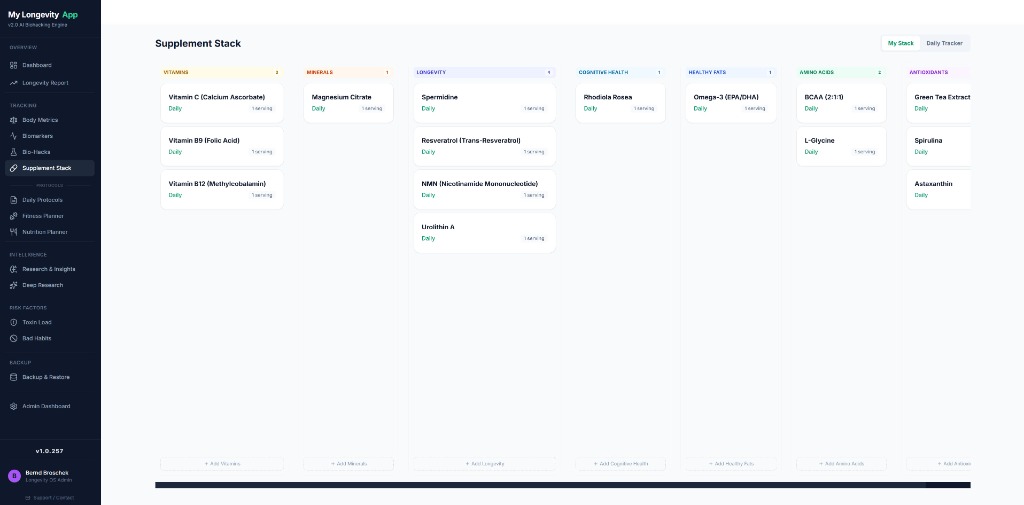
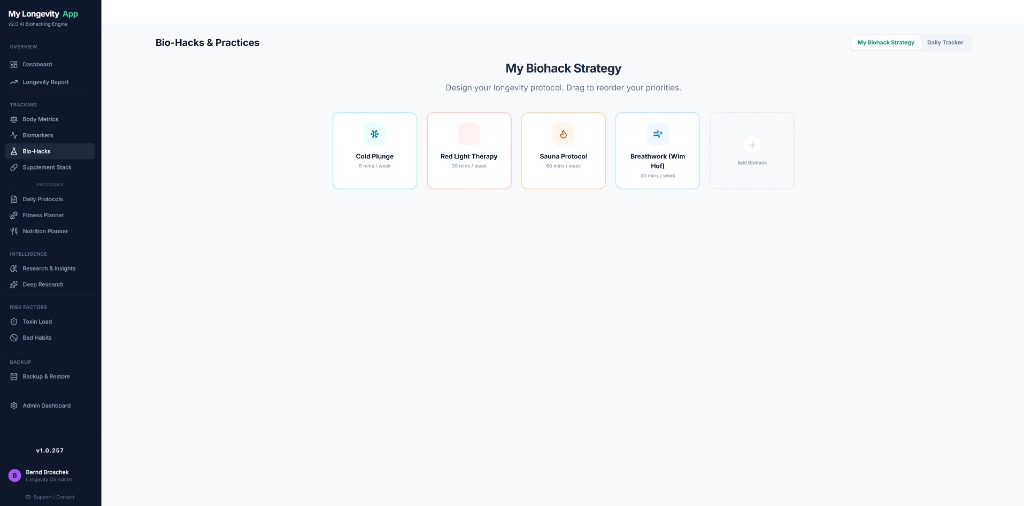
Advanced biohacking tools at your fingertips.
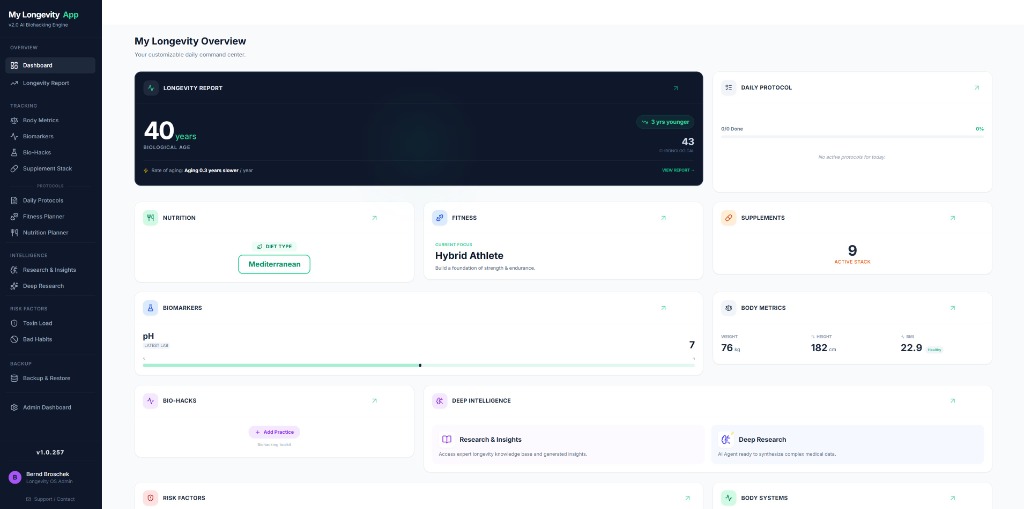
10 integrated modules working together.
Create your account in 30 seconds. No credit card required.
Upload blood work, track body metrics, or start with our AI questionnaire.
Receive your biological age score, personalized reports, and action plan.
Choose the plan that fits your biohacking journey.
Regularly read scientific journals and articles to keep up with the latest findings in longevity research.
Engage with online forums and local groups focused on longevity research to share insights and experiences.
Monitor key health metrics and biomarkers to personalize your approach based on emerging longevity research.
Join thousands of biohackers optimizing their health.
"MyLongevityApp helped me lower my biological age by 5 years. The biomarker tracking is a game-changer."
"Finally one app that combines supplements, blood work, and daily protocols. I love the weekly planner."
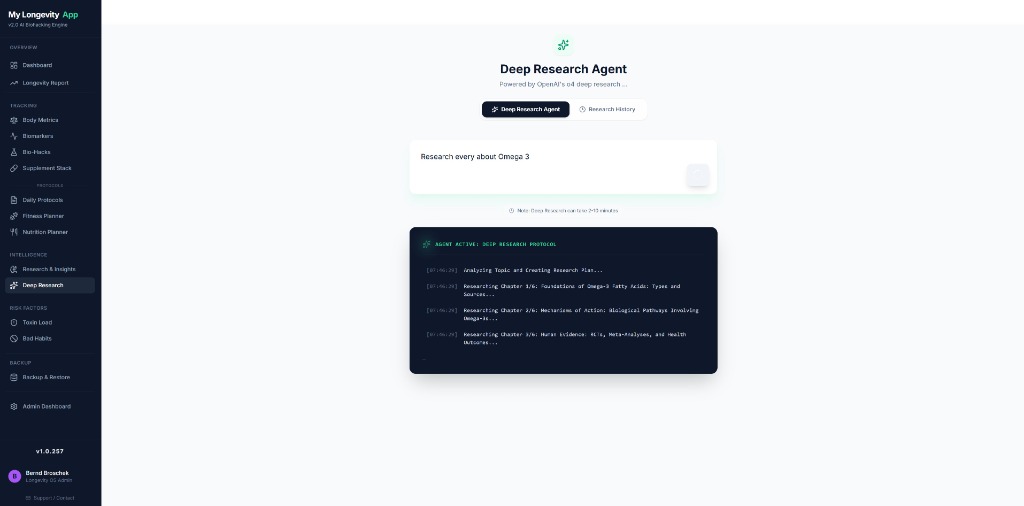
"The AI research agent alone is worth the subscription. It saves me hours of reading every week."
Longevity research has made remarkable strides in understanding the cellular mechanisms that contribute to aging. Among the most promising interventions are senolytics, which target senescent cells—those that have stopped dividing but remain metabolically active. By clearing out these dysfunctional cells, researchers have observed improvements in tissue function and reductions in age-related diseases in animal models. This approach not only enhances healthspan but may also extend lifespan.
Another significant area of longevity research is the study of caloric restriction and its mimetics. Restricting caloric intake without malnutrition has been linked to increased lifespan in various organisms, including yeast, worms, and mice. Compounds that mimic the effects of caloric restriction, such as resveratrol and spermidine, are being investigated for their potential to extend healthy life by activating cellular stress response pathways, which promote repair and regeneration.
Additionally, advancements in gene therapy and epigenetics are opening new avenues for longevity interventions. Techniques like CRISPR gene editing allow researchers to modify genes associated with aging, potentially reversing age-related decline at the cellular level. This approach holds promise for conditions such as Alzheimer’s disease and other neurodegenerative disorders.
For individuals looking to incorporate these findings into their lives, utilizing tools like MyLongevityApp can help track biological markers and offer personalized insights based on the latest longevity research. Staying informed about these interventions can empower individuals to make proactive choices that enhance their healthspan and potentially extend their lifespan. Engaging with the latest research and technologies offers a tangible way to influence one’s own aging process.
The microbiome—the vast community of microorganisms living in and on our bodies—plays a pivotal role in our overall health, influencing everything from digestion to immune response. Recent studies have begun to illuminate its impact on longevity, revealing how a balanced microbiome can contribute to a longer, healthier life. Research suggests that the diversity and composition of gut bacteria can affect metabolic processes, inflammation levels, and even cognitive function, all of which are essential for maintaining vitality as we age.
Current longevity research is increasingly focused on understanding the specific mechanisms through which the microbiome affects aging. For instance, scientists are investigating how gut bacteria can modulate the production of short-chain fatty acids, which have been linked to reduced inflammation and improved metabolic health. Other studies are examining the relationship between gut microbiota and age-related diseases, such as cardiovascular conditions and neurodegenerative disorders. This research is crucial, as it may unveil new strategies for promoting healthspan—the period of life spent in good health—by targeting the microbiome.
Platforms like MyLongevityApp are beginning to integrate findings from this burgeoning field, providing users with personalized insights into their microbiome's composition and suggesting dietary adjustments that could enhance their gut health. Emphasizing the importance of a balanced diet rich in prebiotics and probiotics can help individuals take proactive steps toward better health outcomes.
To harness the potential of your microbiome for longevity, consider incorporating fermented foods like yogurt, kefir, and sauerkraut into your diet. These foods can help cultivate a diverse gut flora, supporting both your microbiome and your overall health as you age.
Genetic factors play a pivotal role in longevity research as they provide insights into the biological mechanisms that influence aging and lifespan. Through the study of genes associated with longevity, researchers have identified specific genetic variations that can enhance resilience against age-related diseases. For instance, genes involved in cellular repair, inflammation regulation, and metabolic health have been linked to longer life expectancy. Understanding these genetic markers allows scientists to dissect the complex interplay between genetics and environmental factors, paving the way for more targeted interventions in health management.
Personalized approaches to healthy aging can be significantly informed by these genetic insights. By utilizing advanced genetic testing, individuals can gain a clearer picture of their unique predispositions and vulnerabilities. This information can guide lifestyle choices, such as dietary adjustments, exercise regimens, and even supplement use, tailored to their specific genetic makeup. MyLongevityApp exemplifies this personalized approach by integrating genetic data with user health information to create bespoke recommendations for improving longevity.
One actionable takeaway for individuals interested in longevity is to consider genetic testing as a tool for informing their health strategies. By understanding their genetic risks and strengths, they can adopt lifestyle modifications that align with their unique profile, ultimately enhancing their chances of healthy aging. Engaging with platforms that focus on personalized health insights can empower users to make informed decisions that support their long-term wellbeing.
Longevity research has consistently highlighted several lifestyle modifications that can significantly extend lifespan and enhance healthspan. One of the most prominent factors is regular physical activity. Studies show that engaging in moderate to vigorous exercise for at least 150 minutes per week can reduce the risk of chronic diseases, improve cardiovascular health, and promote mental well-being. Incorporating both aerobic and strength-training exercises not only boosts physical fitness but also supports metabolic health.
Nutrition is another critical area supported by longevity research. A balanced diet rich in whole foods—fruits, vegetables, whole grains, lean proteins, and healthy fats—has been linked to better health outcomes. Specific dietary patterns, such as the Mediterranean diet, emphasize plant-based foods and healthy fats while limiting processed foods and sugars. Additionally, practices like intermittent fasting have gained attention for their potential to improve metabolic health and promote cellular repair processes.
Social connections and mental well-being also play crucial roles in longevity. Engaging with a supportive community, nurturing relationships, and maintaining a positive outlook can enhance emotional health, which is intricately connected to physical health. Mindfulness practices, such as meditation and yoga, have been associated with reduced stress levels and improved cognitive function.
For those looking to track and optimize their health journey, MyLongevityApp offers personalized insights based on these evidence-backed practices. Implementing even a few of these lifestyle changes can lead to significant improvements in both lifespan and healthspan. Start by setting achievable fitness goals, reevaluating your diet, and prioritizing social connections to foster a more vibrant life.
The field of longevity research is advancing rapidly, fueled by breakthroughs in genetics, cellular biology, and technology. However, translating these scientific discoveries into practical applications for the general public is a multi-faceted challenge that involves not only innovation but also regulatory and ethical considerations. Currently, many promising findings are still in preclinical or early clinical trial stages, which can delay their availability to everyday consumers.
Recent years have seen the development of various interventions, such as senolytics, which target aging cells, and gene therapies aimed at reversing age-related decline. While some of these therapies demonstrate significant potential, it may still take a decade or more before they become widely accessible. Regulatory approval processes can be lengthy to ensure safety and efficacy, which further extends the timeline for practical application.
Moreover, public acceptance plays a crucial role in the implementation of longevity research solutions. As awareness of biohacking and longevity-enhancing practices grows, platforms like MyLongevityApp are helping to educate the public about science-backed lifestyle changes that can promote healthspan and potentially delay aging. These tools can bridge the gap between cutting-edge research and practical application by providing users with personalized insights and actionable strategies based on the latest findings.
For individuals eager to benefit from longevity research today, focusing on lifestyle choices—such as a balanced diet, regular exercise, and stress management—can yield significant benefits. Engaging with emerging technologies and apps in the longevity space can also provide access to the latest insights and strategies, making it possible to incorporate cutting-edge science into daily life.
Join 10,000+ biohackers optimizing their health with AI.
Start Your 7-Day Free TrialNo credit card required. Cancel anytime.