Unlock your health potential by easily calculating your biological age at home, no doctor needed.
Many people feel a growing sense of urgency as they seek to understand their health and vitality, especially when they worry about aging too quickly. The desire to take control of one’s well-being can lead to frustration, particularly when access to medical professionals is limited or when they feel overwhelmed by conflicting information. For those searching for ways to learn how to calculate biological age at home without a doctor, the journey is often fueled by a deep longing for empowerment and clarity in their health choices.
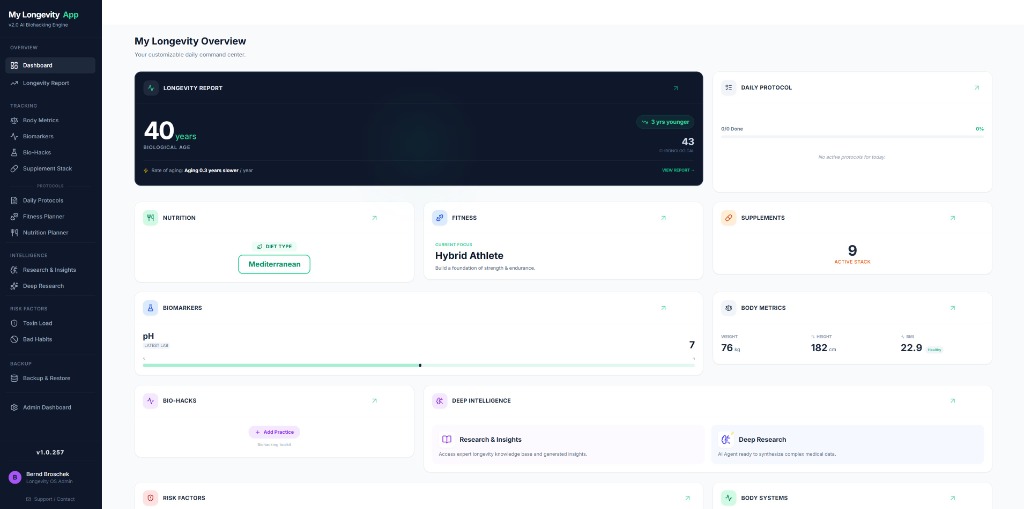
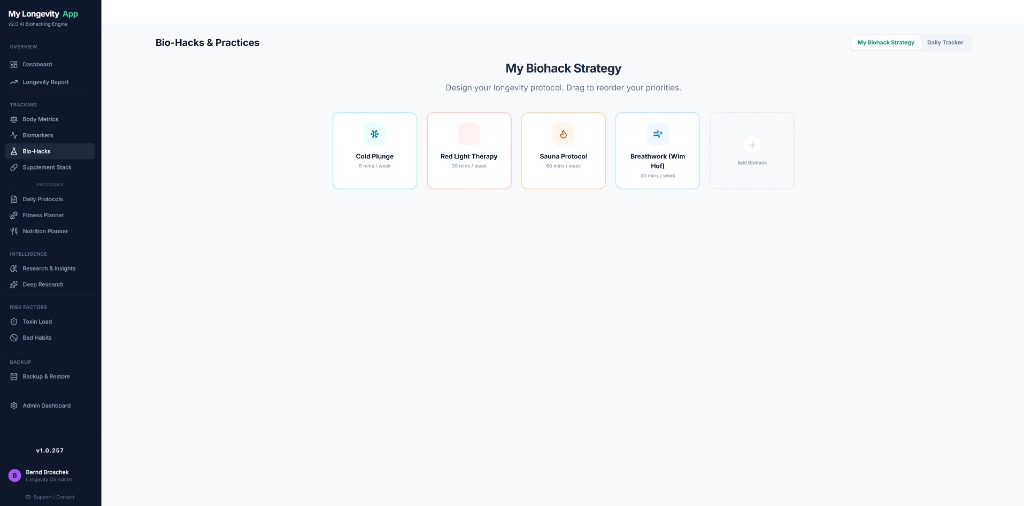
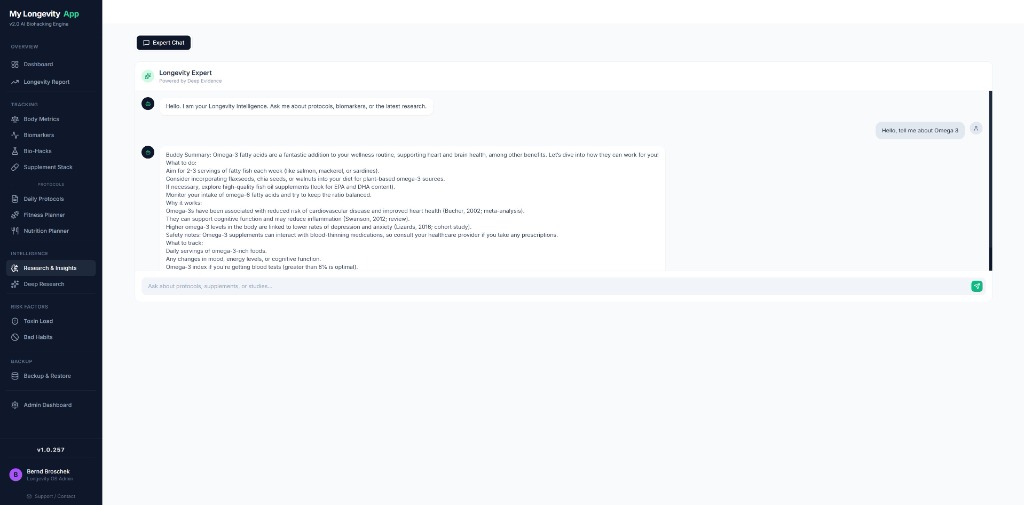
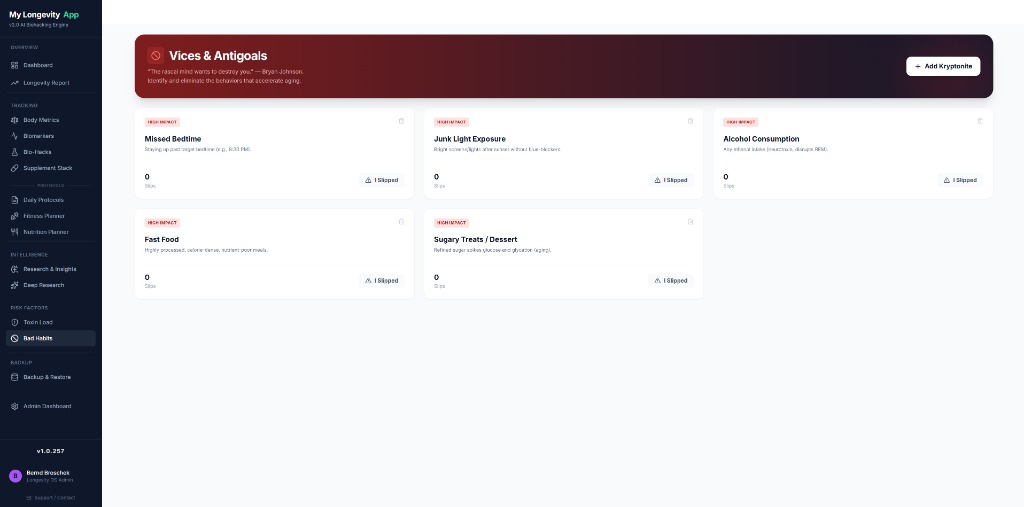
Advanced biohacking tools at your fingertips.
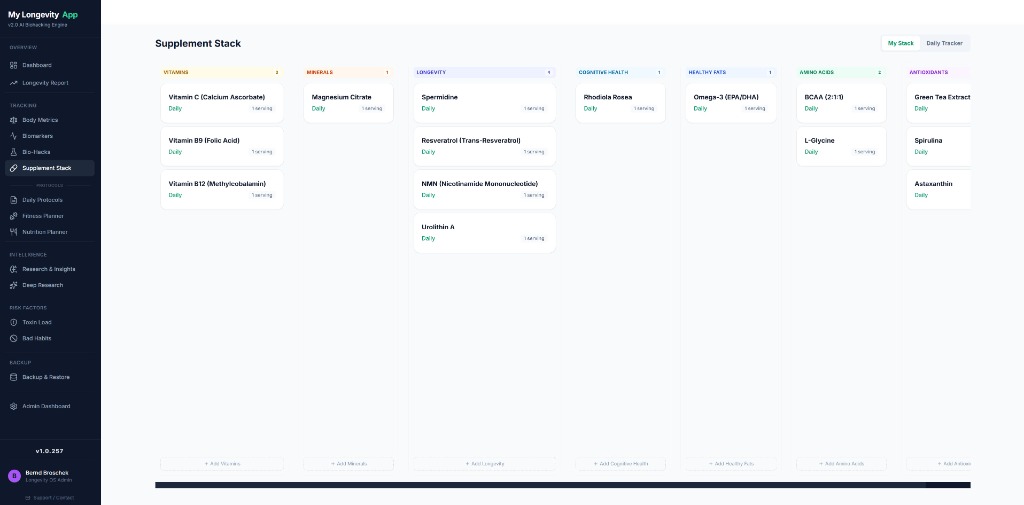
10 integrated modules working together.
Create your account in 30 seconds. No credit card required.
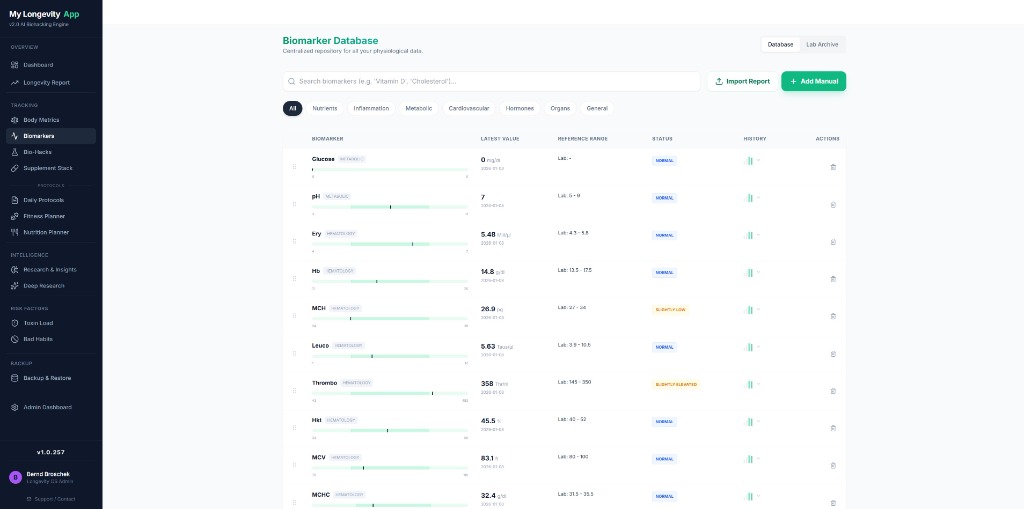
Upload blood work, track body metrics, or start with our AI questionnaire.
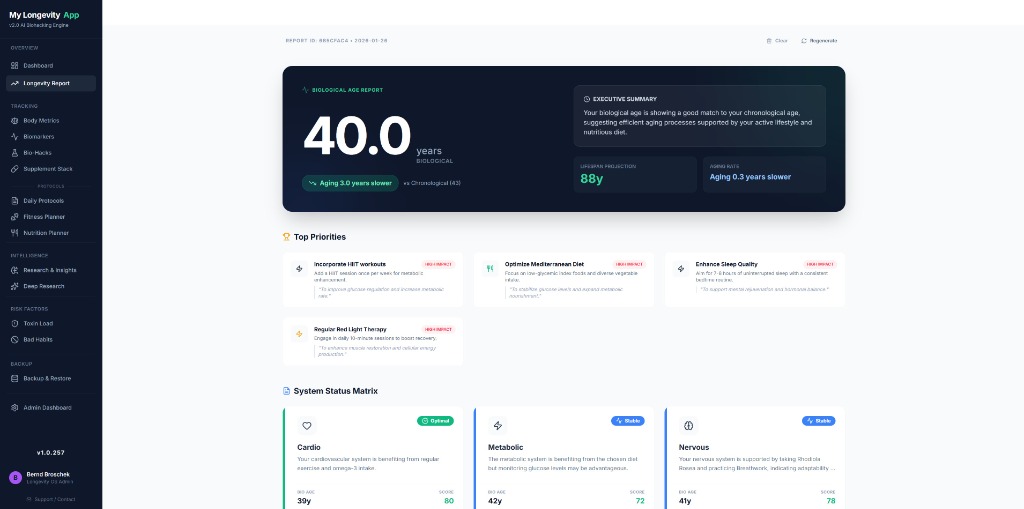
Receive your biological age score, personalized reports, and action plan.
Choose the plan that fits your biohacking journey.
Many reliable online calculators can estimate biological age using your lifestyle and health data.
Monitor vital signs like heart rate, blood pressure, and sleep patterns to gauge your biological age.
Evaluate your diet, exercise, and stress levels to understand how to calculate biological age at home without a doctor.
Join thousands of biohackers optimizing their health.
"MyLongevityApp helped me lower my biological age by 5 years. The biomarker tracking is a game-changer."
"Finally one app that combines supplements, blood work, and daily protocols. I love the weekly planner."
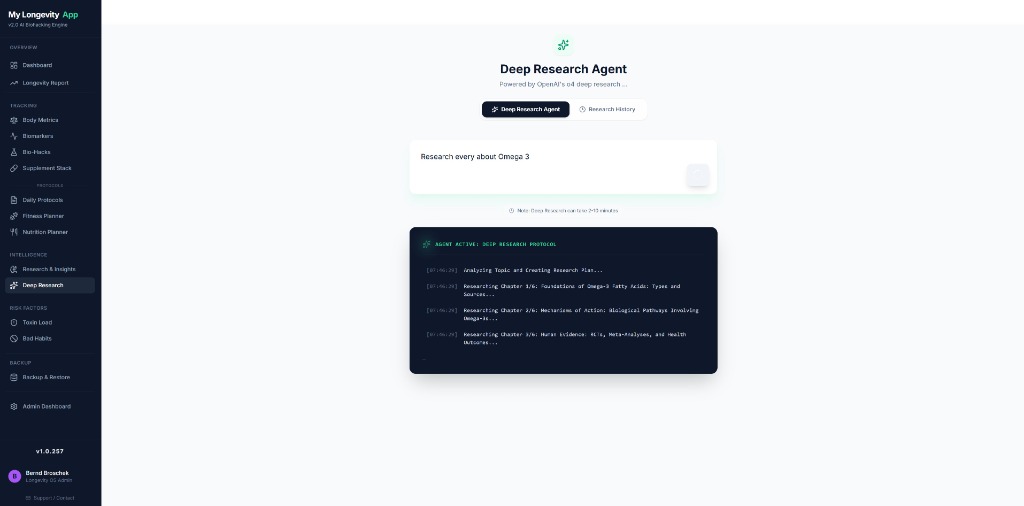
"The AI research agent alone is worth the subscription. It saves me hours of reading every week."
Estimating your biological age at home can provide valuable insights into your health and longevity. While professional assessments are available, several metrics and tests can be performed independently to give you a clearer picture of your biological age.
One of the simplest methods is to measure your resting heart rate. A lower resting heart rate often indicates better cardiovascular health and can suggest a younger biological age. To get an accurate reading, take your pulse first thing in the morning for a few days and calculate the average.
Another effective way to estimate biological age is through body composition analysis. You can use skinfold calipers or smart scales that estimate body fat percentage. Generally, a lower body fat percentage and higher muscle mass correlate with a younger biological age.
Additionally, assessing your flexibility and strength can provide insight. Simple tests like the sit-and-reach for flexibility or push-up and squat tests for strength can help gauge your physical fitness level, which typically declines with age.
For a more comprehensive approach, consider using tools like MyLongevityApp, which can analyze various health metrics, including sleep patterns, dietary habits, and exercise routines, to give you a personalized biological age estimate.
To effectively calculate biological age at home without a doctor, focus on these metrics: resting heart rate, body composition, and physical fitness levels. Regularly tracking these indicators can help you create a proactive approach to your health and longevity. Start by measuring your resting heart rate today, and incorporate additional assessments over the following weeks to build a clearer picture of your biological age.
Lifestyle factors, particularly diet and exercise, play a crucial role in influencing biological age calculations, especially when exploring how to calculate biological age at home without a doctor. Biological age refers to the physiological state of an individual, which can differ significantly from chronological age. This divergence is largely determined by lifestyle choices that impact cellular health, metabolic function, and overall resilience.
Diet is a primary factor affecting biological age. Nutrient-dense foods rich in antioxidants, vitamins, and minerals can mitigate oxidative stress and inflammation, two key contributors to aging. For instance, a diet high in fruits, vegetables, whole grains, and healthy fats promotes cellular repair and function. Conversely, a diet high in processed foods, sugars, and unhealthy fats can accelerate aging markers, such as increased blood pressure and higher cholesterol levels, which are often integrated into biological age calculations.
Exercise also significantly influences biological age. Regular physical activity improves cardiovascular health, enhances muscle mass, and supports cognitive function, all of which contribute to a younger biological age. Studies show that those who maintain an active lifestyle often exhibit lower levels of biomarkers associated with aging. Incorporating strength training, cardiovascular workouts, and flexibility exercises can provide a holistic approach to enhancing biological age metrics.
MyLongevityApp can assist individuals in tracking these lifestyle factors by providing insights into how dietary choices and exercise patterns impact their biological age. Users can evaluate their habits and make informed adjustments to promote longevity.
Taking actionable steps, such as adopting a balanced diet rich in whole foods and committing to a regular exercise routine, can significantly influence biological age. By consciously focusing on these lifestyle elements, individuals can effectively lower their biological age, enhancing their health and longevity.
For individuals interested in assessing their biological age independently, several reliable online tools and apps have emerged that simplify this process. These platforms utilize various algorithms based on health metrics, lifestyle choices, and sometimes even genetic data to provide insights into one’s biological age.
One of the most popular tools is MyLongevityApp, which offers a user-friendly interface for tracking essential health markers. Users can input data such as weight, exercise habits, and nutritional choices. The app then calculates biological age based on these inputs, providing users with personalized feedback and recommendations for improvement. This is a great option for those looking to understand how lifestyle factors contribute to overall health and longevity.
Another noteworthy tool is the Aging.ai platform, which employs advanced machine learning techniques to analyze user data. By answering a series of health-related questions, users can receive an estimate of their biological age, along with insights into specific areas for improvement—such as diet or exercise—based on their unique profiles.
For those who prefer a more comprehensive approach, the DNAfit app provides insights based on genetic testing. After submitting a DNA sample, users can access information about their predispositions to various age-related conditions, allowing them to tailor their lifestyle choices accordingly.
Using these tools can empower individuals to take charge of their health by learning how to calculate biological age at home without a doctor. By leveraging technology, users can make informed decisions about their wellness journeys. Start by selecting one of these apps that resonate with your health goals, and begin tracking your biological age today.
Understanding the difference between biological age and chronological age is crucial for effectively assessing health at home. Chronological age simply refers to the number of years a person has lived, whereas biological age reflects the physiological condition of the body and its systems. This distinction is essential because two individuals of the same chronological age can have vastly different biological ages, influenced by genetics, lifestyle choices, and environmental factors.
Biological age can provide a more accurate picture of one's health and vitality. For instance, someone who exercises regularly, eats a balanced diet, and manages stress effectively may have a biological age that is significantly lower than their chronological age. Conversely, someone leading a sedentary lifestyle, with poor dietary habits and high stress levels, might experience accelerated biological aging. Recognizing this difference allows individuals to tailor their health strategies more effectively, focusing on interventions that can genuinely enhance their well-being.
For those interested in how to calculate biological age at home without a doctor, tools and apps like MyLongevityApp can facilitate this process. These resources utilize various health metrics—such as physical fitness, nutrition, and even sleep patterns—to estimate biological age, empowering users to make informed decisions about their health.
To leverage the insights gained from understanding biological versus chronological age, one actionable step is to regularly assess your lifestyle habits. By tracking key health indicators and making intentional changes, you can actively work towards reducing your biological age, enhancing your overall health and longevity.
Calculating your biological age at home can provide valuable insights into your overall health and longevity. However, there are specific situations where consulting a healthcare professional becomes crucial. If your self-assessment reveals a biological age significantly higher than your chronological age, it’s wise to seek expert advice. This discrepancy could indicate underlying health issues that require attention.
Moreover, if you experience symptoms such as fatigue, persistent pain, or unusual weight changes during your self-evaluation, these signs should prompt you to consult a healthcare provider. These symptoms may not only be linked to aging but could also hint at other medical conditions that need to be addressed. Additionally, if you are considering making significant lifestyle changes based on your biological age calculations—such as starting a new diet or exercise program—it’s important to discuss these plans with a healthcare professional. They can provide personalized guidance tailored to your unique health profile.
It’s also essential to recognize that while tools like MyLongevityApp can help you understand how to calculate biological age at home without a doctor, they should not replace professional medical advice. The results and insights gained from these applications should be viewed as a starting point for further exploration rather than a definitive assessment of your health.
If you find yourself questioning the results of your biological age calculation or if lifestyle changes are necessary, take the step to consult a healthcare professional. This proactive approach can ensure that you receive tailored advice and support to optimize your longevity and well-being.
Join 10,000+ biohackers optimizing their health with AI.
Start Your 7-Day Free TrialNo credit card required. Cancel anytime.