Unlock your true potential by accurately measuring and optimizing your biological age today.
As you delve into the complexities of health and wellness, you may feel overwhelmed by the quest to understand your body’s true age. The frustration of conventional age markers often leaves you questioning if you’re truly aging gracefully or if hidden factors are silently accelerating your decline. Searching for a biological age scoring system reflects a deep desire to reclaim control over your vitality and longevity, empowering you to make informed choices that can enhance your life and well-being.
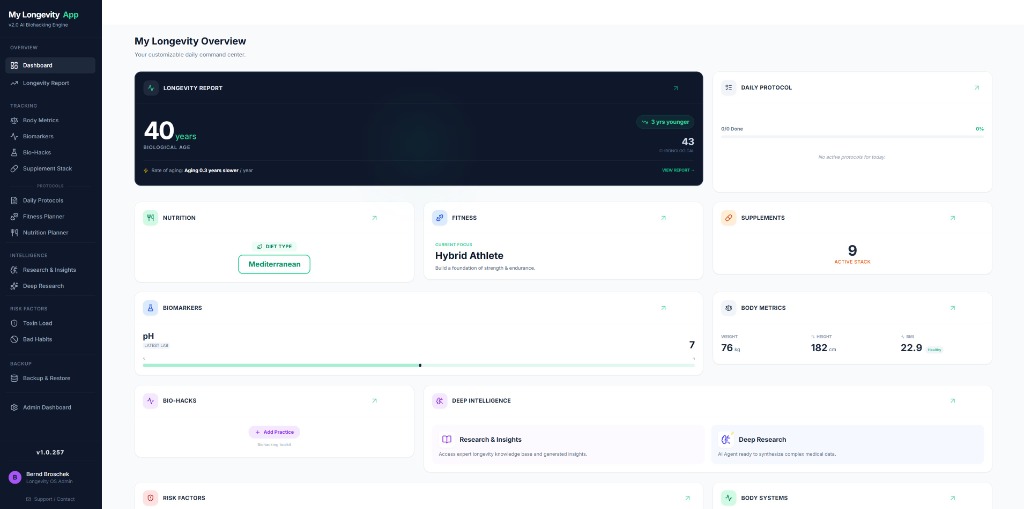
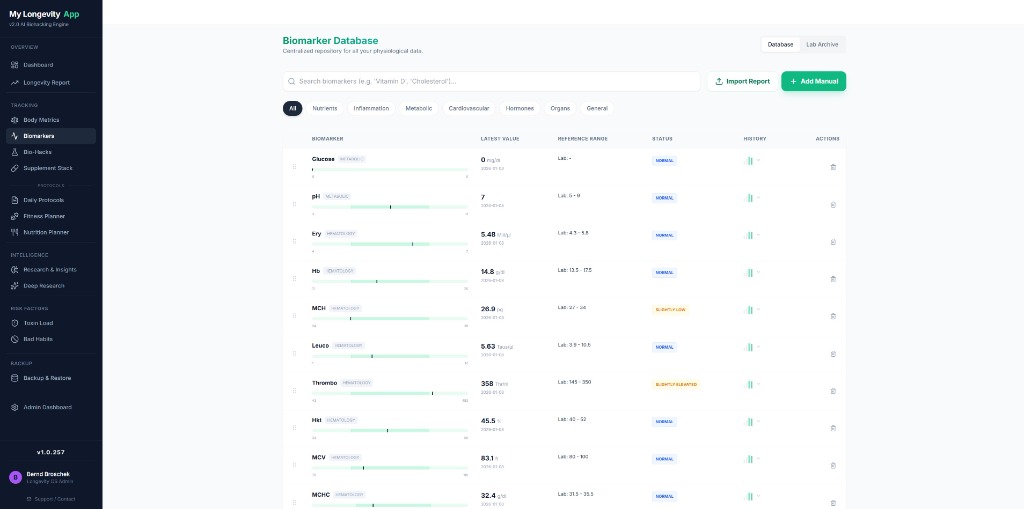
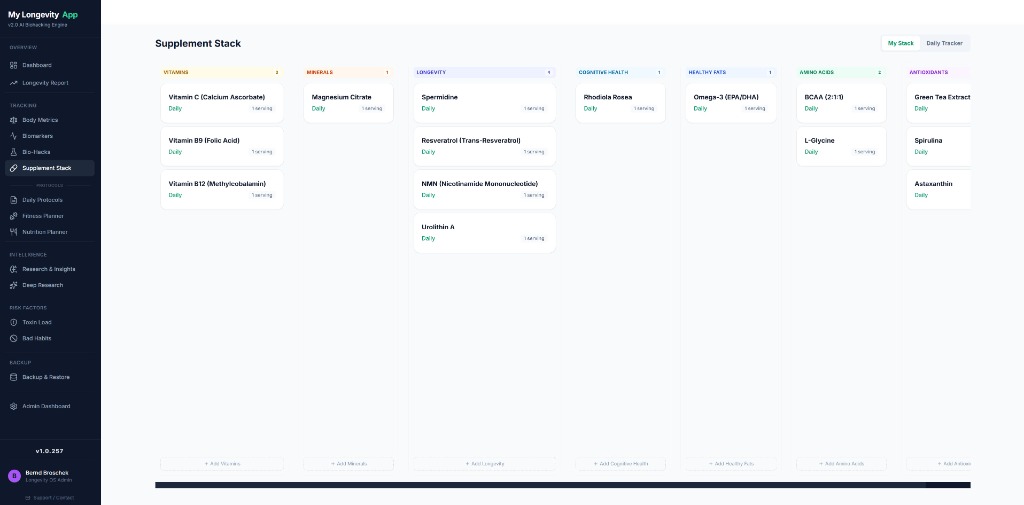
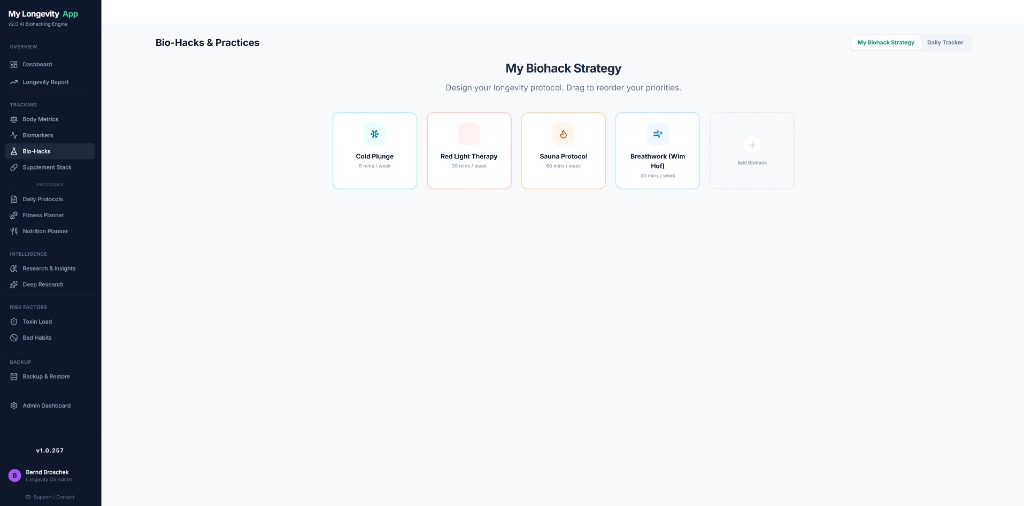
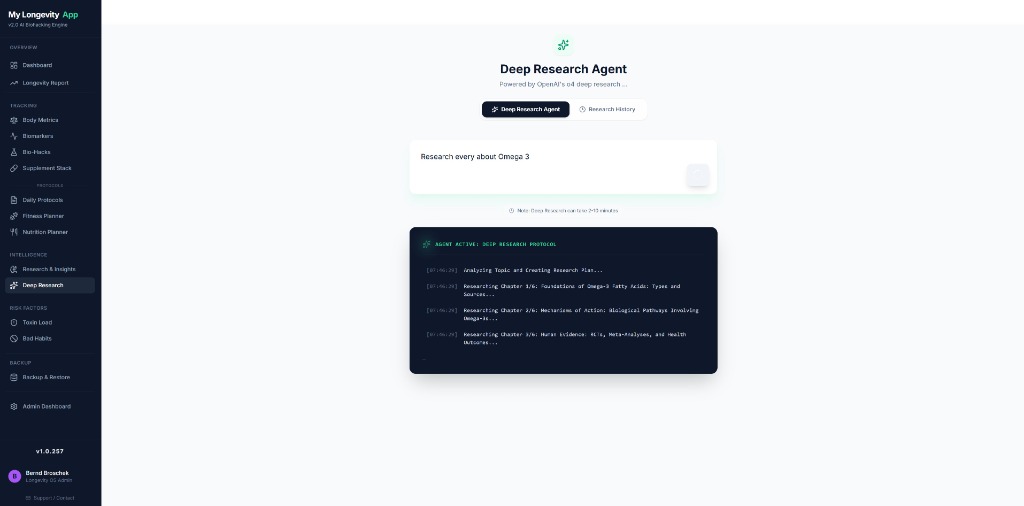
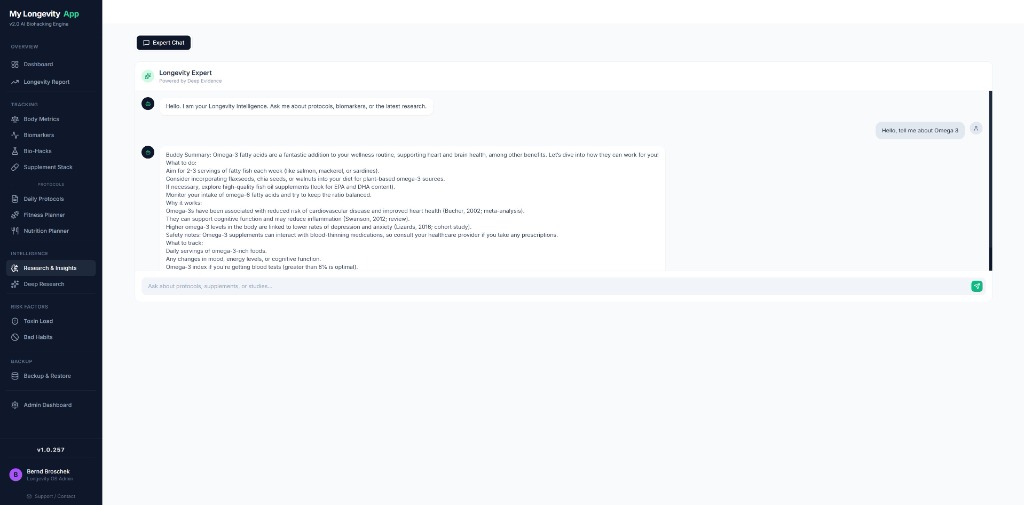
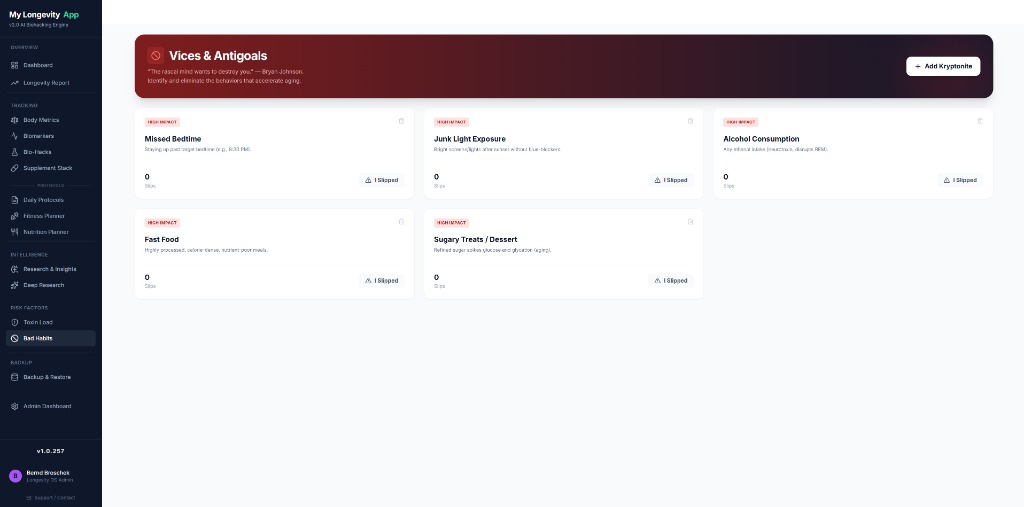
Advanced biohacking tools at your fingertips.
10 integrated modules working together.
Create your account in 30 seconds. No credit card required.
Upload blood work, track body metrics, or start with our AI questionnaire.
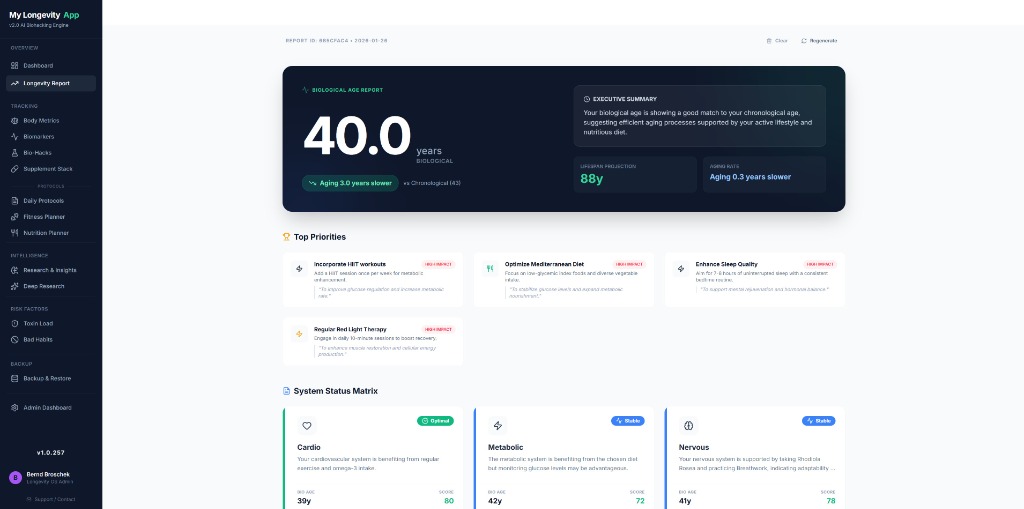
Receive your biological age score, personalized reports, and action plan.
Choose the plan that fits your biohacking journey.
Identify and track key biological markers to better gauge your health and longevity using a biological age scoring system.
Adopt diet, exercise, and sleep routines that positively impact your biological age scoring system for improved overall health.
Schedule periodic assessments to monitor your biological age scoring system, allowing for timely adjustments to your longevity strategies.
Join thousands of biohackers optimizing their health.
"MyLongevityApp helped me lower my biological age by 5 years. The biomarker tracking is a game-changer."
"Finally one app that combines supplements, blood work, and daily protocols. I love the weekly planner."
"The AI research agent alone is worth the subscription. It saves me hours of reading every week."
A biological age scoring system is designed to provide insights into an individual’s overall health and longevity potential by assessing various biomarkers and lifestyle factors. This system moves beyond chronological age, focusing instead on biological markers that reflect the body’s physiological state.
Key components of a biological age scoring system typically include genomic data, epigenetic markers, and various physiological indicators such as blood pressure, cholesterol levels, and inflammatory markers. Genomic analyses can reveal genetic predispositions to certain diseases, while epigenetic markers provide insights into how lifestyle choices influence gene expression. Additionally, physiological assessments, including body mass index (BMI), muscle mass, and cardiovascular fitness, contribute to a comprehensive understanding of an individual's health status.
Metrics used in these systems often incorporate advanced algorithms that integrate diverse data points to calculate a biological age score. This score can help identify discrepancies between chronological and biological age, indicating areas where improvements may enhance longevity. For example, tools like MyLongevityApp utilize these metrics to provide personalized recommendations based on the user’s specific biological profile.
An actionable takeaway is to regularly monitor these key components through health assessments and lifestyle evaluations. Engaging with a biological age scoring system can empower individuals to make informed decisions about their health, enabling them to adopt strategies that promote vitality and longevity.
The distinction between biological age and chronological age is crucial for those interested in longevity and biohacking practices. Chronological age refers to the actual time a person has lived, measured in years from birth. In contrast, a biological age scoring system assesses an individual’s physiological condition, focusing on how well their body is functioning relative to their chronological age. This system takes into account various biomarkers, such as DNA methylation patterns, inflammation levels, and metabolic health, providing a more nuanced view of one’s overall health status.
Understanding this difference is particularly important in biohacking because it empowers individuals to take actionable steps toward improving their health. While two individuals may be the same chronological age, their biological ages can vary significantly, reflecting differing lifestyles, genetics, and health conditions. A biological age scoring system can reveal insights that chronological age alone cannot, allowing for targeted interventions that can enhance healthspan—the period of life spent in good health.
For example, tools like MyLongevityApp offer users a platform to track their biological age and identify specific areas for improvement. By focusing on biological age, biohackers can implement personalized strategies, such as dietary changes, exercise regimens, and stress management techniques, to potentially reduce their biological age and enhance longevity.
To effectively leverage a biological age scoring system, individuals should regularly monitor their biomarkers and adjust their health strategies accordingly. This proactive approach not only fosters a deeper understanding of personal health but also promotes a longer, healthier life.
Research indicates that several lifestyle interventions can significantly influence biological age scores, which reflect an individual's physiological state relative to their chronological age. Key factors include nutrition, physical activity, stress management, and sleep quality.
A balanced diet rich in antioxidants, healthy fats, and anti-inflammatory foods has been linked to improved biological age metrics. Incorporating fruits, vegetables, whole grains, and lean proteins helps reduce oxidative stress and inflammation, two significant contributors to aging. Individuals can implement dietary changes by planning meals around these food groups and minimizing processed foods and sugars.
Regular physical activity is another critical intervention. Aerobic exercises, strength training, and flexibility routines not only enhance physical fitness but also promote cellular repair and regeneration. Aim for at least 150 minutes of moderate exercise each week, integrating activities like brisk walking, cycling, or yoga into your routine. Tools like MyLongevityApp can assist in tracking your fitness progress and ensuring you meet your activity goals.
Stress management techniques, such as mindfulness meditation and deep-breathing exercises, can also lower biological age scores by reducing cortisol levels and promoting a state of calm. Incorporating these practices into daily life, even for just a few minutes each day, can lead to significant improvements in overall well-being.
Lastly, prioritizing quality sleep is essential for biological age reduction. Aim for 7-9 hours of restorative sleep per night. Establish a consistent sleep schedule, create a relaxing bedtime routine, and limit screen time before bed to enhance sleep quality.
Start by choosing one or two of these interventions to integrate into your daily life. Gradually building these habits can lead to a more profound impact on your biological age scores over time.
When evaluating the accuracy of a biological age scoring system, several critical factors must be considered to ensure reliable results. Biological age differs from chronological age, as it reflects the physiological state of an individual rather than merely how long they have lived. Therefore, a robust scoring system must incorporate a wide range of biological markers to paint an accurate picture of one’s biological age.
First, the selection of biomarkers is essential. Key indicators often include genetics, epigenetic changes, metabolic health, and inflammatory markers. A comprehensive biological age scoring system should integrate these various factors to provide a holistic assessment. For example, systems that focus solely on DNA methylation patterns may miss other vital aspects of aging, such as organ function and lifestyle factors.
Second, the methodology used to collect and analyze data can significantly influence outcomes. Reliable systems typically utilize advanced statistical models and machine learning algorithms to process large datasets. This ensures that the scoring system can adapt to new research findings and accurately reflect the complexities of aging.
Finally, user demographics must be taken into account. Factors such as sex, ethnicity, and lifestyle can affect biological aging. A scoring system that adjusts for these variables can provide more personalized and accurate insights, enhancing its overall reliability.
For individuals looking to track their biological age, tools like MyLongevityApp can provide valuable insights based on these principles. Users should focus on selecting a scoring system that employs comprehensive biomarkers, utilizes sound methodologies, and considers demographic factors. By doing so, they can gain a more accurate understanding of their biological age and make informed decisions about their health and longevity.
The importance of developing and refining biological age scoring systems cannot be overstated, especially in the context of personalized medicine and longevity. These scoring systems provide a quantitative measure of an individual's biological age relative to their chronological age, offering valuable insights into their health status and potential risks for age-related diseases. As personalized medicine gains traction, understanding biological aging becomes crucial for tailoring interventions that promote longevity and enhance quality of life.
Researchers and health professionals are increasingly recognizing that biological age can vary significantly among individuals with the same chronological age. This variation highlights the need for accurate biological age scoring systems that can effectively guide personalized health strategies. By identifying biomarkers and health indicators, these systems can help practitioners devise targeted approaches that consider an individual's unique aging processes, rather than applying a one-size-fits-all model.
Furthermore, the integration of technology, such as applications like MyLongevityApp, enhances the ability to track and analyze biological age over time. These tools empower individuals to monitor their health metrics and engage in proactive measures for longevity, fostering a more dynamic relationship between patients and healthcare providers.
A concrete takeaway for both researchers and health professionals is to prioritize the refinement of biological age scoring systems as a cornerstone of personalized medicine. By investing in this area, they can facilitate more effective interventions that not only extend lifespan but also improve healthspan, ultimately leading to a more holistic approach to aging and wellbeing.
Join 10,000+ biohackers optimizing their health with AI.
Start Your 7-Day Free TrialNo credit card required. Cancel anytime.