Discover how understanding biological age can enhance your health and longevity journey.
Many people feel a growing disconnect between how old they are in years and how they feel in their bodies. The search for clarity on the concept of 'biological age vs chronological age' often stems from a deep desire to understand why they may feel younger or older than their actual age. This confusion can lead to frustration and anxiety, as individuals seek answers to improve their health and well-being, hoping to bridge the gap between their physical vitality and the number of candles on their birthday cake.
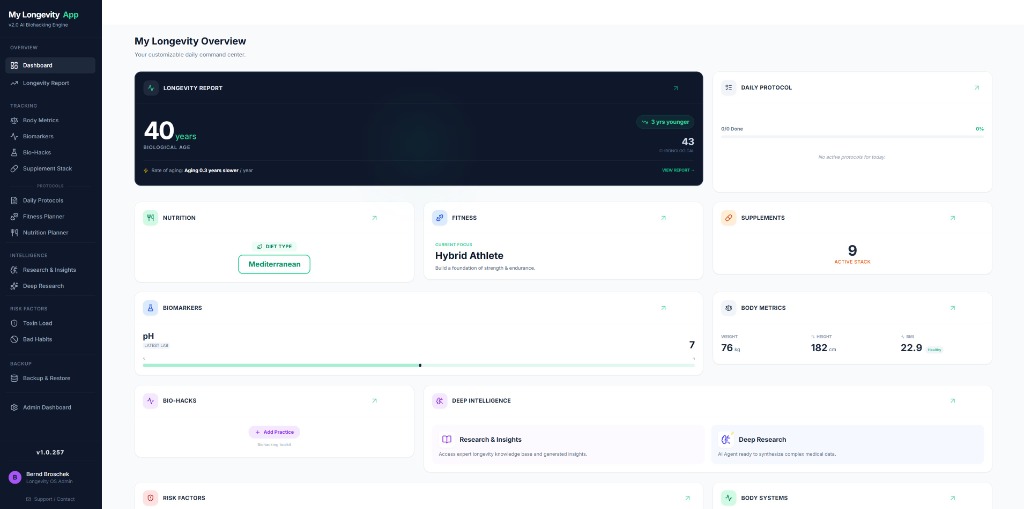
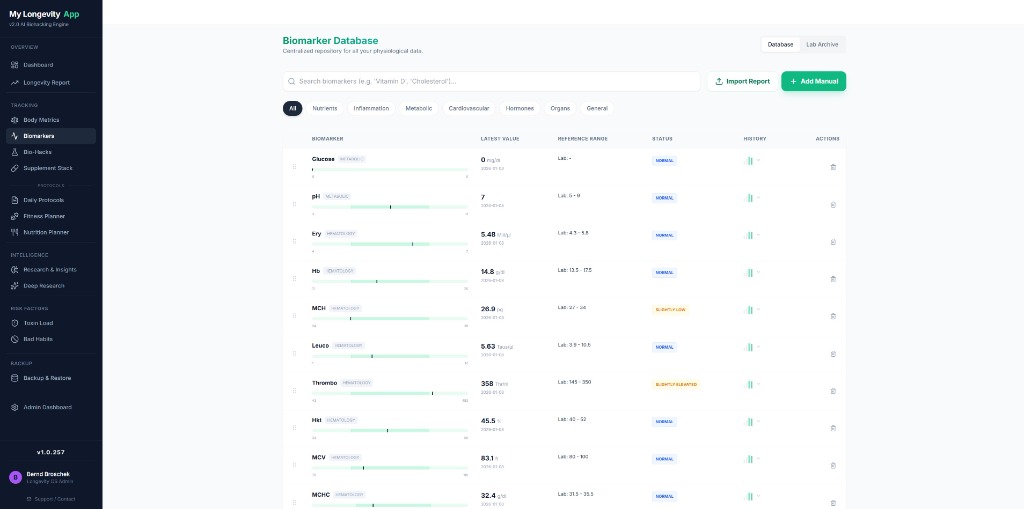
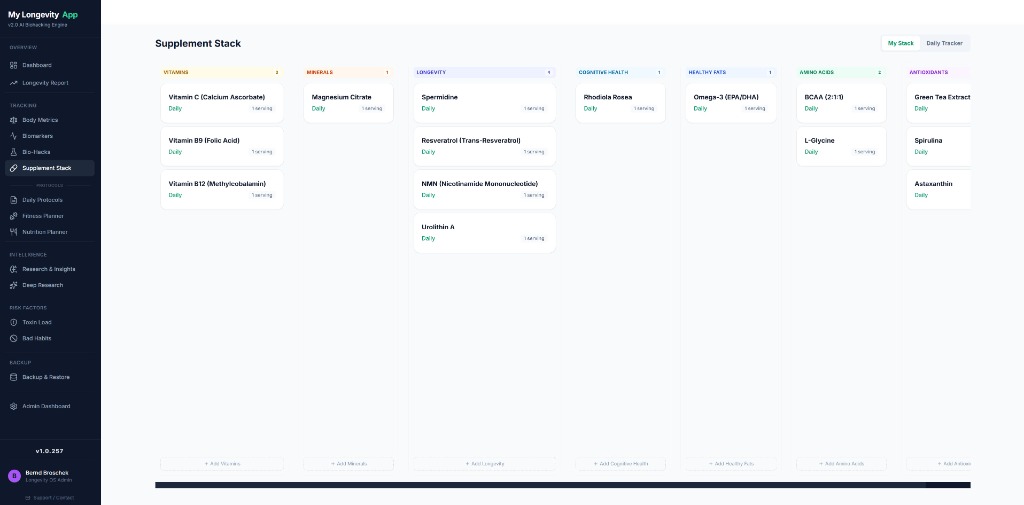
Advanced biohacking tools at your fingertips.
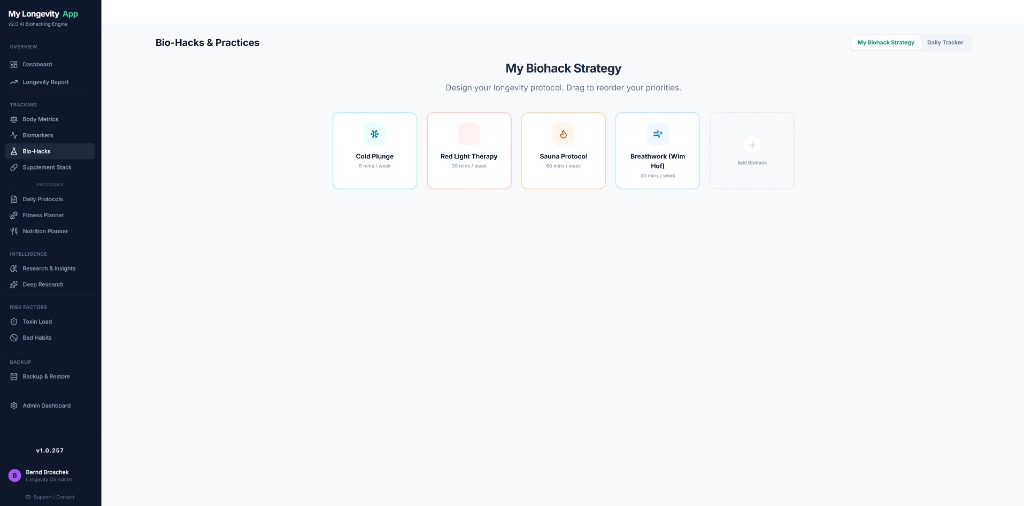
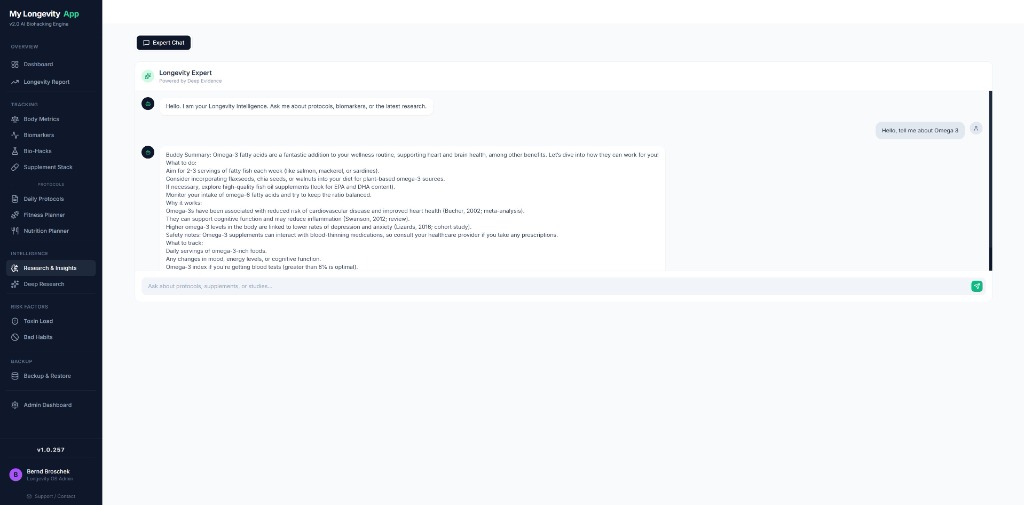
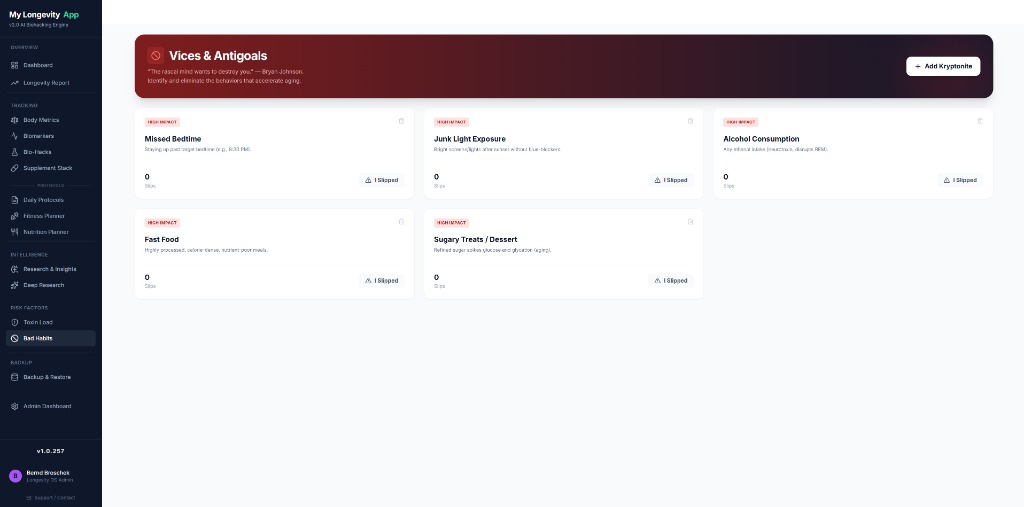
10 integrated modules working together.
Create your account in 30 seconds. No credit card required.
Upload blood work, track body metrics, or start with our AI questionnaire.
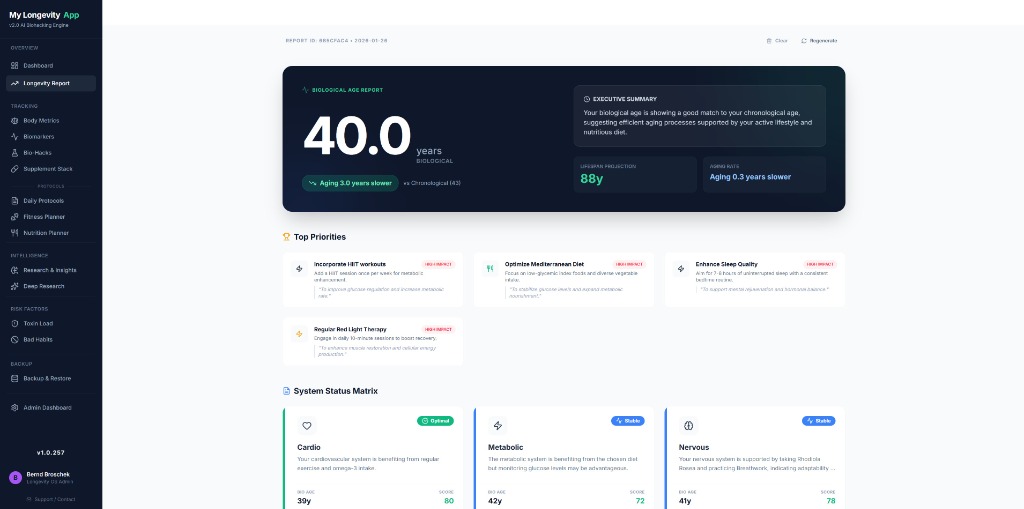
Receive your biological age score, personalized reports, and action plan.
Choose the plan that fits your biohacking journey.
Learn how biological age vs chronological age affects your health to tailor your lifestyle choices effectively.
Schedule periodic health check-ups to monitor your biological age and make informed adjustments to your wellness routine.
Implement diet, exercise, and stress management strategies that can positively impact your biological age compared to your chronological age.
Join thousands of biohackers optimizing their health.
"MyLongevityApp helped me lower my biological age by 5 years. The biomarker tracking is a game-changer."
"Finally one app that combines supplements, blood work, and daily protocols. I love the weekly planner."
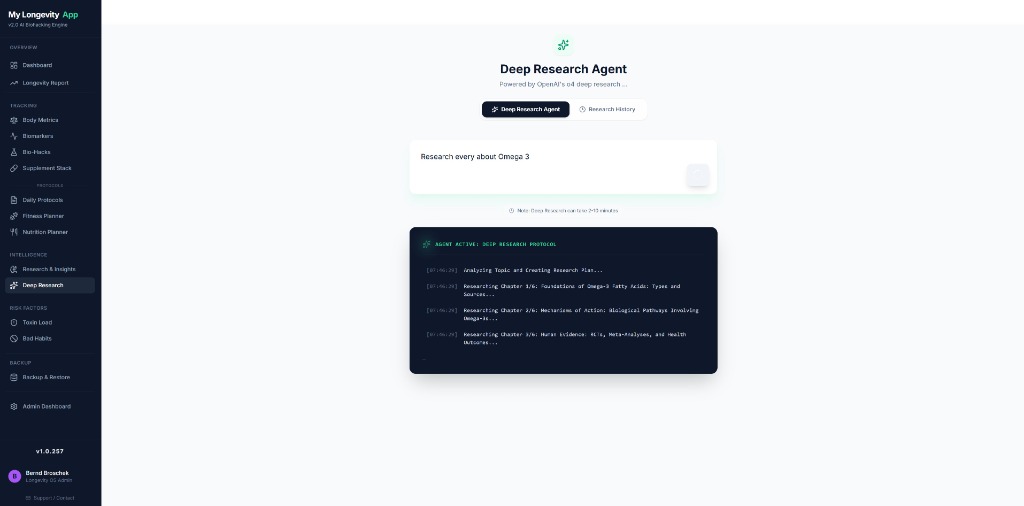
"The AI research agent alone is worth the subscription. It saves me hours of reading every week."
Biological age vs chronological age is a critical distinction in understanding overall health and longevity outcomes. Chronological age, the number of years a person has lived, is a straightforward measure of time. In contrast, biological age reflects how well your body is functioning relative to your chronological age. This concept takes into account various factors, including genetics, lifestyle choices, and environmental influences that can accelerate or decelerate the aging process.
Research has indicated that biological age can provide more insight into an individual’s health status and longevity potential than chronological age. For instance, two individuals of the same chronological age may have vastly different biological ages due to lifestyle factors such as diet, exercise, stress management, and sleep quality. A person who maintains a healthy lifestyle may exhibit a biological age significantly younger than their chronological age, potentially leading to better health outcomes and a longer lifespan.
Tools like MyLongevityApp can help individuals monitor their biological age by assessing various biomarkers and lifestyle habits. By tracking these factors, users can gain insights into their aging process and implement strategies to improve their health.
The key takeaway here is to focus on factors that influence biological age rather than simply counting years. Engaging in regular physical activity, eating a balanced diet, managing stress, and ensuring adequate sleep can all contribute to a younger biological age, enhancing longevity and overall well-being. Prioritizing these aspects can lead to a healthier, more fulfilling life regardless of chronological age.
Assessing biological age has gained prominence as a more nuanced measure of health and longevity compared to traditional chronological age, which simply counts the years since birth. Various methodologies have emerged to evaluate biological age, each with its own strengths and weaknesses.
One widely recognized method is epigenetic clock analysis, which examines DNA methylation patterns. This approach utilizes specific biomarkers to determine biological age, often revealing how environmental factors and lifestyle choices have impacted an individual’s health. Another popular technique involves evaluating biomarkers in blood tests, such as inflammation markers, hormone levels, and metabolic indicators. These biomarkers can provide insights into an individual's physiological state and potential health risks, making them valuable for assessing biological age.
Other methodologies include telomere length measurement and the examination of physiological functions such as VO2 max, which assesses cardiovascular fitness. These approaches focus on the body's ability to perform and maintain function, aligning more closely with the concept of biological age vs chronological age. Each method offers a unique perspective, highlighting the importance of a holistic approach to evaluating longevity.
For those interested in tracking their biological age, tools like MyLongevityApp can integrate various assessments and provide personalized insights. This allows users to make informed lifestyle changes that may positively influence their biological age.
A practical takeaway is to consider incorporating a combination of these methodologies to gain a clearer picture of your biological age. By doing so, you can tailor your health strategies more effectively, moving beyond the limitations of chronological age alone.
Understanding the relationship between biological age and chronological age is crucial for individuals focused on optimizing their health and lifespan through biohacking techniques. Chronological age is simply the number of years a person has lived, while biological age refers to how well a person's body is functioning relative to their chronological age. This distinction is significant because biological age can vary widely among individuals, influenced by factors such as genetics, lifestyle choices, and environmental exposures.
For those engaged in biohacking, recognizing the differences between biological age and chronological age allows for a more personalized approach to health. While chronological age is fixed, biological age can be modified through targeted interventions like diet, exercise, and stress management. By tracking biological markers, individuals can assess their health status more accurately and identify areas requiring improvement.
Tools such as MyLongevityApp enable users to monitor their biological age, providing insights into their health trajectory and the effectiveness of various biohacking strategies. This data empowers individuals to make informed decisions about their health, facilitating a proactive approach to aging.
An actionable takeaway is to regularly assess both your biological and chronological age. Incorporate health tracking apps to monitor biomarkers and adjust your lifestyle accordingly. Implementing consistent exercise routines, optimizing nutrition, and managing stress can significantly lower biological age, ultimately enhancing overall health and longevity.
Biological age vs chronological age is a crucial concept in the pursuit of longevity, as it highlights the difference between how old you are in years and how well your body functions on a cellular level. Several lifestyle factors significantly impact biological age, including diet, exercise, sleep quality, stress management, and social connections.
A nutritious diet rich in antioxidants, healthy fats, and lean proteins can mitigate oxidative stress and inflammation, both of which accelerate aging. Regular physical activity promotes cardiovascular health and muscle preservation, further contributing to a younger biological age. Adequate sleep is essential for cellular repair processes, while effective stress management techniques, such as mindfulness and meditation, can reduce cortisol levels that negatively affect aging. Lastly, maintaining strong social ties has been linked to better health outcomes, reinforcing the importance of community in longevity.
To effectively track changes in biological age over time, individuals can utilize various methods and tools. Biomarkers, such as telomere length, epigenetic clocks, and blood panels, provide insights into biological aging processes. Additionally, platforms like MyLongevityApp can help users monitor lifestyle habits, providing personalized feedback based on tracked data and correlating it with biological age indicators.
A practical takeaway is to establish a consistent routine that prioritizes these lifestyle factors. Consider keeping a journal to log diet, exercise, and sleep patterns, and periodically assess your biological age through available biomarkers. This proactive approach will not only help you understand your aging process but also empower you to make informed decisions for a healthier, longer life.
Discrepancies between biological age and chronological age can arise due to a variety of factors, including genetics, lifestyle choices, and environmental influences. Biological age refers to the physiological state of an individual, reflecting how well their body functions compared to typical age-related norms, while chronological age is simply the number of years a person has lived. For instance, an individual who leads a sedentary lifestyle, consumes a poor diet, and experiences chronic stress may have a biological age that exceeds their chronological age, indicating accelerated aging processes. Conversely, someone who engages in regular exercise, maintains a balanced diet, and practices stress management techniques might have a biological age that is younger than their chronological age.
These discrepancies hold significant implications for personal health strategies. Understanding the difference between biological age vs chronological age can guide individuals in tailoring their health and wellness approaches. For example, if a person discovers through assessments that their biological age is higher than expected, it may prompt them to adopt lifestyle changes such as increasing physical activity, optimizing nutrition, and integrating mindfulness practices. Tools like MyLongevityApp can help monitor these changes by providing personalized insights based on individual health data.
Recognizing one’s biological age can also influence health screenings and preventive measures. Individuals with a higher biological age may need to prioritize regular health check-ups and screenings to address potential age-related health issues proactively. As such, taking actionable steps to align biological age with chronological age can lead to improved overall health and longevity. Investing in personal health strategies that are informed by the understanding of biological age can enhance quality of life and promote a longer, healthier existence.
Join 10,000+ biohackers optimizing their health with AI.
Start Your 7-Day Free TrialNo credit card required. Cancel anytime.