Discover how longevity empowers you to enhance your health and extend your life's vitality.
When someone searches for "what is longevity," they often feel a deep yearning for more than just a longer life; they seek a life rich with purpose and vitality. This quest can stem from fears of aging, declining health, or losing connections with loved ones. The uncertainty around how to achieve not just survival, but a thriving existence, can be overwhelming, leaving many feeling lost and anxious about their future.
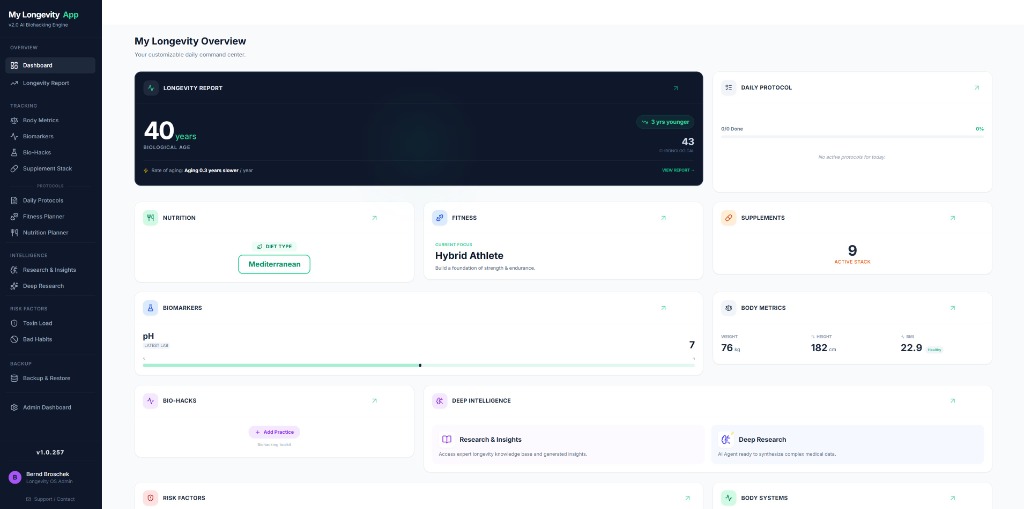
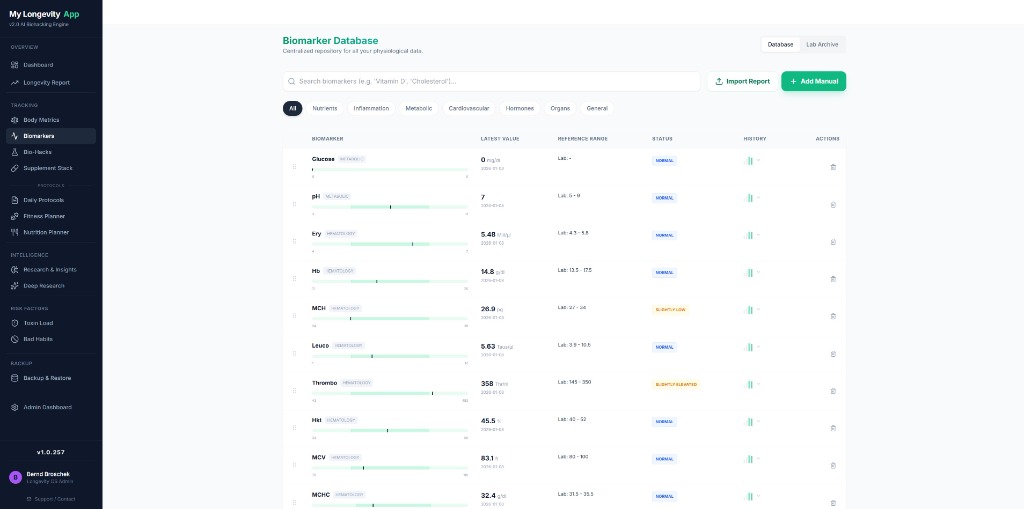
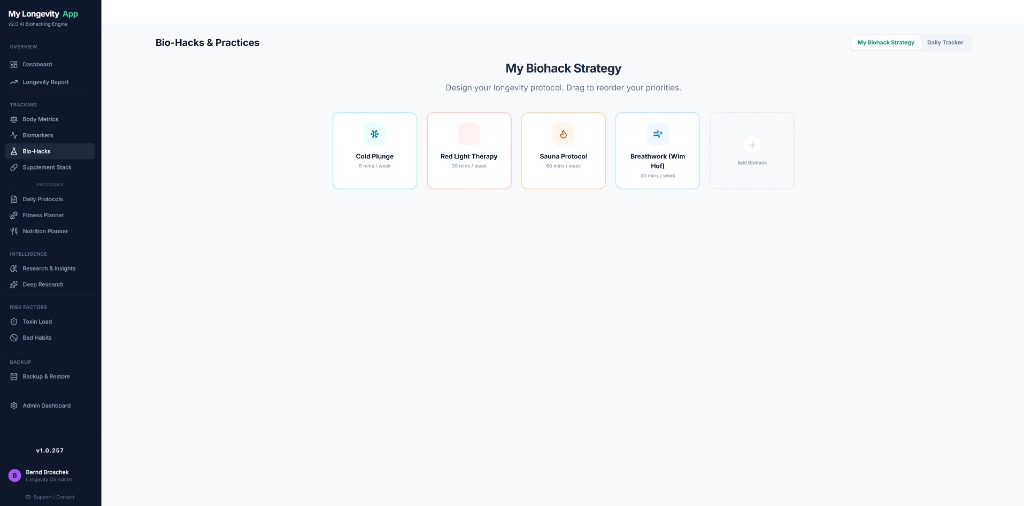
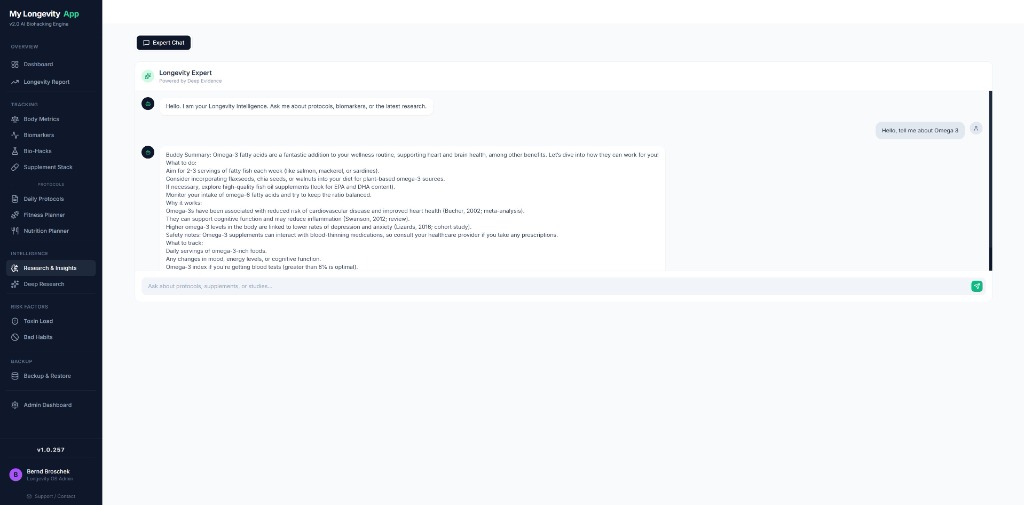
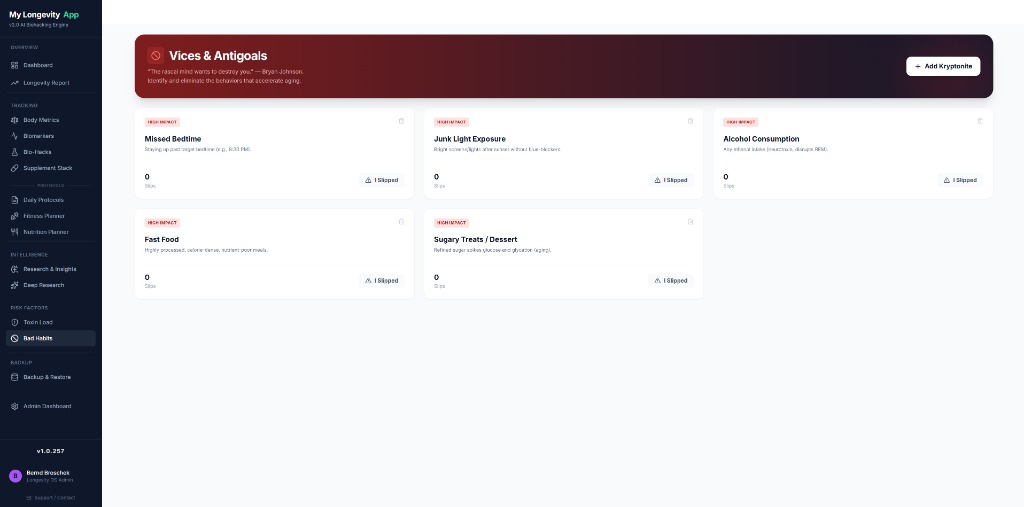
Advanced biohacking tools at your fingertips.
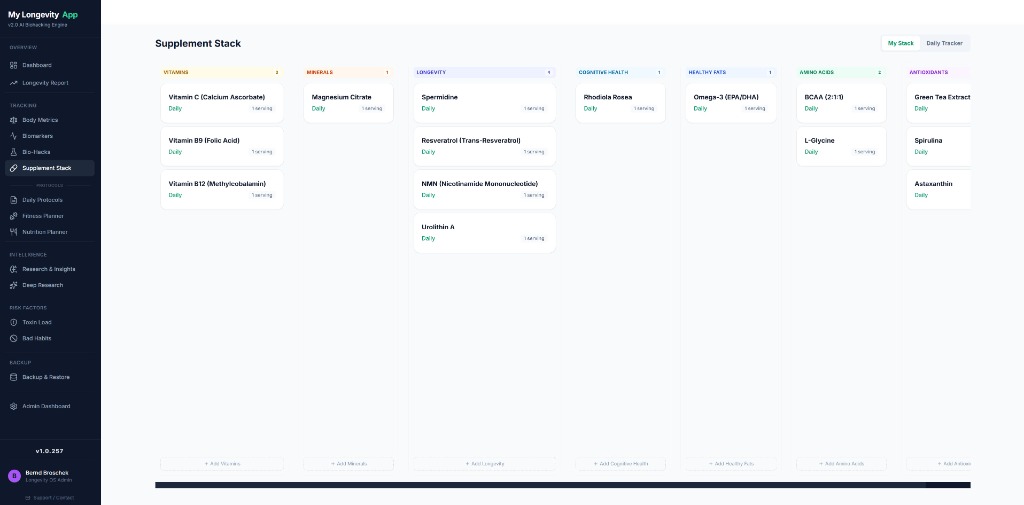
10 integrated modules working together.
Create your account in 30 seconds. No credit card required.
Upload blood work, track body metrics, or start with our AI questionnaire.
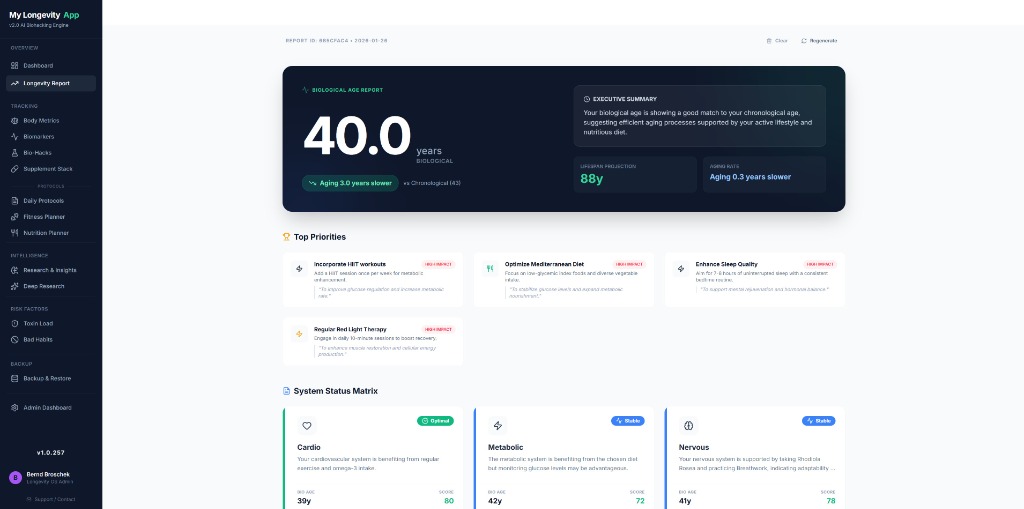
Receive your biological age score, personalized reports, and action plan.
Choose the plan that fits your biohacking journey.
What is longevity? It refers to extending life and enhancing health, focusing on both lifespan and healthspan.
Adopt a nutrient-rich diet, emphasizing whole foods, antioxidants, and healthy fats to support cellular health and longevity.
Incorporate both aerobic and strength training exercises into your routine to improve fitness, promote longevity, and enhance overall well-being.
Join thousands of biohackers optimizing their health.
"MyLongevityApp helped me lower my biological age by 5 years. The biomarker tracking is a game-changer."
"Finally one app that combines supplements, blood work, and daily protocols. I love the weekly planner."
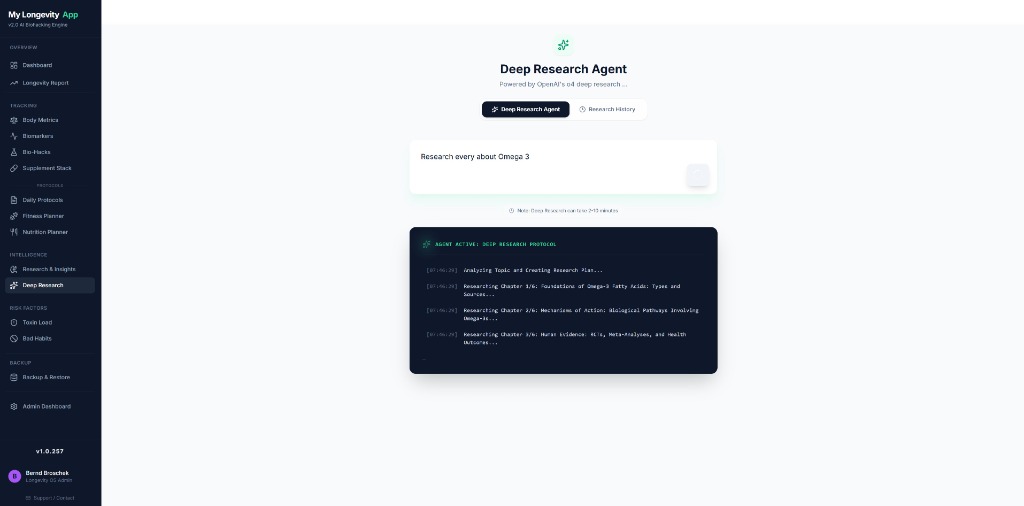
"The AI research agent alone is worth the subscription. It saves me hours of reading every week."
Understanding what is longevity involves delving into key biological mechanisms that influence our lifespan. Several interconnected processes play a critical role, including cellular senescence, telomere shortening, and mitochondrial function. Cellular senescence refers to the state where cells lose their ability to divide, contributing to aging and the decline of tissue function. Telomeres, the protective caps at the ends of chromosomes, shorten with each cell division, leading to cellular aging. Mitochondria, known as the powerhouse of the cell, generate energy, and their decline is associated with age-related diseases.
Lifestyle choices can significantly impact these biological mechanisms. Regular physical activity, for instance, has been shown to combat cellular senescence by promoting the turnover of senescent cells and enhancing overall cellular function. Nutrition also plays a crucial role; diets rich in antioxidants and anti-inflammatory compounds can help preserve mitochondrial function and slow down telomere shortening. Additionally, practices such as intermittent fasting have been linked to increased longevity through mechanisms like autophagy, which cleans out damaged cells and promotes cellular rejuvenation.
To track and optimize these lifestyle choices, tools like MyLongevityApp can provide personalized insights into your habits and their effects on longevity. By monitoring your diet, exercise, and other health metrics, you can make informed decisions that align with your longevity goals. Implementing a balanced routine that includes regular exercise, a nutrient-dense diet, and stress management techniques can have a profound impact on your biological aging process, effectively enhancing your lifespan.
Environmental factors, particularly diet and exercise, play a crucial role in the aging process and overall longevity. Research shows that a balanced diet rich in nutrients can significantly enhance cellular function, reduce inflammation, and improve metabolic health. Foods high in antioxidants, such as fruits and vegetables, combat oxidative stress—one of the key contributors to aging. Additionally, diets that emphasize healthy fats, lean proteins, and whole grains support optimal bodily functions and can prevent age-related diseases.
Exercise is equally essential for longevity. Regular physical activity strengthens the cardiovascular system, improves muscle mass, and enhances bone density, all of which are critical as we age. Studies suggest that maintaining an active lifestyle can lead to a reduction in the risk of chronic diseases, such as diabetes and heart disease, thereby influencing lifespan. Moreover, exercise has been linked to improved mental health, which is vital for maintaining a high quality of life as we grow older.
Understanding what is longevity involves recognizing the interconnectedness of these factors. The lifestyle choices we make have profound implications for our health span—the period during which we remain healthy and free from serious diseases. MyLongevityApp can be a valuable tool in tracking dietary habits and exercise routines, helping users make informed decisions that promote longevity.
To enhance your longevity, focus on incorporating a diverse range of nutrient-dense foods into your diet and establish a regular exercise routine that includes both cardio and strength training. Small, consistent changes can lead to significant impacts on your overall health and lifespan.
Understanding the difference between chronological and biological age is crucial when discussing longevity, as it shapes how we perceive aging and our potential for a longer, healthier life. Chronological age refers to the number of years a person has lived, while biological age reflects the physiological state of one’s body, influenced by genetics, lifestyle choices, and environmental factors. This distinction is vital because two individuals of the same chronological age can exhibit significantly different biological ages due to their health behaviors and genetic predispositions.
When exploring the concept of longevity, it is essential to recognize that biological age can often provide a more accurate picture of health and vitality than chronological age. For instance, a person who follows a balanced diet, exercises regularly, and manages stress effectively may have a biological age significantly lower than their chronological age. Conversely, someone with poor lifestyle habits may have a biological age that exceeds their chronological age, indicating a greater risk of age-related diseases and reduced quality of life.
Incorporating tools like MyLongevityApp can aid individuals in assessing their biological age and understanding the factors that contribute to it. By tracking health metrics and lifestyle choices, users can make informed decisions that positively impact their longevity. This approach allows for personalized strategies to enhance well-being and extend lifespan.
An actionable takeaway is to regularly evaluate your lifestyle habits and their impact on your biological age. Consider utilizing health-tracking apps or consulting with health professionals to create a tailored plan aimed at reducing your biological age, ultimately promoting a longer and healthier life.
Emerging technologies and biohacking strategies are continually evolving, offering new potential in the quest for longevity and enhanced healthspan. What is longevity? It refers not only to the length of life but also to the quality of that life, emphasizing the importance of maintaining physical and mental well-being as we age.
One promising area is the development of gene editing technologies like CRISPR. These tools allow for precise modifications to DNA, potentially correcting genetic predispositions to aging-related diseases. By targeting specific genes, researchers aim to enhance cellular repair mechanisms, which could delay the onset of age-related conditions.
Another emerging technology is senolytics, which are compounds designed to selectively eliminate senescent cells—cells that have stopped dividing and contribute to aging. Preliminary studies show that clearing these cells can significantly improve health markers and extend lifespan in animal models. As research progresses, these therapies could provide a practical approach to rejuvenation.
In the realm of biohacking, practices such as intermittent fasting, advanced supplementation, and personalized nutrition continue to gain traction. For instance, utilizing apps like MyLongevityApp allows individuals to track their dietary habits and health metrics, tailoring their biohacking strategies based on real-time data and genetic insights.
Actionable takeaway: Start by integrating one or more of these strategies into your routine. Consider exploring intermittent fasting or utilizing genetics-based insights through apps like MyLongevityApp to optimize your approach to longevity and healthspan enhancement. Prioritize lifestyle changes that align with your unique biology, and stay informed about the latest scientific advancements in the field.
When exploring the question of what is longevity, it's essential to recognize the interplay between genetics and lifestyle interventions in determining lifespan. Genetics undeniably play a significant role in longevity, influencing factors such as cellular repair mechanisms, metabolic efficiency, and susceptibility to age-related diseases. Certain genes have been associated with extended lifespans, and studies on centenarians reveal common genetic traits that may contribute to their remarkable longevity.
However, lifestyle interventions are increasingly recognized as equally, if not more, critical in promoting a longer and healthier life. Factors such as diet, physical activity, stress management, and social connections have profound effects on overall health and can mitigate genetic predispositions to certain ailments. For instance, a balanced diet rich in antioxidants and anti-inflammatory compounds can counteract genetic vulnerabilities, while regular physical exercise enhances cardiovascular health and cognitive function, offering protective benefits as one ages.
The integration of genetics and lifestyle choices is where personalized longevity strategies, like those offered by MyLongevityApp, can be particularly effective. By analyzing genetic information alongside lifestyle habits, individuals can tailor their health interventions to maximize their potential for longevity. This holistic approach underscores the importance of not solely relying on genetic predispositions but also actively engaging in lifestyle changes that promote optimal health.
Individuals seeking to enhance their longevity should prioritize a balanced diet, regular physical activity, and stress-reducing practices. By understanding the role of both genetics and lifestyle, they can adopt a proactive stance towards their health, ultimately improving their chances of living a longer life filled with vitality.
Join 10,000+ biohackers optimizing their health with AI.
Start Your 7-Day Free TrialNo credit card required. Cancel anytime.