"Unlock your potential for a longer, healthier life with cutting-edge longevity software."
In a world filled with overwhelming information about health and wellness, searching for longevity software can feel daunting and isolating. Many individuals are driven by a deep desire to extend their lives and enhance their well-being, yet they often struggle to find reliable solutions tailored to their unique needs. The fear of making the wrong choices or missing out on transformative insights can lead to frustration, leaving them yearning for a guiding hand to navigate the complex landscape of longevity.
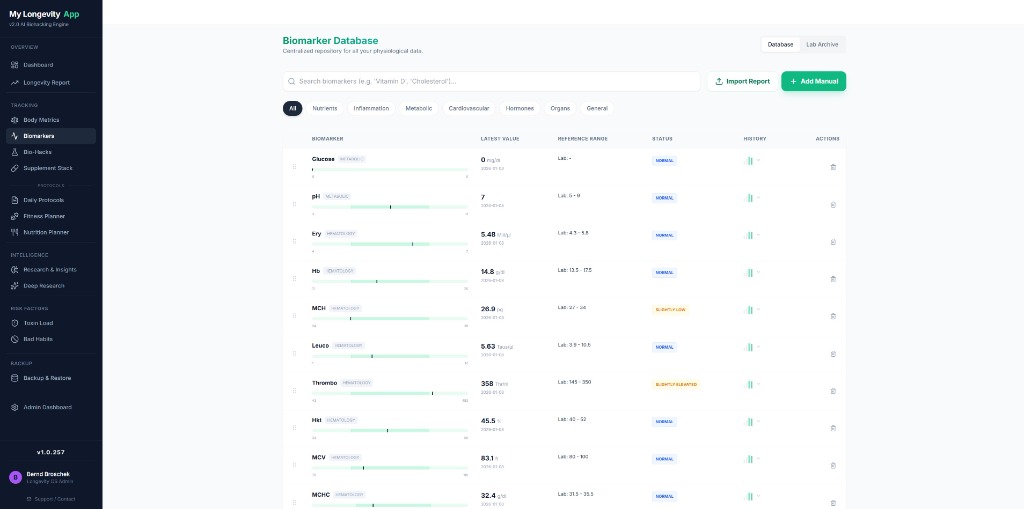
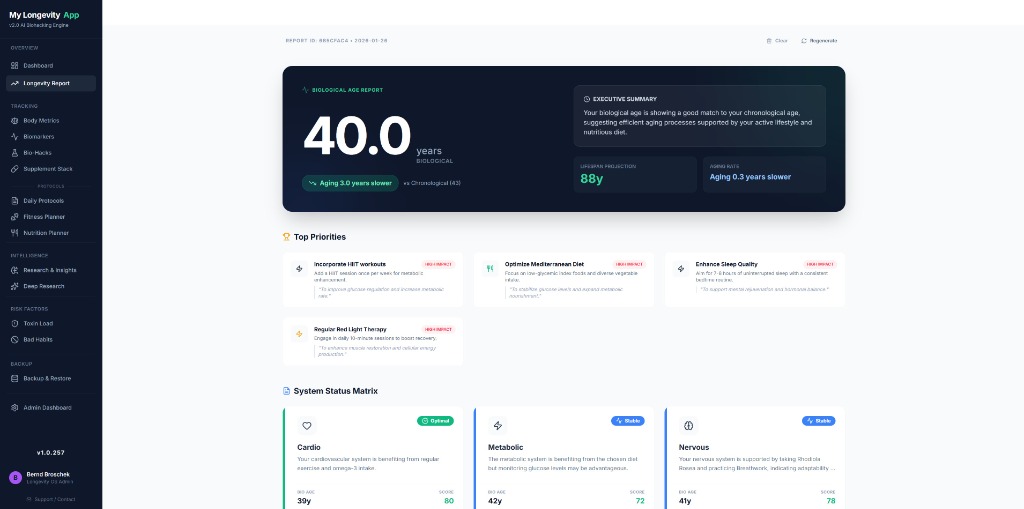
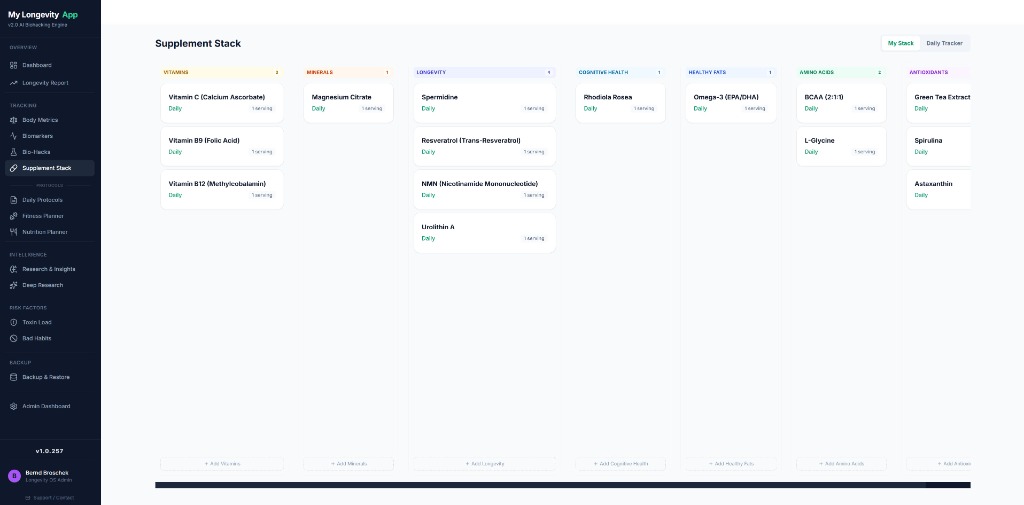
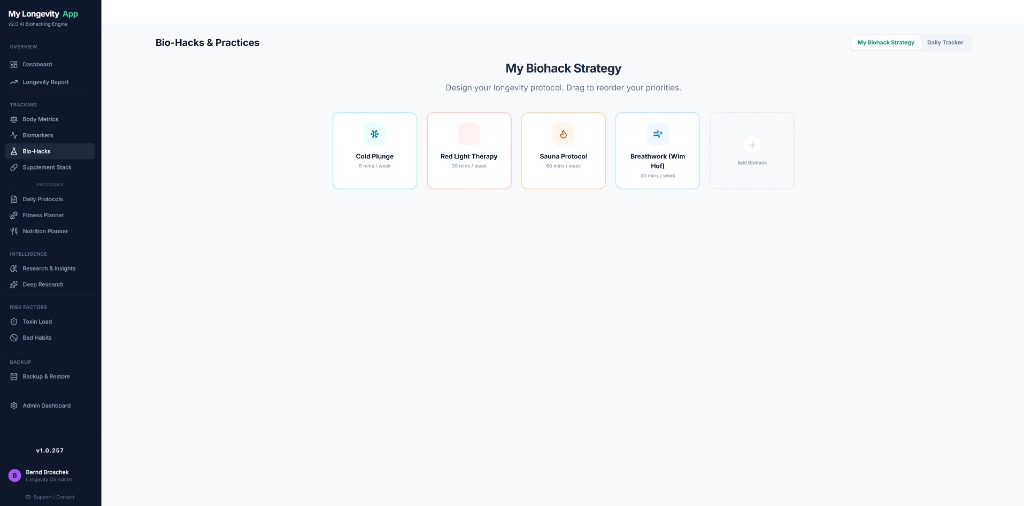
Advanced biohacking tools at your fingertips.
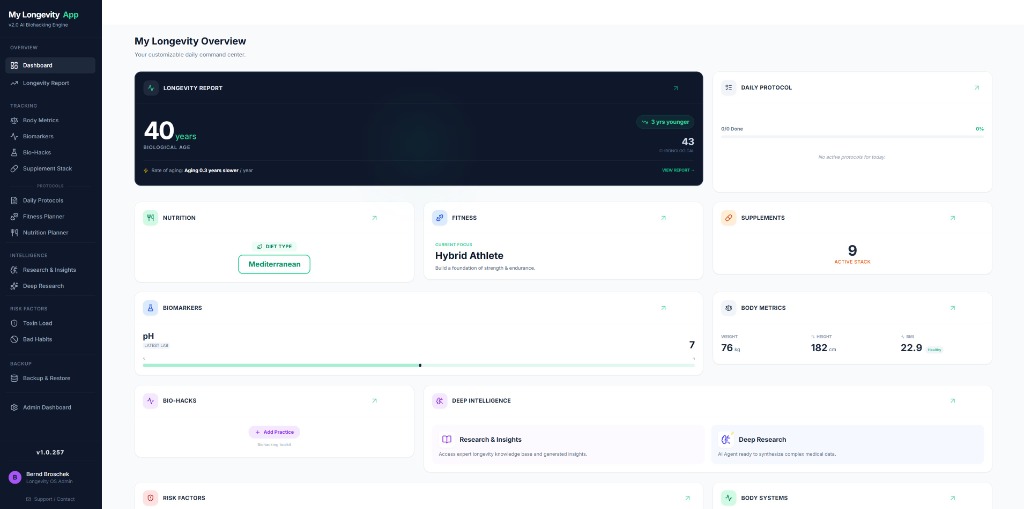
10 integrated modules working together.
Create your account in 30 seconds. No credit card required.
Upload blood work, track body metrics, or start with our AI questionnaire.
Receive your biological age score, personalized reports, and action plan.
Choose the plan that fits your biohacking journey.
Utilize longevity software to analyze your health data, providing tailored recommendations for improving your well-being and extending your lifespan.
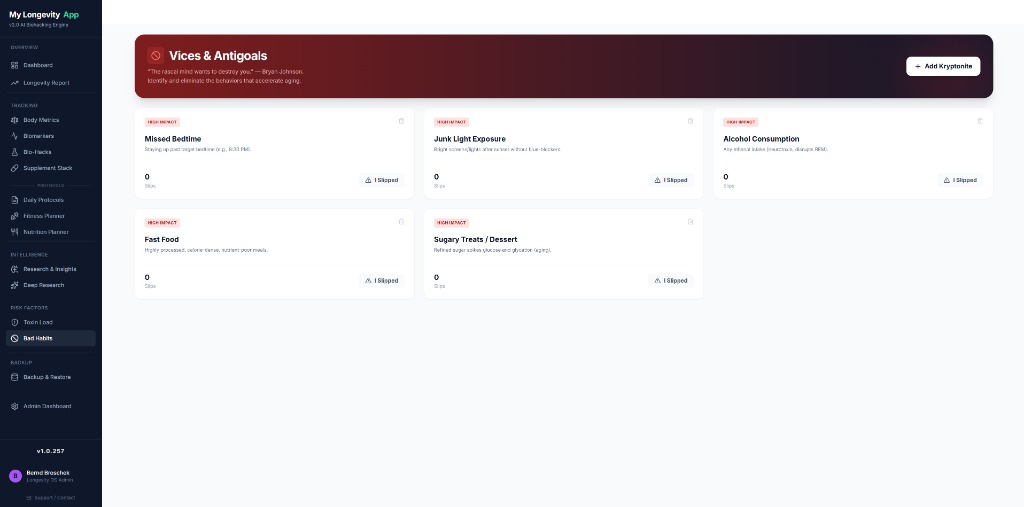
Leverage longevity software to track lifestyle choices, enabling informed decisions that support your longevity goals.
Join a network of like-minded individuals through longevity software, fostering motivation and sharing strategies for a healthier, longer life.
Join thousands of biohackers optimizing their health.
"MyLongevityApp helped me lower my biological age by 5 years. The biomarker tracking is a game-changer."
"Finally one app that combines supplements, blood work, and daily protocols. I love the weekly planner."
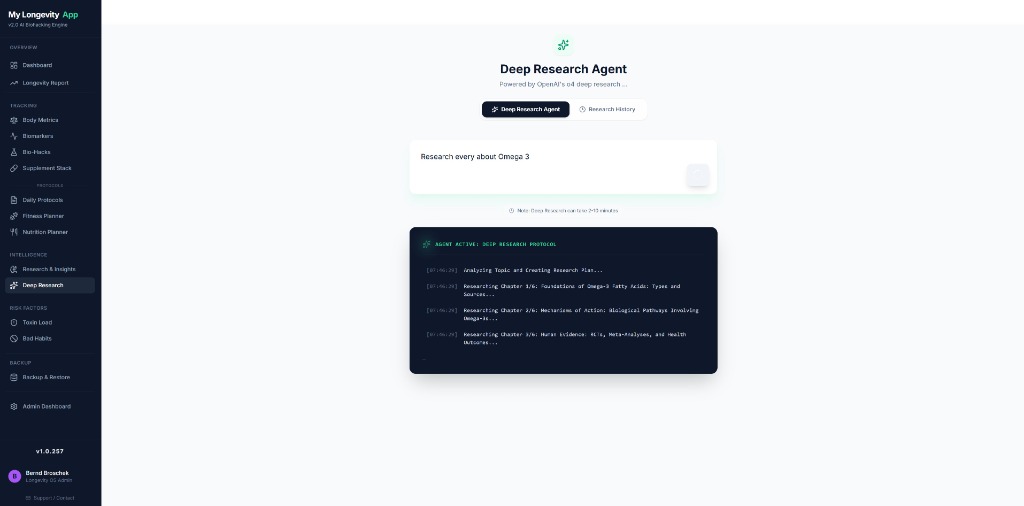
"The AI research agent alone is worth the subscription. It saves me hours of reading every week."
When selecting longevity software to track and enhance your healthspan, several key features are essential to ensure it meets your needs effectively. First and foremost, look for comprehensive data integration capabilities. The software should be able to synchronize with various health devices and apps, such as wearables, fitness trackers, and even electronic health records. This integration allows for a holistic view of your health metrics, making it easier to monitor your progress over time.
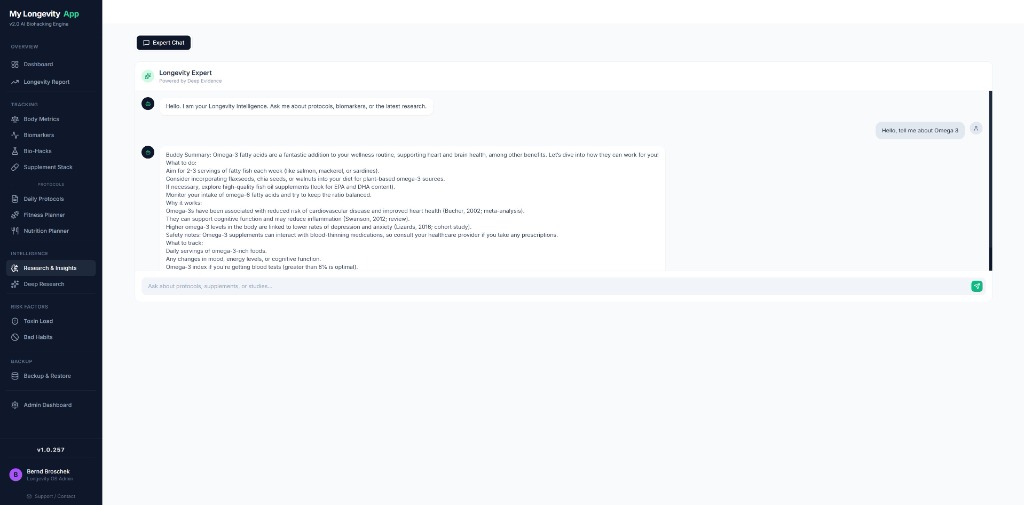
Another important feature is personalized health insights. The software should analyze your data to provide tailored recommendations based on your unique health profile, lifestyle, and goals. This could include suggestions for dietary changes, exercise routines, or mindfulness practices that align with your specific longevity objectives. MyLongevityApp, for instance, excels in providing personalized feedback that empowers users to make informed decisions about their health.
User-friendly interfaces are also crucial. The longevity software should be intuitive and easy to navigate, allowing you to focus on your health rather than struggling with complex functionalities. Look for features such as goal setting, reminders, and progress tracking to keep you motivated and accountable.
Lastly, consider the software's community and support features. Engaging with a community of like-minded individuals can provide inspiration and encouragement, while access to expert advice can enhance your understanding of longevity practices.
To maximize the benefits of longevity software, choose one that encompasses these features, ensuring it aligns with your health goals and lifestyle preferences. Regularly engage with the insights and recommendations provided, making adjustments as needed to enhance your healthspan effectively.
Longevity software plays a crucial role in enhancing our understanding of biological age and overall wellness by integrating seamlessly with wearable devices. These devices, which can track various health metrics such as heart rate, sleep patterns, physical activity, and even stress levels, provide real-time data that can be invaluable for assessing one’s health status. When this data is fed into longevity software, users gain insights that go beyond simple metrics, allowing for a more nuanced view of their biological age and wellness trajectory.
For instance, MyLongevityApp can aggregate information from multiple wearable devices, synthesizing data into a cohesive narrative about the user’s health. By utilizing algorithms that analyze patterns and correlations, the software can offer personalized recommendations tailored to improve specific aspects of health. For example, if your wearable indicates poor sleep quality, the longevity software can suggest lifestyle changes or mindfulness practices aimed at enhancing sleep hygiene, thereby potentially lowering biological age over time.
Another significant advantage of integrating longevity software with wearables is the capacity for long-term tracking. Users can observe how changes in diet, exercise, or stress management impact their biological age and overall wellness. This continuous feedback loop encourages proactive health management and empowers users to make informed decisions about their lifestyle choices.
To maximize the benefits of this integration, regularly sync your wearable devices with longevity software and actively engage with the insights provided. By staying informed and responsive to your body’s signals, you can take actionable steps toward optimizing your health and enhancing longevity.
Data privacy is a critical consideration when using longevity software because these applications often handle sensitive personal health information. This data can include medical history, genetic data, and lifestyle choices, all of which can reveal intimate details about an individual's health and well-being. The potential for misuse of this information by unauthorized parties raises significant ethical and security concerns. As the longevity industry continues to grow, so does the need for robust data protection measures that ensure users can safely benefit from these innovative technologies.
To protect your personal health information while using longevity software, start by thoroughly reviewing the privacy policies of the applications you choose. Look for software that emphasizes data encryption, user consent for data sharing, and transparency about how your data will be used. MyLongevityApp, for instance, is designed with user privacy in mind, implementing strong security protocols to safeguard your information.
Additionally, consider using features that allow you to control your data. Many longevity applications offer options to customize privacy settings, enabling you to limit the information shared with third parties. Regularly updating your software can also help protect against vulnerabilities, as developers frequently release patches to address security flaws. Lastly, be cautious about sharing your data with third-party services or social media, as this can inadvertently expose your health information to a wider audience.
Taking these proactive steps will empower you to enjoy the benefits of longevity software while keeping your personal health information secure.
Longevity software has rapidly evolved, leveraging advanced algorithms and technologies to predict lifespan and identify actionable lifestyle changes. One of the most effective approaches is the integration of machine learning models, which analyze vast datasets from various sources, including genomic information, lifestyle choices, and environmental factors. These models can identify patterns and correlations that may not be apparent through traditional analysis, allowing for personalized longevity assessments.
Another crucial technology is the use of predictive analytics, which focuses on forecasting health outcomes based on historical data. By evaluating risk factors such as diet, exercise, sleep, and stress levels, these analytics provide users with tailored recommendations that can enhance their health and potentially extend their lifespan. For instance, platforms like MyLongevityApp utilize these technologies to offer users insights into how specific lifestyle adjustments can impact their overall health trajectory.
Additionally, the incorporation of wearable technology plays a significant role in the effectiveness of longevity software. Wearables collect real-time data on physical activity, heart rate, and sleep patterns, enabling software to deliver feedback and suggestions that are timely and relevant. This real-time data integration allows users to track their progress and make informed decisions about their health.
To maximize the benefits of longevity software, individuals should actively engage with the insights provided, setting achievable goals based on the personalized data. Regularly updating lifestyle habits based on feedback from the software can lead to significant improvements in health and longevity. Embracing these technologies not only empowers users to take control of their health but also fosters a proactive approach to living a longer, healthier life.
When evaluating different longevity software options, determining the credibility of the health data and research that underpin the recommendations is crucial. Start by examining the sources of the data used in the software. Reputable longevity software should rely on peer-reviewed studies published in respected scientific journals. Look for references to clinical trials, meta-analyses, and other robust research methodologies that provide a solid foundation for the claims made.
Next, consider the credentials of the developers and researchers involved in creating the software. Check their backgrounds and affiliations to ensure they have the necessary expertise in fields such as gerontology, biostatistics, and bioinformatics. Software like MyLongevityApp often highlights the qualifications of its team, which can give you confidence in the reliability of its recommendations.
Additionally, investigate how the software updates its database. Longevity science is an evolving field, and credible software should regularly incorporate new research findings and adjust recommendations accordingly. Look for transparency regarding the frequency of updates and the processes used to validate new data.
User reviews and testimonials can also provide insight into the software’s effectiveness and reliability. However, it’s essential to assess these reviews critically, focusing on those that reference specific outcomes or experiences rather than vague endorsements.
To ensure you’re making informed decisions, take the time to cross-reference the recommendations provided by longevity software with established health guidelines and independent research. This practice will help you discern credible information from less reliable sources.
Join 10,000+ biohackers optimizing their health with AI.
Start Your 7-Day Free TrialNo credit card required. Cancel anytime.