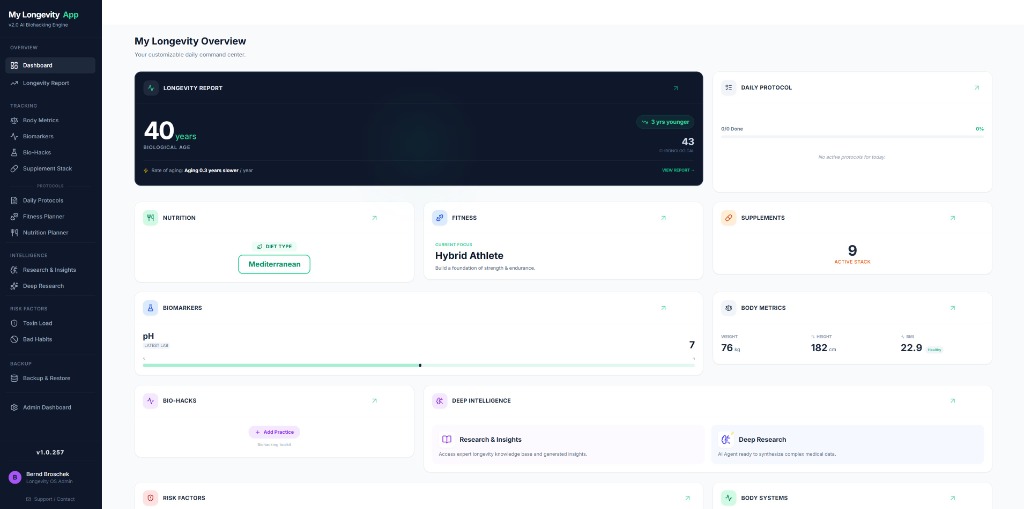
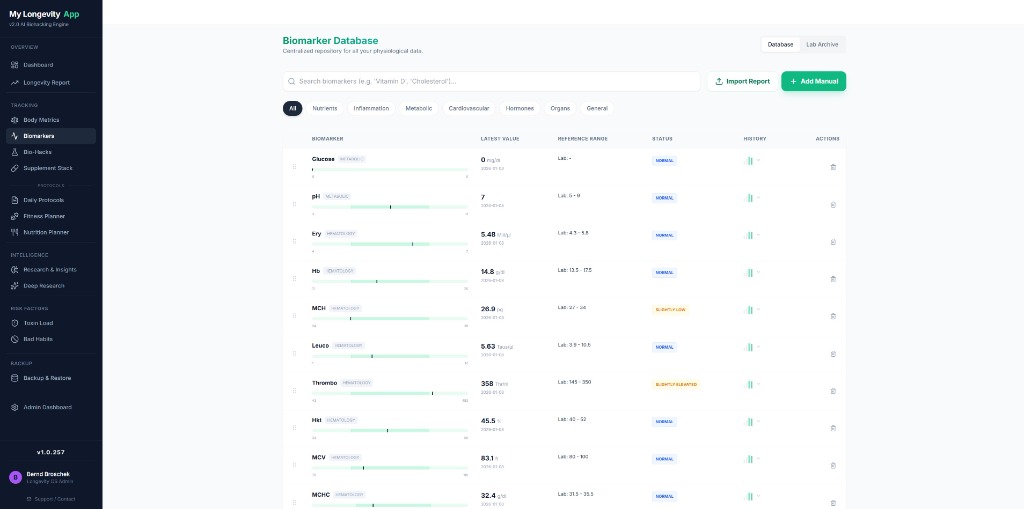
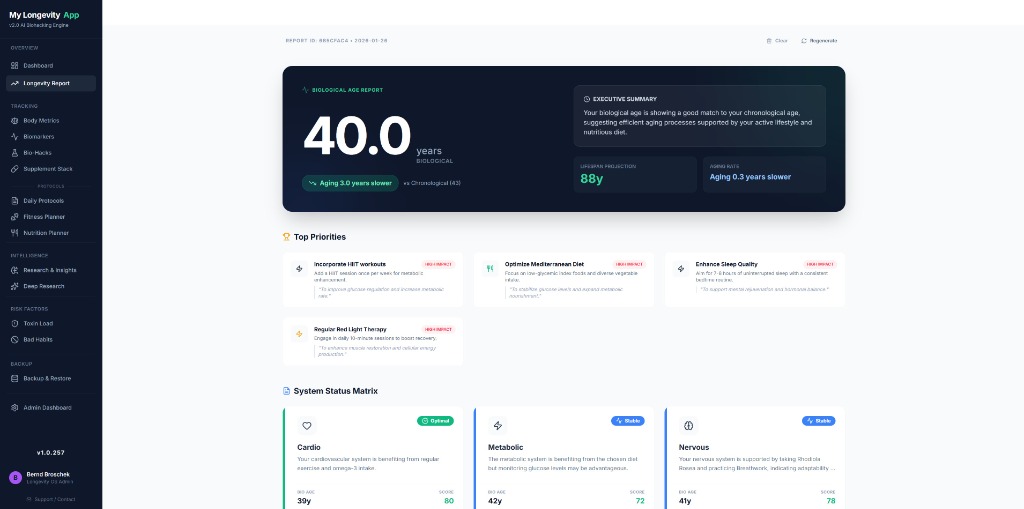
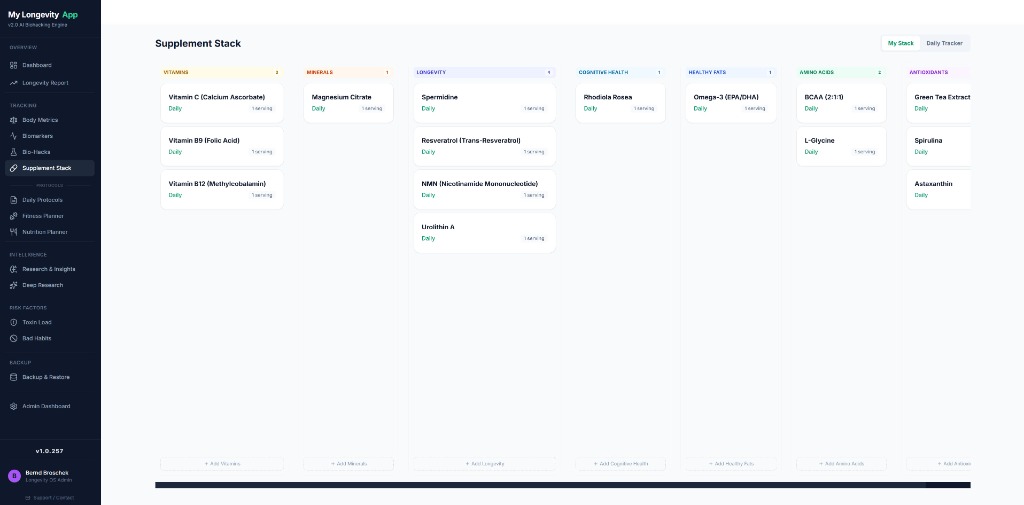
"Monitor your health journey and unlock your potential for a longer, vibrant life."
In a world overflowing with health information and wellness trends, many people feel overwhelmed and lost on their journey to a longer, healthier life. The struggle to measure progress can be disheartening; without a clear way to track improvements, it’s easy to feel like you’re just going in circles. A **longevity progress tracker** can provide that much-needed clarity and motivation, transforming the daunting path of biohacking into a manageable and empowering experience.
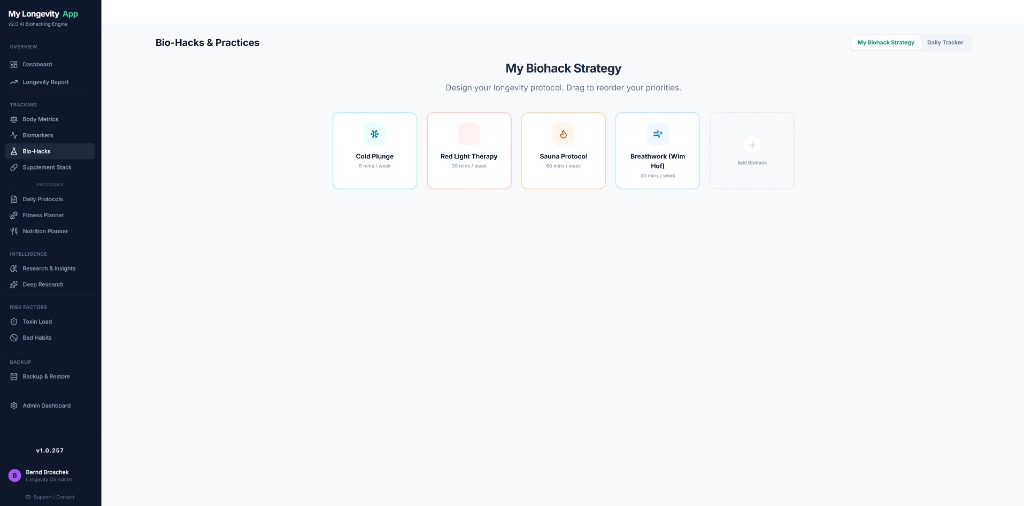
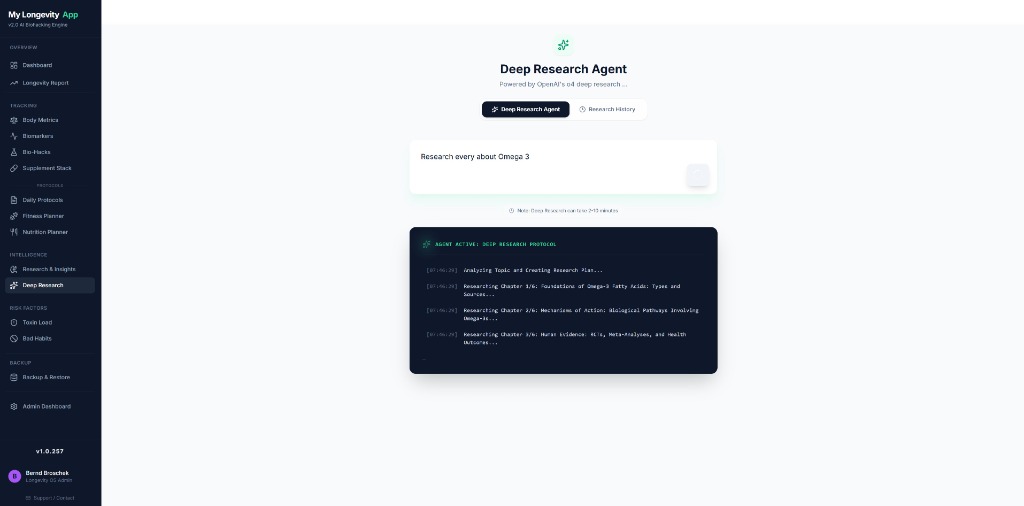
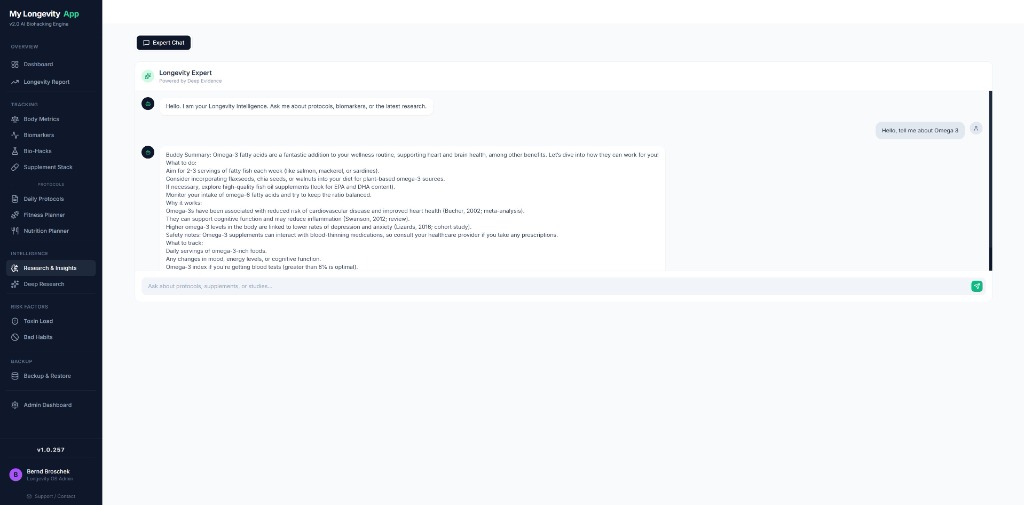
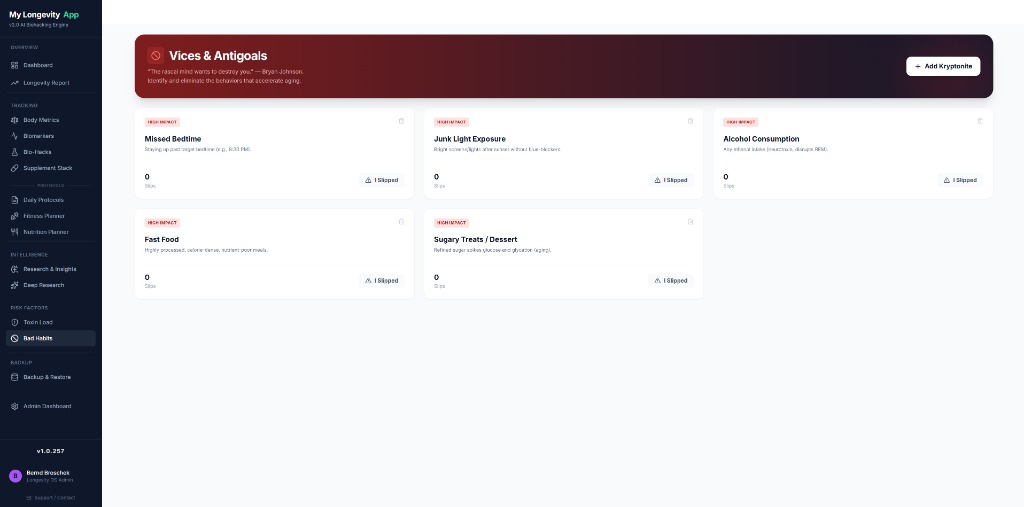
Advanced biohacking tools at your fingertips.
10 integrated modules working together.
Create your account in 30 seconds. No credit card required.
Upload blood work, track body metrics, or start with our AI questionnaire.
Receive your biological age score, personalized reports, and action plan.
Choose the plan that fits your biohacking journey.
Define specific longevity targets to effectively use your longevity progress tracker for measurable results.
Schedule consistent evaluations of your health metrics with the longevity progress tracker to stay motivated and accountable.
Utilize the longevity progress tracker to identify patterns in your data, helping you make informed adjustments to your health regimen.
Join thousands of biohackers optimizing their health.
"MyLongevityApp helped me lower my biological age by 5 years. The biomarker tracking is a game-changer."
"Finally one app that combines supplements, blood work, and daily protocols. I love the weekly planner."
"The AI research agent alone is worth the subscription. It saves me hours of reading every week."
When creating a longevity progress tracker for optimal health assessment, it is essential to include a range of key metrics and indicators that provide a holistic view of well-being. These metrics can help individuals identify areas for improvement and guide biohacking strategies.
One of the fundamental indicators to track is **biomarkers of aging**, such as telomere length, inflammatory markers, and hormone levels. These biomarkers can offer insights into biological age versus chronological age, helping users understand their physiological status. Regular monitoring of these metrics can reveal the effectiveness of lifestyle changes aimed at promoting longevity.
Another important category includes **lifestyle factors** such as diet, physical activity, and sleep quality. Tracking daily caloric intake, macronutrient ratios, and the variety of foods consumed can help individuals optimize their diets for longevity. Additionally, recording exercise frequency, intensity, and types of activities can provide valuable data on how physical fitness impacts overall health. Sleep patterns, including duration and quality, are critical as well, given their significant influence on recovery and longevity.
Psychological well-being should not be overlooked. Including metrics related to stress levels, mindfulness practices, and social connections can help provide a more comprehensive understanding of one's health. Positive psychological states have been linked to increased longevity, making them essential components of a longevity progress tracker.
Finally, integrating tools like MyLongevityApp can facilitate the collection and analysis of these various metrics, providing personalized insights and recommendations. Users can leverage such technology to visualize their progress and make data-driven adjustments to their health strategies.
Incorporating these diverse indicators into a longevity progress tracker allows for a nuanced approach to health assessment, empowering individuals to take actionable steps toward improved longevity.
Advancements in technology have significantly transformed the capabilities of a longevity progress tracker, allowing for more personalized and effective health monitoring. With the integration of artificial intelligence and machine learning, these trackers can analyze an individual’s health data in real time, providing tailored insights and recommendations based on lifestyle choices, genetic predispositions, and environmental factors. This personalized approach goes beyond generic advice, enabling users to make informed decisions that align with their unique health profiles.
Wearable technology also plays a crucial role in enhancing the functionality of a longevity progress tracker. Devices that monitor heart rate, sleep patterns, and physical activity can feed data directly into the tracker, ensuring that the information is not only current but also comprehensive. Advanced sensors can detect subtle changes in physiological metrics, alerting users to potential health issues before they become significant problems. This proactive monitoring fosters a deeper understanding of one's health and enables timely interventions.
Moreover, the integration of platforms like MyLongevityApp facilitates community engagement and support. Users can connect with others on similar health journeys, share insights, and access a wealth of resources. This social aspect enhances motivation and accountability, which are critical for long-term adherence to health plans.
For those seeking to optimize their health trajectory, leveraging a technology-enhanced longevity progress tracker can be pivotal. Consider adopting a comprehensive tracking system that incorporates wearables and AI-driven insights to create a more personalized health monitoring experience. By doing so, you can stay ahead in your longevity journey and make data-driven decisions that promote a healthier, longer life.
Regularly updating and reviewing data in a longevity progress tracker is crucial for several reasons. First, it allows individuals to monitor their health metrics over time, identifying trends that may indicate improvements or declines in their well-being. By consistently tracking factors such as physical activity, diet, sleep quality, and biomarkers, users can gain insights into how their lifestyle choices impact their longevity. This continuous feedback loop encourages individuals to make informed decisions that can optimize their health outcomes.
Moreover, a longevity progress tracker can help identify areas that require attention. For instance, if data reveals a consistent lack of sleep or a decline in physical activity, users can implement targeted changes to address these issues. Timely reviews ensure that adjustments can be made proactively rather than reactively, which is essential for long-term health sustainability. Furthermore, utilizing platforms like MyLongevityApp can enhance this process, as these tools often provide personalized recommendations based on the user’s historical data.
The impact of regularly updating a longevity progress tracker extends beyond individual metrics. It fosters a deeper understanding of one’s health journey, making it easier to set realistic goals and celebrate progress. Additionally, sharing this data with healthcare providers can facilitate more tailored health interventions, leading to better management of chronic conditions and overall improved health outcomes.
To maximize the benefits of a longevity progress tracker, set a routine for data input and review, ideally weekly or bi-weekly. This approach not only keeps your health goals at the forefront but also empowers you to take actionable steps toward enhancing your longevity.
When creating a longevity progress tracker, several lifestyle factors should be prioritized to effectively promote healthy aging and longevity. These factors encompass nutrition, physical activity, sleep quality, and stress management, each playing a crucial role in overall health.
Nutrition is fundamental; a balanced diet rich in whole foods, antioxidants, healthy fats, and lean proteins supports cellular health and reduces inflammation. Tracking macronutrient and micronutrient intake can help identify dietary patterns that contribute to longevity. Including plant-based foods can also enhance longevity, as they are generally lower in calories and higher in essential nutrients.
Regular physical activity is another vital component. Engaging in both aerobic and resistance training exercises has been shown to improve cardiovascular health, muscle mass, and bone density. A longevity progress tracker should include metrics for exercise frequency, duration, and intensity to ensure a well-rounded fitness routine.
Sleep quality often goes overlooked but is essential for recovery and cognitive function. It’s important to monitor sleep duration and patterns, as inadequate sleep can lead to a range of health issues. Tools that track sleep cycles and quality can be beneficial for optimizing rest.
Stress management is equally significant in promoting longevity. Chronic stress can accelerate biological aging, so incorporating mindfulness practices such as meditation or yoga can be advantageous. Tracking stress levels through self-assessments or physiological measures can provide insight into one's emotional well-being.
For individuals using platforms like MyLongevityApp, integrating these lifestyle factors into a longevity progress tracker can offer a comprehensive view of health and aging. This actionable approach allows users to make data-driven decisions that support their longevity journey, ultimately enhancing their quality of life.
Individuals should consider using a longevity progress tracker as soon as they embark on their health and wellness journey. Early adoption allows for the establishment of baseline metrics, which are crucial for measuring improvements over time. By tracking various health indicators—such as sleep patterns, exercise routines, nutrition intake, and even stress levels—users can gain valuable insights into their current state of health and identify areas for enhancement.
The benefits of a longevity progress tracker are amplified when integrated into a holistic approach to wellness. For instance, if someone aims to improve their metabolic health, they can monitor their dietary choices alongside physical activity levels. This real-time feedback enables adjustments in habits that can lead to significant improvements in overall well-being. Utilizing tools like MyLongevityApp can enhance this process, providing tailored recommendations based on individual data.
It’s also beneficial to start tracking before any significant lifestyle changes are made. This allows for a clearer understanding of how new habits impact health over time. Users can set specific, measurable goals and watch their progress unfold, which fosters motivation and accountability.
For those just beginning their wellness journey, the key takeaway is to start tracking early and consistently. The data gathered will not only inform future health decisions but also empower individuals to take control of their longevity journey effectively. Embrace the process, and let a longevity progress tracker guide the way to a healthier, more vibrant life.
Join 10,000+ biohackers optimizing their health with AI.
Start Your 7-Day Free TrialNo credit card required. Cancel anytime.