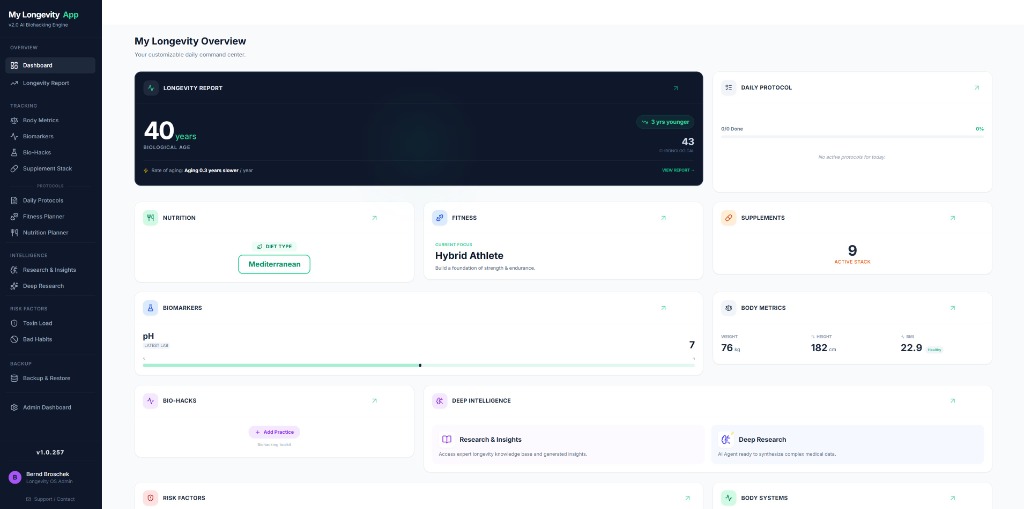
"Track your health metrics seamlessly to unlock your path to a longer, healthier life."
In a world where the quest for a longer, healthier life can feel overwhelming, many individuals struggle to sift through the noise of conflicting information about longevity. The journey often leaves them feeling lost and anxious, as they yearn for clear guidance and actionable insights. A longevity dashboard could hold the key to unlocking a personalized path forward, providing the clarity and support needed to navigate their unique journey toward optimal health and well-being.
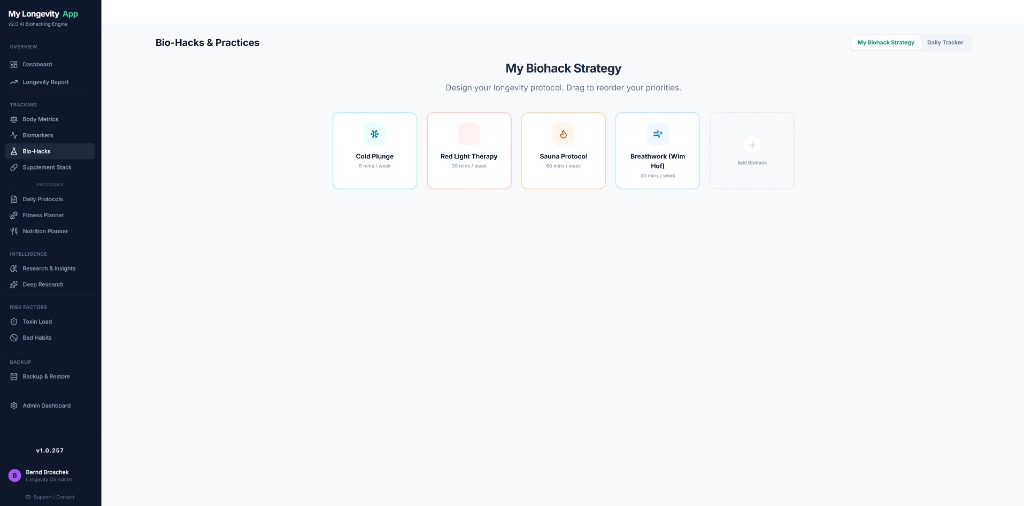
Advanced biohacking tools at your fingertips.
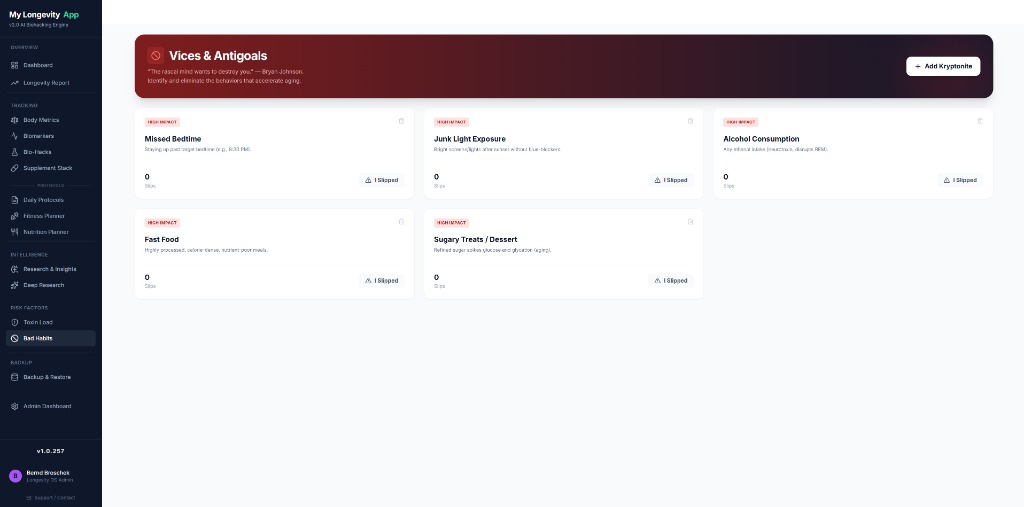
10 integrated modules working together.
Create your account in 30 seconds. No credit card required.
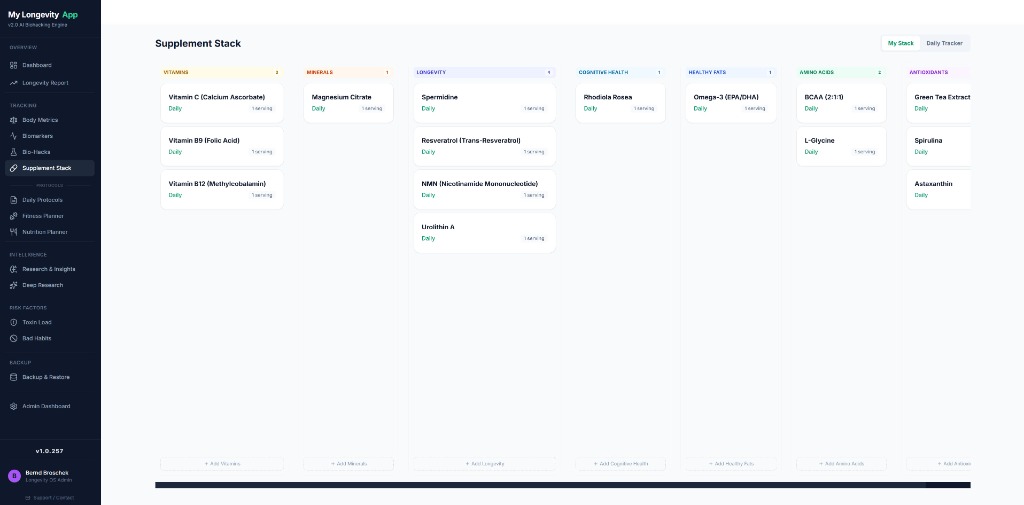
Upload blood work, track body metrics, or start with our AI questionnaire.
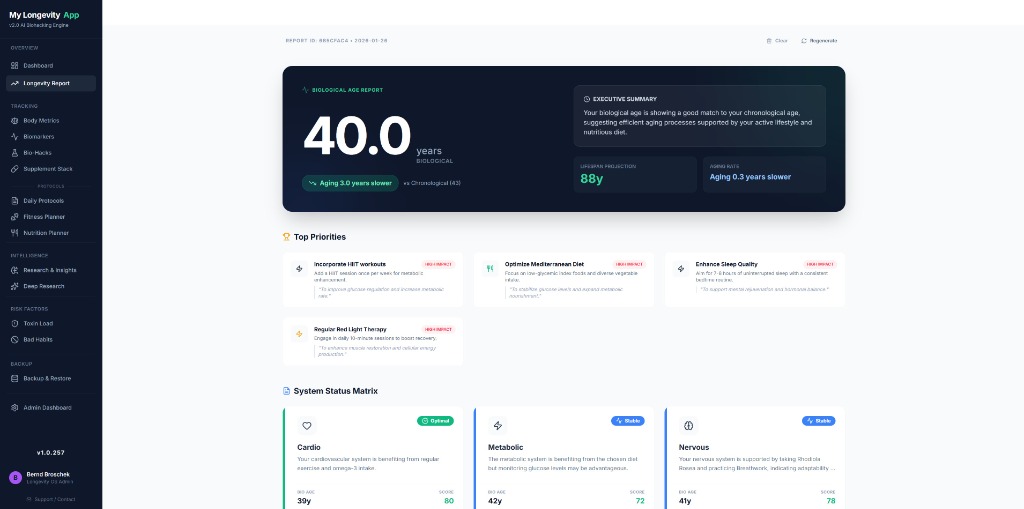
Receive your biological age score, personalized reports, and action plan.
Choose the plan that fits your biohacking journey.
Utilize the longevity dashboard to receive tailored health metrics that guide your wellness journey effectively.
Regularly monitor your vital statistics on the longevity dashboard to assess improvements and adjust your biohacking strategies.
Set achievable health goals within the longevity dashboard to stay motivated and accountable on your path to optimal longevity.
Join thousands of biohackers optimizing their health.
"MyLongevityApp helped me lower my biological age by 5 years. The biomarker tracking is a game-changer."
"Finally one app that combines supplements, blood work, and daily protocols. I love the weekly planner."
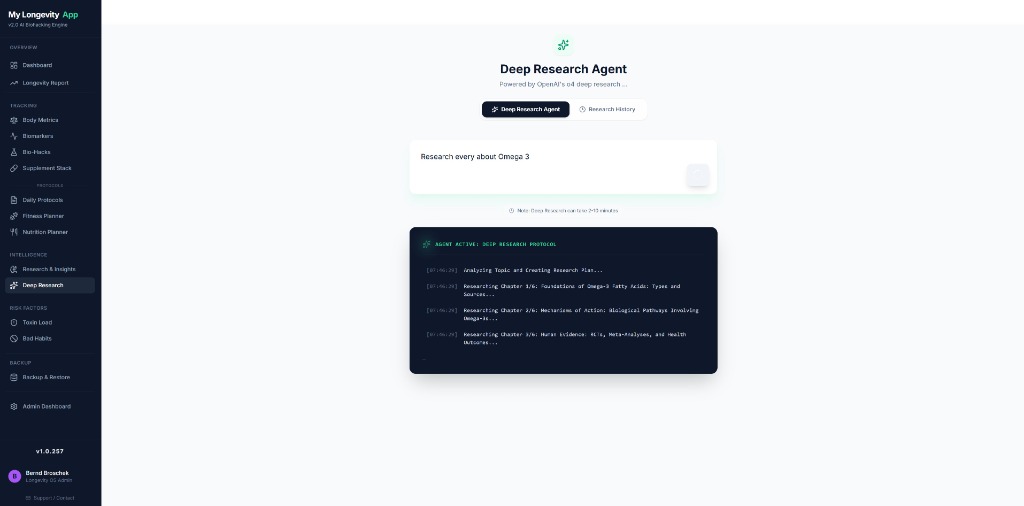
"The AI research agent alone is worth the subscription. It saves me hours of reading every week."
A comprehensive longevity dashboard should encompass a variety of key metrics that provide insights into personal health and aging markers. These metrics allow individuals to monitor their progress and make informed decisions about their wellness strategies.
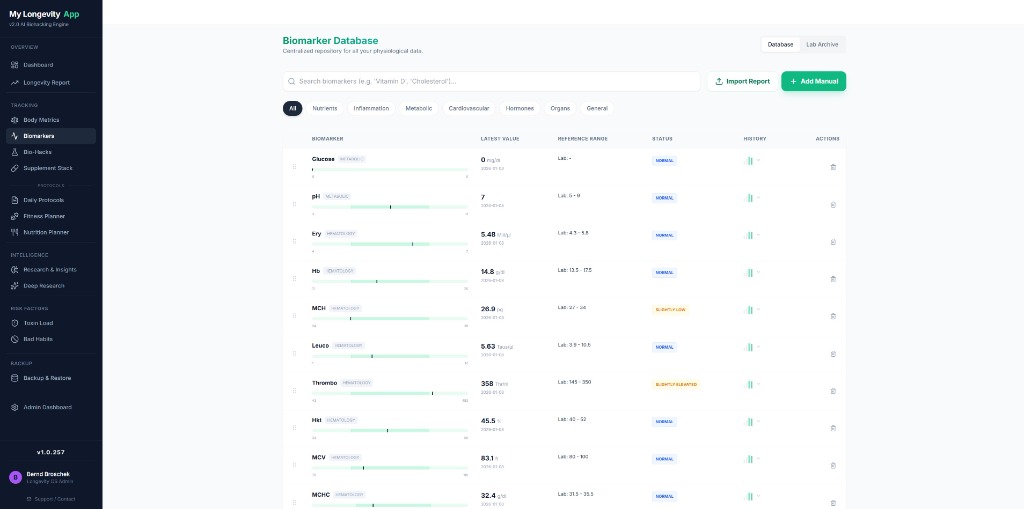
Firstly, biomarkers of aging are crucial. These include metrics such as telomere length, DNA methylation patterns, and inflammatory markers like C-reactive protein (CRP). Tracking these indicators can help gauge biological age versus chronological age, providing a clearer picture of one's health trajectory.
Secondly, lifestyle factors play a significant role in longevity. A longevity dashboard should track physical activity levels, sleep quality, and dietary habits. Tools that monitor steps taken, hours slept, and nutritional intake can provide valuable data. For instance, MyLongevityApp can help users log their daily habits, allowing for a more comprehensive understanding of how lifestyle choices impact health over time.
Another important metric is metabolic health, which can be assessed through blood glucose levels, cholesterol profiles, and body composition measurements like body mass index (BMI) and fat percentage. Regular monitoring of these factors can help detect potential health issues early and guide necessary adjustments.
Mental health and cognitive function are also vital components of longevity. Metrics such as stress levels, mood tracking, and cognitive assessments can help individuals maintain mental acuity as they age.
By integrating these metrics into a longevity dashboard, users can create a holistic view of their health, identify areas for improvement, and personalize their longevity strategies. Taking proactive steps in tracking these indicators empowers individuals to optimize their well-being and age gracefully.
A longevity dashboard serves as a centralized platform for integrating data from various health-tracking devices, enabling users to gain a comprehensive view of their wellness. By aggregating information from wearables, fitness trackers, and health apps, the dashboard can compile metrics such as heart rate variability, sleep patterns, physical activity levels, and nutritional intake. This holistic approach allows individuals to see how different aspects of their health interplay, providing insights that might otherwise remain hidden when data is viewed in isolation.
The integration process typically involves connecting devices via APIs or data synchronization protocols. For instance, a user might link their smartwatch, which monitors heart rate and activity, with a nutrition app that tracks caloric intake. This synergy enables the longevity dashboard to present users with real-time feedback on how their exercise routines impact their overall health and energy levels. Advanced analytics can further enhance this experience by identifying trends and correlations, empowering users to make informed decisions about their wellness routines.
MyLongevityApp exemplifies how a longevity dashboard can be tailored to individual needs, allowing users to customize which data points they wish to prioritize. By focusing on personalized metrics, the app can help users set specific goals, such as improving sleep quality or increasing physical activity, thereby fostering a proactive approach to health management.
To maximize the benefits of a longevity dashboard, users should regularly interact with the data, adjusting their health strategies based on insights gained. This continuous feedback loop encourages sustainable lifestyle changes that can enhance overall well-being and longevity.
Personalizing a longevity dashboard is essential for maximizing its effectiveness in monitoring and enhancing individual health and well-being. A one-size-fits-all approach often overlooks unique health conditions, lifestyle choices, and personal goals. By tailoring the dashboard, users can focus on metrics that truly matter to them, ensuring that their efforts align with their specific longevity objectives.
Several factors should be considered during the customization process. First, an individual's health history is crucial. This includes pre-existing conditions, medications, and family health trends that could influence longevity. Understanding these factors allows the dashboard to provide relevant insights and recommendations tailored to the user's health profile.
Next, lifestyle habits play a significant role in longevity. Factors such as diet, exercise routines, sleep patterns, and stress management should be integrated into the dashboard. For example, someone who practices intermittent fasting may want their dashboard to highlight metrics related to nutrition and metabolic health. Additionally, personal goals—whether it's weight loss, improved cardiovascular health, or enhanced mental clarity—should shape the dashboard's focus, allowing users to track progress toward their specific aspirations.
Furthermore, the incorporation of advanced technologies, like wearables and health apps (such as MyLongevityApp), can enrich the personalization process. These tools can provide real-time data and insights that feed into the longevity dashboard, offering a holistic view of an individual's health journey.
An actionable takeaway is to begin by assessing your personal health history, lifestyle habits, and specific longevity goals. Use this information to customize your longevity dashboard effectively, ensuring it serves as a meaningful tool in your journey toward a longer, healthier life.
The development of effective longevity dashboards is gaining momentum, driven by advancements in technology and a growing awareness of health optimization. These dashboards serve as comprehensive tools that aggregate data on various biomarkers, lifestyle choices, and genetic factors, allowing both consumers and researchers to track and analyze health metrics over time.
Wearable technology plays a significant role in the evolution of longevity dashboards. Devices like fitness trackers and smartwatches collect real-time data on physical activity, heart rate, sleep patterns, and even stress levels. This data can be seamlessly integrated into longevity dashboards, providing users with a holistic view of their health. Companies such as Oura and WHOOP have taken the lead in this space, offering analytics that empower users to make informed decisions about their well-being.
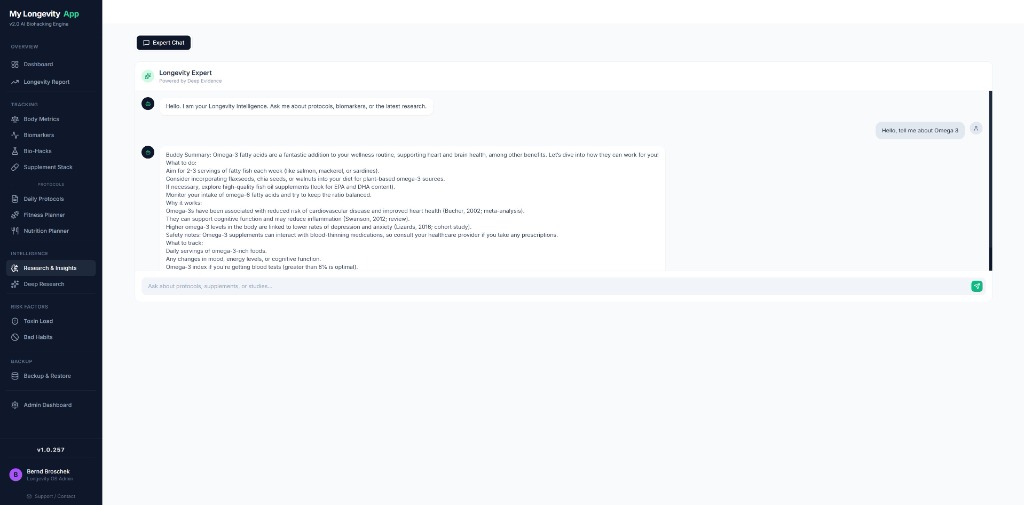
In addition to wearables, advances in artificial intelligence (AI) and machine learning are enhancing the capabilities of longevity dashboards. These technologies can analyze large datasets to identify patterns and correlations that may not be immediately apparent. For instance, platforms like MyLongevityApp leverage AI to personalize health recommendations based on an individual's unique profile. This capability allows users to take proactive steps toward optimizing their longevity based on data-driven insights.
Furthermore, the integration of genetic testing into longevity dashboards is becoming increasingly prevalent. Services that analyze genetic predispositions can provide users with tailored advice on diet, exercise, and preventive health measures, further enriching the dashboard experience.
For those looking to enhance their longevity journey, exploring available longevity dashboards and integrating wearable technology into daily routines can provide actionable insights and foster a more proactive approach to health management.
Individuals should consider utilizing a longevity dashboard when they become serious about monitoring their health metrics and implementing biohacking strategies for healthier aging. The optimal time to start is typically in their late 30s to early 40s, when the body begins to experience more noticeable changes in metabolism, hormone levels, and overall vitality. By this age, individuals are often more aware of their lifestyle choices and are likely to seek proactive measures to enhance their well-being.
A longevity dashboard serves as a comprehensive tool that aggregates various health data, including biomarkers, lifestyle habits, and genetic information. This holistic view enables individuals to identify patterns and correlations between their activities and health outcomes. By starting to track these metrics early, individuals can create a baseline that allows for more effective adjustments to their lifestyle, diet, and exercise routines.
MyLongevityApp, for instance, offers features that help users visualize their progress and set personalized goals, making it easier to implement biohacking strategies tailored to their unique needs. Regularly engaging with a longevity dashboard can provide valuable insights, helping users stay motivated and accountable as they navigate their health journeys.
Taking actionable steps now by integrating a longevity dashboard into your routine can lead to significant long-term benefits. Start by assessing your current health metrics and establishing a baseline, then set specific biohacking goals that align with your aspirations for healthier aging.
Join 10,000+ biohackers optimizing their health with AI.
Start Your 7-Day Free TrialNo credit card required. Cancel anytime.