Unlock deeper rest and rejuvenate your body for enhanced vitality and daily performance.
For many, the struggle to improve sleep is a nightly battle that leaves them feeling drained and frustrated. As they toss and turn, worry creeps in, amplifying feelings of anxiety and helplessness. The exhaustion not only affects their mood but also hampers their ability to focus and enjoy life fully, creating a relentless cycle that seems impossible to break. Understanding this pain is essential; it’s not just about sleep—it's about reclaiming the vitality and joy that restful nights can bring.
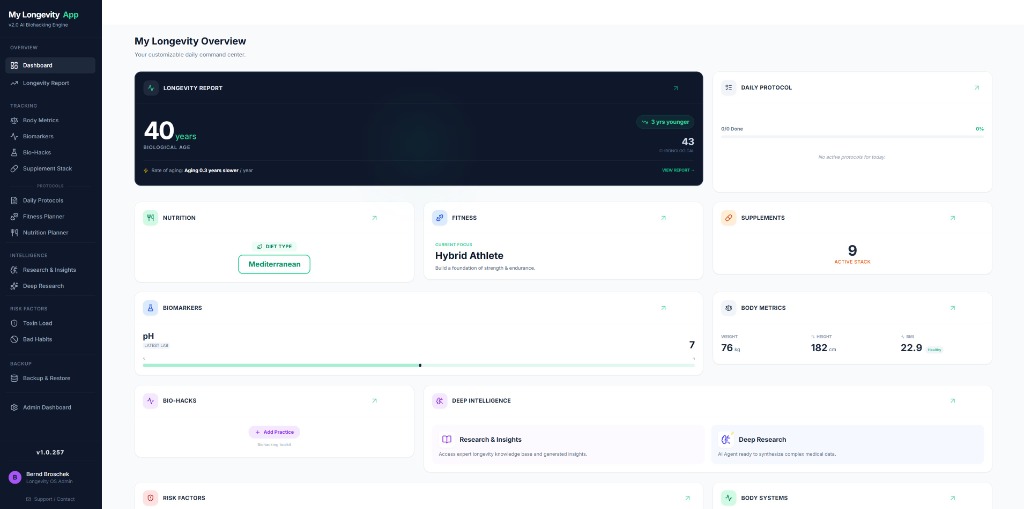
Advanced biohacking tools at your fingertips.
10 integrated modules working together.
Create your account in 30 seconds. No credit card required.
Upload blood work, track body metrics, or start with our AI questionnaire.
Receive your biological age score, personalized reports, and action plan.
Choose the plan that fits your biohacking journey.
Going to bed and waking up at the same time daily helps regulate your body clock to improve sleep.
Reducing screen exposure an hour before bed can help your brain unwind and improve sleep quality.
Creating a dark, cool, and quiet space can significantly enhance comfort and improve sleep.
Join thousands of biohackers optimizing their health.
"MyLongevityApp helped me lower my biological age by 5 years. The biomarker tracking is a game-changer."
"Finally one app that combines supplements, blood work, and daily protocols. I love the weekly planner."
"The AI research agent alone is worth the subscription. It saves me hours of reading every week."
As individuals age, sleep quality often declines due to various factors such as hormonal changes, health conditions, and lifestyle habits. Implementing effective lifestyle changes can significantly improve sleep for those over 50.
One of the most impactful adjustments is establishing a consistent sleep schedule. Going to bed and waking up at the same time each day helps regulate the body's internal clock, making it easier to fall asleep and wake up refreshed. Additionally, creating a calming pre-sleep routine can signal to the body that it’s time to wind down. This may include activities like reading, gentle stretching, or practicing mindfulness meditation.
Diet also plays a crucial role in sleep quality. Limiting caffeine and alcohol intake, especially in the hours leading up to bedtime, can help prevent disruptions in sleep. Instead, consider incorporating foods rich in magnesium and tryptophan, such as nuts and turkey, into your diet. These nutrients can promote relaxation and support better sleep.
Physical activity is another important factor. Regular exercise, even light activities like walking or tai chi, can enhance sleep quality. Aim for at least 30 minutes of moderate exercise most days of the week, but be mindful to avoid vigorous workouts close to bedtime.
Lastly, consider utilizing technology wisely. Apps like MyLongevityApp can help track sleep patterns and offer personalized recommendations to enhance rest. Monitoring sleep habits can lead to greater awareness and more effective adjustments.
Integrating these lifestyle changes can lead to significant improvements in sleep quality. Focus on consistency and make gradual adjustments to create a sleep-friendly environment that supports restful nights.
Sleep hygiene refers to the habits and practices that promote consistent, quality sleep. By implementing effective sleep hygiene, individuals can significantly improve sleep quality and duration, which are vital for overall health and longevity. Poor sleep hygiene can lead to disrupted sleep patterns, impacting cognitive function, mood, and physical health.
Specific practices to enhance sleep hygiene include establishing a regular sleep schedule. Going to bed and waking up at the same time each day helps regulate the body's internal clock, making it easier to fall asleep and wake up refreshed. Additionally, creating a calming bedtime routine—such as reading, meditating, or taking a warm bath—signals to the body that it’s time to wind down.
The sleep environment is another crucial factor. A dark, quiet, and cool room can facilitate better sleep. Consider using blackout curtains, earplugs, or white noise machines to eliminate disturbances. Limiting exposure to screens at least an hour before bedtime is also essential, as the blue light emitted by devices can interfere with melatonin production.
Another practice is to monitor food and drink intake. Consuming heavy meals, caffeine, or alcohol close to bedtime can disrupt sleep. Instead, opt for light snacks if needed, and herbal teas that promote relaxation.
For those looking to track and enhance their sleep habits, MyLongevityApp offers tools to monitor sleep patterns and gain insights into improving sleep hygiene. By integrating these practices into your daily routine, you can take significant steps towards achieving more restorative sleep and enhancing your overall well-being. Start by choosing one or two of these practices to implement tonight and observe the positive changes in your sleep quality.
Dietary choices play a significant role in influencing sleep patterns due to the complex relationship between food, metabolism, and hormone regulation. Certain nutrients can enhance the body's ability to produce sleep-inducing hormones, while others may disrupt this delicate balance. For instance, foods rich in tryptophan, such as turkey, nuts, and seeds, can help increase serotonin levels, which is a precursor to melatonin—the hormone responsible for regulating sleep cycles. Additionally, complex carbohydrates found in whole grains can facilitate the transport of tryptophan into the brain, further promoting restful sleep.
Conversely, some dietary choices can negatively impact sleep. Caffeine, commonly found in coffee, tea, and chocolate, can stimulate the nervous system, making it harder to fall asleep. High-sugar foods can cause energy spikes followed by crashes, disrupting the body’s natural rhythms. Alcohol might initially make one feel sleepy, but it can lead to fragmented sleep and reduced REM cycles, ultimately diminishing sleep quality.
To improve sleep, consider incorporating foods known for their sleep-enhancing properties into your diet. Cherries and bananas are excellent sources of melatonin, while fatty fish like salmon provide omega-3 fatty acids and vitamin D, both of which have been linked to better sleep quality. Leafy greens and herbal teas, such as chamomile, can also support relaxation and promote better rest.
For those looking to optimize their health and sleep, tracking dietary choices, sleep patterns, and overall well-being can be beneficial. Tools like MyLongevityApp can help monitor these metrics, providing insights that lead to improved lifestyle decisions. Focus on creating a balanced diet rich in sleep-promoting foods to foster better rest and enhance overall longevity.
Biohacking techniques, such as light exposure and temperature regulation, play a crucial role in enhancing sleep efficiency. Understanding how these factors affect our circadian rhythms can lead to significant improvements in sleep quality.
Light exposure is one of the most effective methods for optimizing sleep. Natural light in the morning helps regulate melatonin production, which is essential for signaling sleepiness in the evening. Incorporating practices like morning sunlight exposure or using light therapy devices can help align your body’s internal clock. Conversely, minimizing blue light exposure from screens in the hours leading up to bedtime can further promote melatonin production, facilitating a smoother transition into sleep.
Temperature regulation is another vital component. The body’s core temperature naturally decreases during sleep, and maintaining a cooler sleep environment can enhance this process. Aim for a bedroom temperature between 60-67°F (15-19°C), as studies suggest this range promotes deeper sleep stages. Additionally, techniques such as taking a warm bath before bed can help by initially raising your body temperature, which then drops rapidly, signaling to your body that it’s time to sleep.
For those interested in tracking and improving their sleep, MyLongevityApp offers insights and personalized recommendations based on your habits and preferences. By integrating biohacking techniques like light exposure and temperature regulation into your nightly routine, you can significantly improve sleep and overall well-being.
Implement these strategies consistently and monitor your sleep patterns to identify what works best for you. Small adjustments can lead to substantial improvements in how you feel and function during the day.
Engaging in physical activity can significantly improve sleep quality, but the timing of your workouts plays a crucial role in determining how restful your nights will be. Research suggests that exercising earlier in the day, particularly in the morning or afternoon, tends to yield the best results for sleep. Morning workouts can enhance your circadian rhythm, promoting alertness during the day and facilitating a natural wind-down at night.
On the other hand, evening exercise can be a double-edged sword. While some individuals find that a light workout before bedtime helps them relax, high-intensity sessions close to bedtime can raise heart rate and body temperature, potentially interfering with the body's ability to transition into restful sleep. The general recommendation is to finish vigorous workouts at least two to three hours before you plan to sleep. This allows your body sufficient time to cool down and prepare for rest.
Incorporating exercise into your daily routine can also have cumulative benefits for sleep quality. Regular physical activity not only helps regulate sleep cycles but also reduces stress and anxiety, both of which are known to disrupt sleep. For those using tools like MyLongevityApp, tracking your activity levels and sleep patterns can provide valuable insights into how different types of exercise and their timing influence your overall restfulness.
To maximize your sleep quality, aim for morning or afternoon workouts, and consider keeping your evenings reserved for relaxation. Establishing a consistent exercise schedule will not only improve sleep but also enhance your overall well-being.
Join 10,000+ biohackers optimizing their health with AI.
Start Your 7-Day Free TrialNo credit card required. Cancel anytime.