Unlock your peak performance with targeted training strategies to boost your VO2 max effectively.
Many individuals striving for better health often find themselves frustrated and overwhelmed when searching for ways to enhance their fitness levels. The quest to uncover how to improve vo2max which training is most effective can feel like navigating a maze of conflicting information and unrealistic expectations. This struggle is not just about numbers; it's about wanting to feel more energetic, improve endurance, and truly embrace a vibrant life, making it all the more essential to find the right path forward.
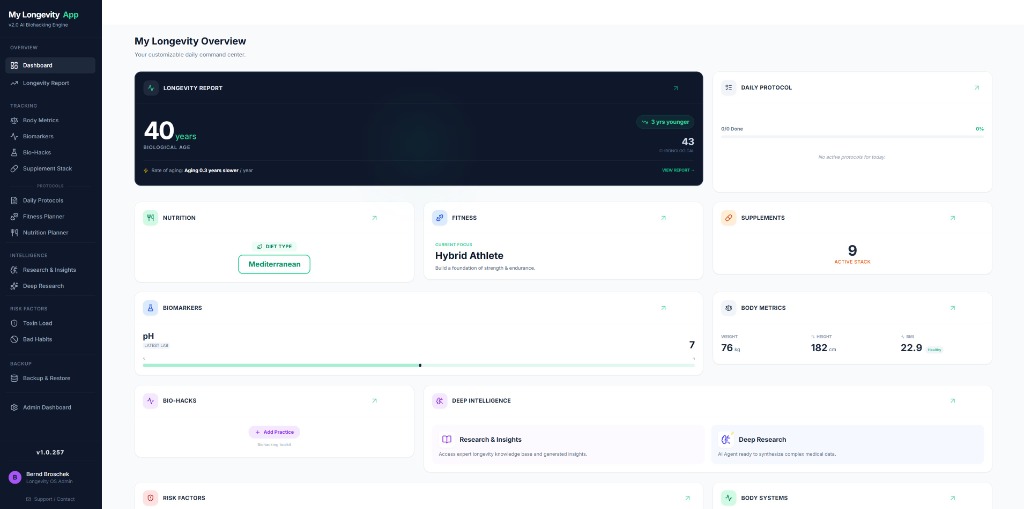
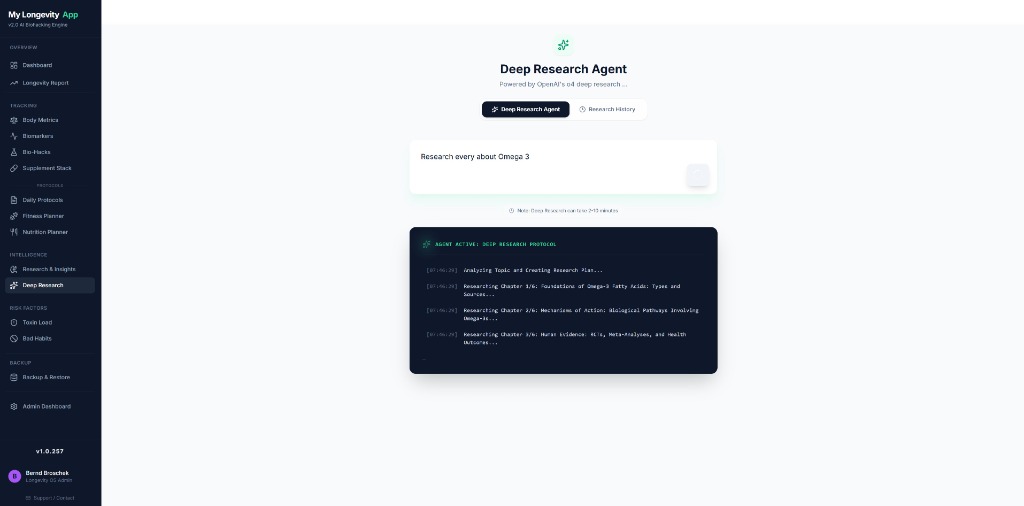
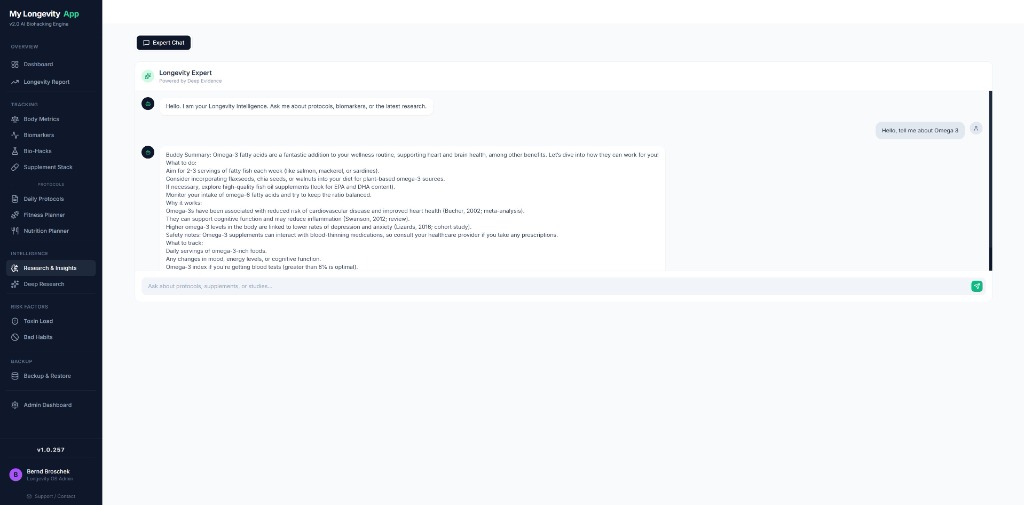
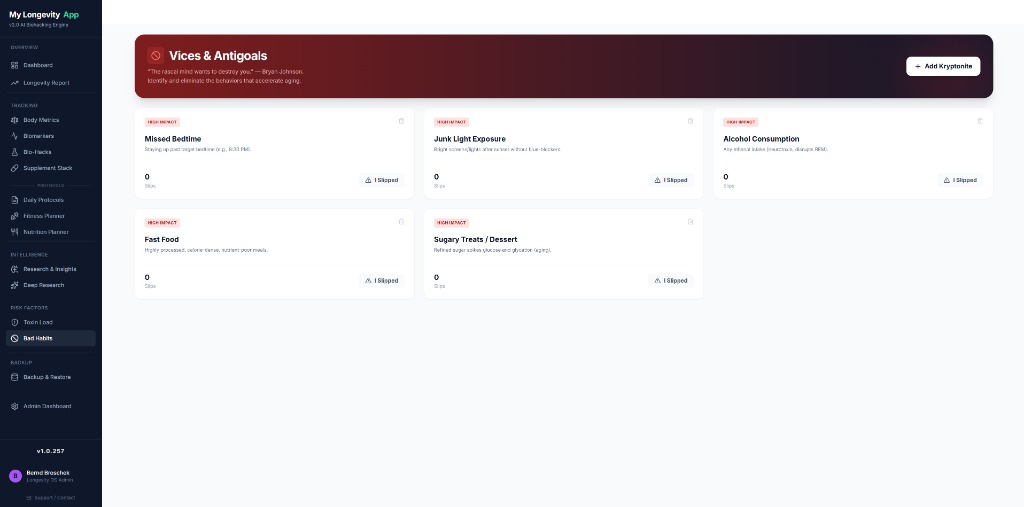
Advanced biohacking tools at your fingertips.
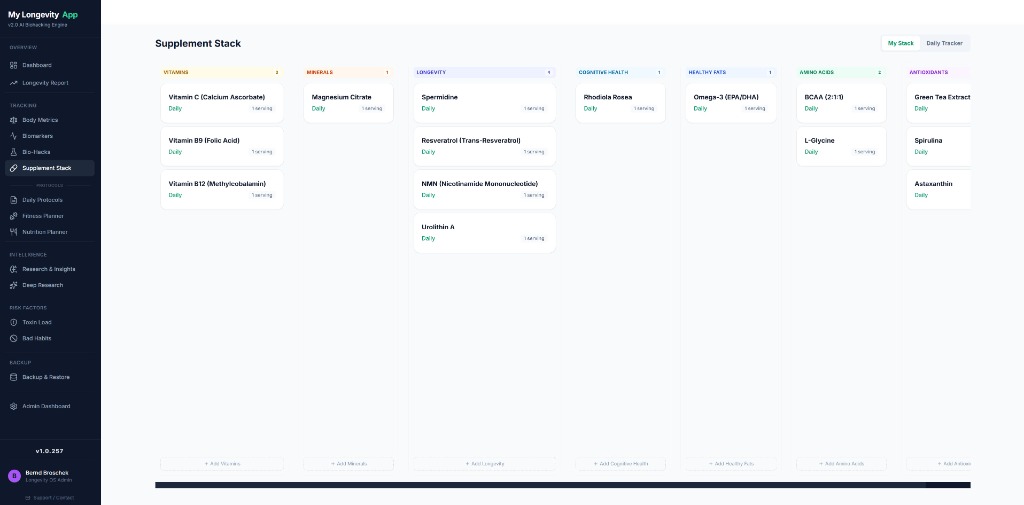
10 integrated modules working together.
Create your account in 30 seconds. No credit card required.
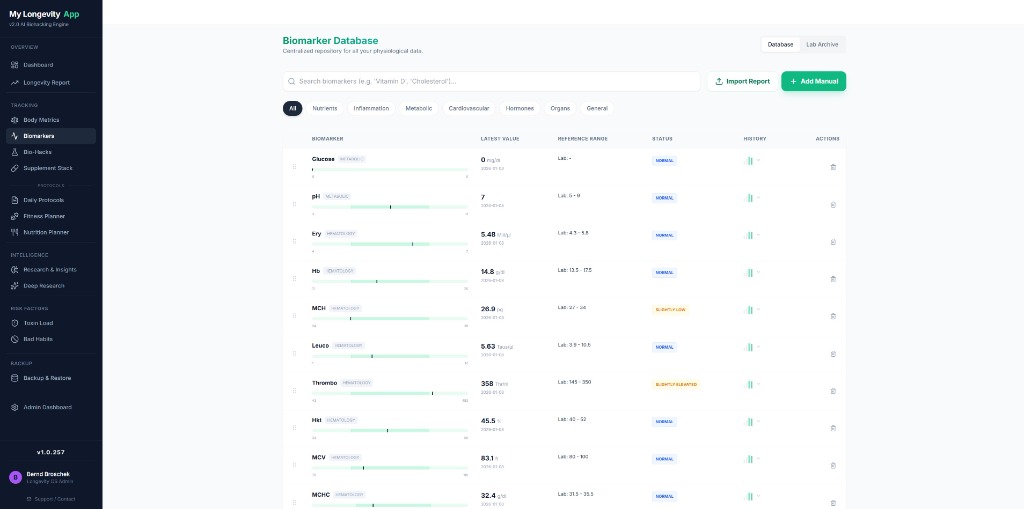
Upload blood work, track body metrics, or start with our AI questionnaire.
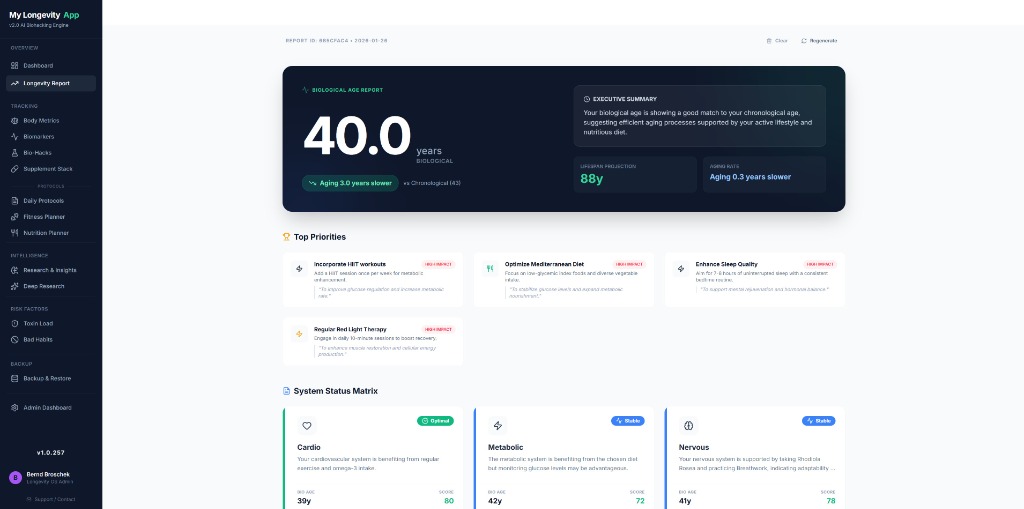
Receive your biological age score, personalized reports, and action plan.
Choose the plan that fits your biohacking journey.
Incorporate high-intensity interval training (HIIT) sessions to effectively boost your cardiovascular capacity and learn how to improve vo2max which training is most effective.
Engage in steady-state endurance workouts like running or cycling for longer durations to enhance your aerobic base.
Add resistance training to your routine; building muscle supports overall metabolic health and increases your VO2max potential.
Join thousands of biohackers optimizing their health.
"MyLongevityApp helped me lower my biological age by 5 years. The biomarker tracking is a game-changer."
"Finally one app that combines supplements, blood work, and daily protocols. I love the weekly planner."
"The AI research agent alone is worth the subscription. It saves me hours of reading every week."
Improving VO2 max, which measures the maximum amount of oxygen your body can utilize during intense exercise, is crucial for enhancing athletic performance and overall cardiovascular health. Specific types of training programs have been shown to effectively improve VO2 max, each with unique methodologies and results.
High-Intensity Interval Training (HIIT) is one of the most effective approaches. This training involves short bursts of intense exercise followed by periods of rest or lower intensity. Research indicates that HIIT can lead to significant improvements in VO2 max in a relatively short time frame, often within a few weeks. The intensity and variability of HIIT stimulate cardiovascular adaptations that enhance the heart's capacity to pump blood and utilize oxygen.
Endurance training, characterized by longer durations of moderate-intensity exercise, is another proven method. Activities such as long-distance running, cycling, or swimming can steadily build aerobic capacity. While endurance training typically requires more time to yield noticeable improvements compared to HIIT, it remains effective for increasing VO2 max, particularly for those new to exercise.
Comparatively, studies show that HIIT often results in greater improvements in VO2 max over shorter periods, while traditional endurance training provides a more gradual increase. The choice between these methods may depend on individual fitness levels, preferences, and time availability.
For those looking to track their progress and optimize their training, tools like MyLongevityApp can offer personalized insights into your performance metrics, enabling you to tailor your workouts effectively.
To enhance your VO2 max, consider incorporating both HIIT and endurance training into your routine, allowing for a balanced approach that maximizes results.
High-intensity interval training (HIIT) has gained significant attention for its effectiveness in enhancing athletic performance and overall fitness, particularly in improving VO2 max—the maximum amount of oxygen an individual can utilize during intense exercise. The frequency and duration of HIIT sessions play a crucial role in determining the extent of these improvements, influencing physiological adaptations in both athletes and recreational exercisers.
Studies indicate that engaging in HIIT two to three times per week can lead to notable improvements in VO2 max. For athletes, this frequency allows for sufficient recovery while still providing the stimulus needed for cardiovascular adaptation. For recreational exercisers, even a lower frequency can yield beneficial results, especially when combined with longer durations of high-intensity intervals. Typically, sessions lasting 20 to 30 minutes, incorporating short bursts of maximum effort followed by rest or low-intensity periods, can maximize cardiovascular benefits.
Duration is equally significant; longer intervals, ranging from 30 seconds to 4 minutes, have been shown to elicit greater improvements in VO2 max compared to shorter intervals. This is primarily because longer efforts push the cardiovascular system to its limits, prompting adaptations that enhance oxygen uptake and utilization. For those looking to understand how to improve VO2 max, which training is most effective often hinges on finding the right balance between frequency and duration.
Incorporating tools like MyLongevityApp can aid individuals in tracking their HIIT sessions, optimizing their training frequency and duration based on personal performance data. A practical takeaway for anyone seeking to enhance their VO2 max is to start with two to three HIIT sessions per week, gradually increasing the duration of the high-intensity intervals as fitness improves. This approach will not only boost VO2 max but also contribute to overall cardiovascular health and longevity.
Aerobic base training is crucial for maximizing VO2 max, which is the maximum amount of oxygen your body can utilize during intense exercise. This metric is a key indicator of cardiovascular fitness and overall health. By enhancing your aerobic base, you improve your body’s efficiency in utilizing oxygen, which directly contributes to a higher VO2 max. This foundational training enhances mitochondrial density, capillary networks, and oxidative enzymes, all of which are essential for sustaining prolonged physical activity and improving endurance.
One effective method for aerobic base training is the use of long, steady-state sessions at a moderate intensity. This approach allows the body to adapt to increased aerobic demands without excessive fatigue. Incorporating interval training can also be beneficial, where shorter bursts of high-intensity exercise are followed by recovery periods. This method not only boosts aerobic capacity but also improves anaerobic performance, contributing to an overall increase in VO2 max.
Additionally, utilizing tools like MyLongevityApp can help track your progress and tailor your training regimen. By analyzing your performance metrics and recovery data, you can make informed adjustments to optimize your training.
To ensure an optimal training regimen, focus on consistency and gradually increase the duration and intensity of your workouts. Aim for at least three to four aerobic sessions per week, incorporating different methods such as tempo runs, long runs, and interval training. This varied approach not only keeps your training engaging but also maximizes your potential for how to improve VO2 max which training is most effective.
Several factors influence an individual's potential for improving VO2 max through training, including age, genetics, and fitness level. Understanding these elements can help tailor a training program to maximize cardiovascular fitness.
Age is a critical factor; VO2 max typically declines with age due to physiological changes like reduced muscle mass and decreased lung function. Younger individuals generally have a higher capacity for improvement, while older adults may need to focus on maintaining their current levels rather than seeking drastic increases. However, age should not deter older individuals from engaging in aerobic training, as significant improvements can still be achieved.
Genetics also plays a substantial role in determining VO2 max. Some individuals are genetically predisposed to have higher baseline levels of VO2 max or respond more favorably to training. Genetic factors can influence muscle fiber composition, cardiovascular efficiency, and how well the body utilizes oxygen during exercise. While one cannot change their genetics, understanding one's potential can guide realistic expectations and training approaches.
Fitness level is another significant determinant. Those who are already fit may find it more challenging to see improvements since they are closer to their physiological limits. Conversely, beginners often experience substantial gains as their bodies adapt to new stresses. Incorporating a varied training regimen that includes high-intensity interval training (HIIT) and steady-state cardio can be particularly effective in boosting VO2 max.
For those seeking to learn how to improve VO2 max which training is most effective, leveraging tools like MyLongevityApp can provide personalized insights and training plans tailored to individual needs. Regular assessment and adaptation of your training intensity and volume can lead to sustained improvements in VO2 max. Aim to engage in consistent aerobic workouts, monitor your progress, and adjust your strategy as necessary to maximize your gains.
Assessing VO2 max is a crucial aspect of evaluating cardiovascular fitness and tracking improvements during a training program. For optimal results, it’s advisable to conduct VO2 max assessments at the onset of the training program, midway through, and at the conclusion. This approach allows for a comprehensive understanding of how your body is responding to the training stimuli over time. Midway assessments are particularly valuable as they enable you to adjust your training protocols if the expected improvements are not occurring.
When it comes to protocols for accurate testing, a controlled environment is essential. The most reliable method is through a graded exercise test (GXT) performed in a lab setting, typically on a treadmill or stationary bike. This involves gradually increasing the intensity of the exercise until the participant reaches exhaustion. It’s important to ensure that the test is administered by a qualified professional who can monitor heart rate, oxygen consumption, and other physiological markers. Additionally, adherence to strict pre-test guidelines—such as avoiding caffeine and vigorous exercise 24 hours prior—can enhance the accuracy of results.
For those looking to understand how to improve VO2 max, it’s beneficial to incorporate interval training into your regimen. High-intensity interval training (HIIT) has been shown to be one of the most effective methods for enhancing VO2 max. Utilizing tools like MyLongevityApp can help track progress and optimize your training plan based on your individual response.
An actionable takeaway is to schedule your VO2 max tests strategically within your training cycle and consider incorporating HIIT sessions into your workout routine to maximize improvements.
Join 10,000+ biohackers optimizing their health with AI.
Start Your 7-Day Free TrialNo credit card required. Cancel anytime.