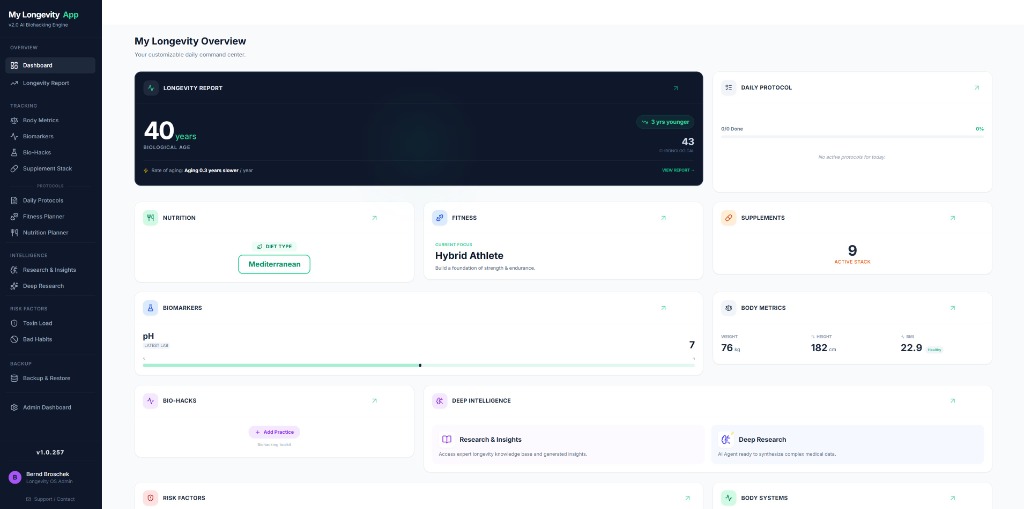
"Unlock personalized insights to boost your well-being and track your health journey effortlessly."
In a world overflowing with health information, the search for a reliable health score calculator app can feel overwhelming and frustrating. You may find yourself lost in a sea of confusing metrics, wondering if you're truly on the right path to wellness. The desire for clarity and guidance is strong, as you seek tools that not only quantify your health but also empower you to make meaningful changes in your life.
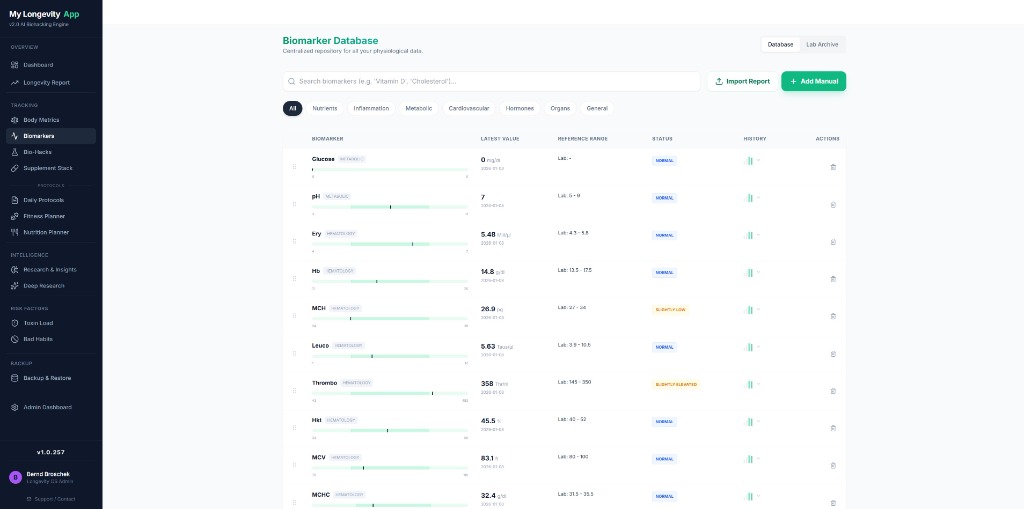
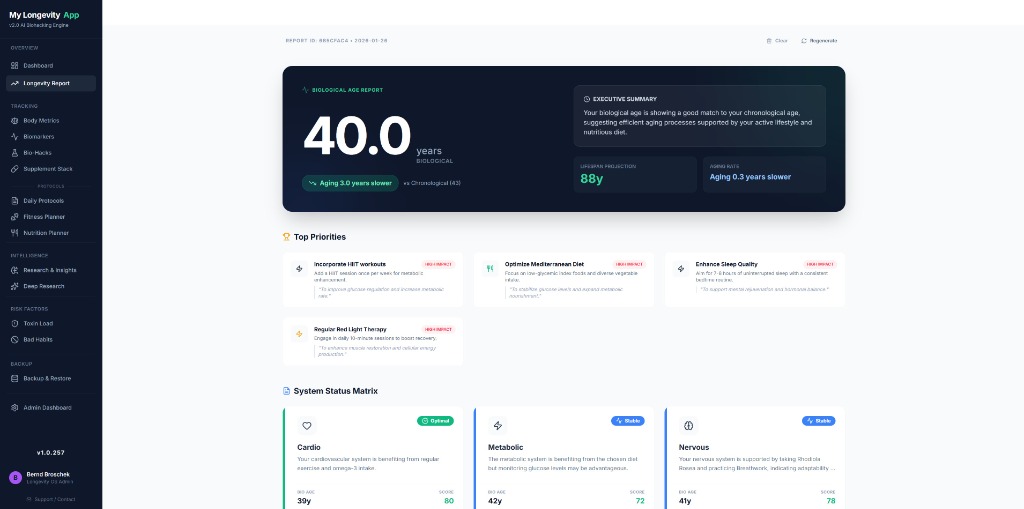
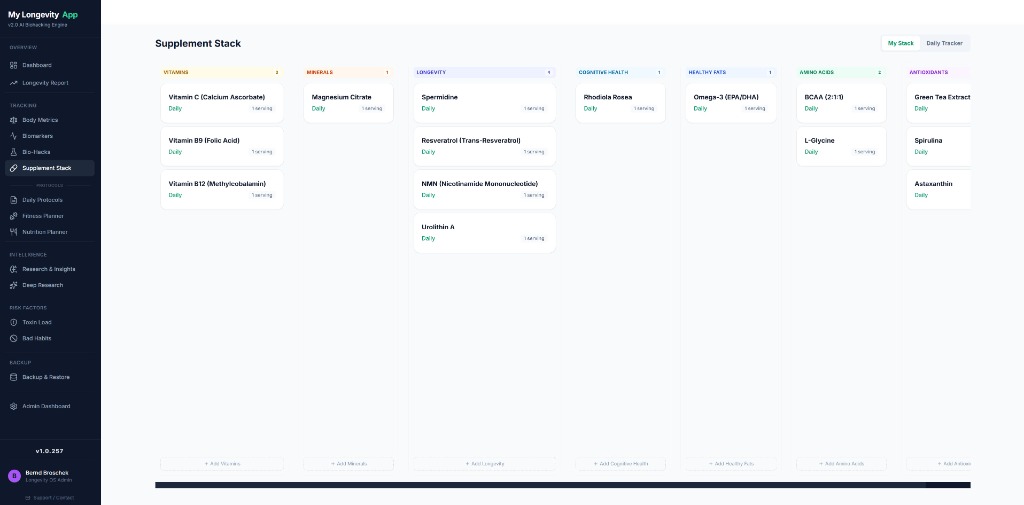
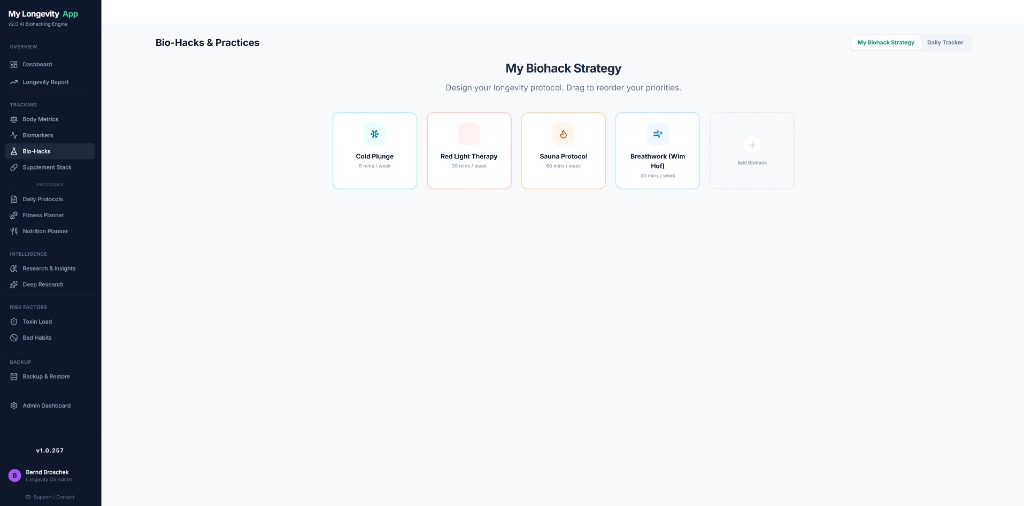
Advanced biohacking tools at your fingertips.
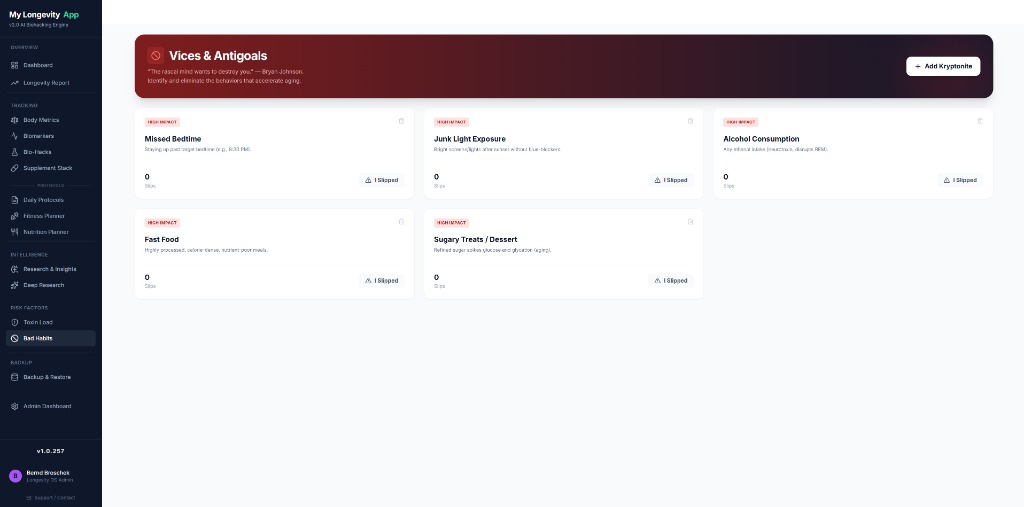
10 integrated modules working together.
Create your account in 30 seconds. No credit card required.
Upload blood work, track body metrics, or start with our AI questionnaire.
Receive your biological age score, personalized reports, and action plan.
Choose the plan that fits your biohacking journey.
Use the health score calculator app to receive tailored recommendations based on your unique health data and lifestyle choices.
Monitor your health journey over time with the health score calculator app, allowing you to visualize improvements and adjust your goals.
Leverage the health score calculator app to make informed decisions about nutrition, exercise, and wellness practices that enhance your longevity.
Join thousands of biohackers optimizing their health.
"MyLongevityApp helped me lower my biological age by 5 years. The biomarker tracking is a game-changer."
"Finally one app that combines supplements, blood work, and daily protocols. I love the weekly planner."
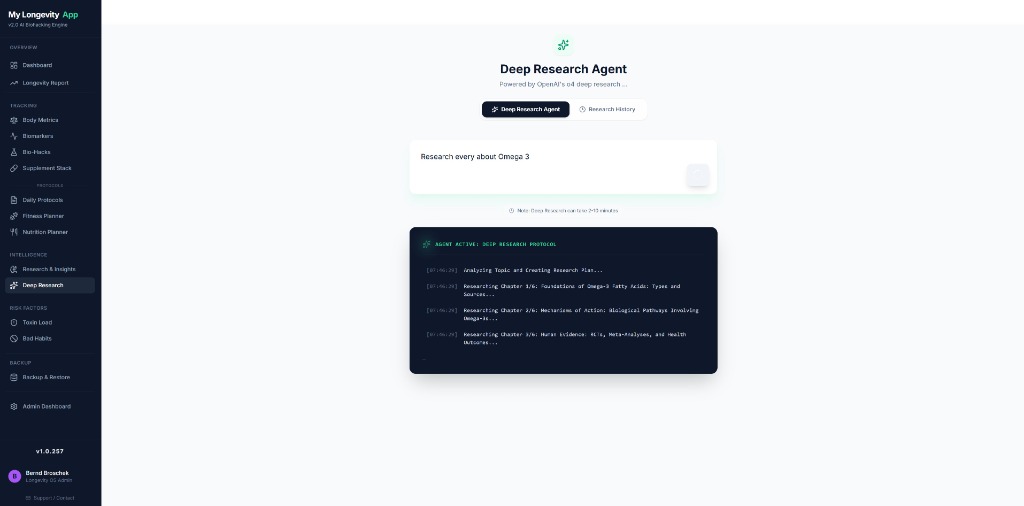
"The AI research agent alone is worth the subscription. It saves me hours of reading every week."
A health score calculator app should encompass several key features to deliver an accurate assessment of an individual’s overall well-being. First and foremost, it should gather comprehensive data on various health metrics, including physical activity, nutrition, sleep patterns, and stress levels. By integrating these diverse aspects, the app can create a holistic view of a user's health.
User-friendly interfaces are essential for effective engagement. The app should allow users to input their data easily and track changes over time, providing intuitive visualizations of their health scores. This encourages regular use and makes it easier for individuals to identify trends, which can be pivotal for long-term health management.
Another critical feature is the personalization of health assessments. The app should utilize algorithms that consider individual variations in age, gender, and lifestyle factors, thereby tailoring the health score to reflect a user's unique circumstances. MyLongevityApp exemplifies this by offering personalized recommendations based on user input, enhancing the relevance of the feedback provided.
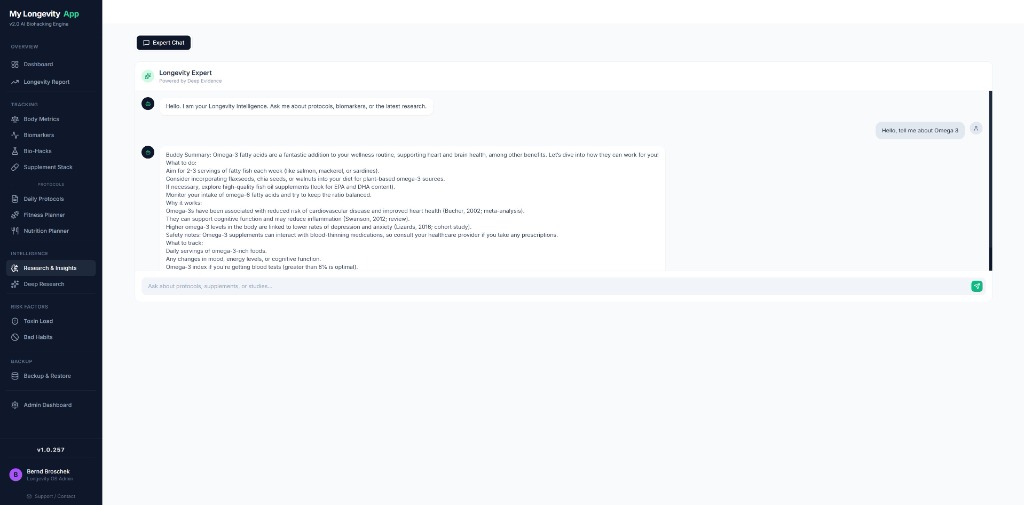
Integration with wearable devices can further enhance accuracy by allowing real-time data collection on heart rate, activity levels, and sleep quality. This functionality enables the app to provide timely insights and suggestions for improving health metrics.
Lastly, incorporating educational resources can significantly enrich the user experience. Providing users with actionable tips and scientifically-backed advice on improving their health score fosters a proactive approach to wellness.
To maximize the benefits of a health score calculator app, users should regularly input their data and take advantage of personalized insights to make informed health decisions.
Interpreting the results from a health score calculator app requires a nuanced approach. These apps typically provide a quantitative score based on various health indicators, including diet, exercise, sleep patterns, and stress levels. Users should first familiarize themselves with the specific metrics the app uses to generate the score. Understanding how each factor contributes to the overall health score is crucial; for example, a low score in physical activity might signal the need for increased exercise, while dietary choices could be another area to address.
Once users grasp the underlying metrics, it’s important to analyze their individual results in the context of personal goals and health history. A health score calculator app like MyLongevityApp can help personalize these insights, allowing users to pinpoint areas for improvement. For instance, if the app highlights insufficient sleep as a factor impacting the score, users can explore strategies to enhance their sleep hygiene, such as establishing a bedtime routine or reducing screen time before bed.
Users should also consider the trends in their scores over time rather than fixating on a single number. Tracking changes can provide valuable feedback on the effectiveness of lifestyle adjustments. Additionally, it may be beneficial to consult with health professionals when making significant changes based on app results, ensuring that these adjustments are safe and suitable for individual circumstances.
An actionable takeaway is to set specific, measurable goals based on the insights from the health score calculator app. For example, if a user identifies low physical activity as a concern, they might aim to incorporate at least 30 minutes of moderate exercise into their daily routine, gradually increasing frequency or intensity as they become more comfortable.
Incorporating personalized metrics in a health score calculator app is vital for enhancing user engagement and delivering meaningful results. Personalization allows users to input data that accurately reflects their unique health profiles, including age, gender, activity levels, and specific health goals. This tailored approach ensures that the feedback users receive is relevant and actionable, leading to a deeper understanding of their health status and areas for improvement.
When users see metrics that resonate with their individual circumstances, they are more likely to remain engaged with the app. Personalized insights can motivate users to make healthier choices, as they can track their progress over time and see tangible results related to their specific lifestyle changes. For instance, MyLongevityApp utilizes personalized metrics to help users visualize how adjustments in diet, exercise, and sleep can impact their overall health score, fostering a sense of ownership and accountability.
Moreover, personalized metrics can enhance the user experience by providing tailored recommendations that align with users’ preferences and challenges. Instead of generic advice that may not apply to everyone, a health score calculator app that adapts to individual needs can suggest realistic and achievable steps, making health improvement feel manageable and less daunting.
To maximize the effectiveness of a health score calculator app, users should actively input their data and set specific health goals. Engaging with the app regularly and reflecting on the personalized insights can lead to sustained motivation and ultimately drive better health outcomes.
When developing a health score calculator app, the reliability of data sources and algorithms is paramount for ensuring accurate assessments. Key data sources typically include peer-reviewed medical studies, clinical trials, and established health databases such as the World Health Organization (WHO) and the Centers for Disease Control and Prevention (CDC). These sources provide evidence-based information that can be leveraged to create more reliable health metrics.
In addition to reputable data sources, the algorithms used to interpret this data play a critical role in determining the accuracy of the health score calculator app. Machine learning algorithms, particularly those based on supervised learning, can analyze large datasets to identify patterns and correlations. Techniques such as regression analysis, decision trees, and neural networks are commonly employed to predict health outcomes based on user-inputted variables. It is essential that these algorithms are regularly updated and validated against new data to maintain their relevance and accuracy.
Furthermore, incorporating user feedback and real-world outcomes can enhance the credibility of the app. For instance, MyLongevityApp utilizes a continuous feedback loop from users to refine its algorithms, ensuring that the health scores reflect not only theoretical data but also practical health realities.
For developers and users alike, the actionable takeaway is to prioritize transparency in both data sourcing and algorithmic processes. Users should be informed about the origins of the information and the methodologies behind the calculations. This transparency fosters trust and encourages users to engage with the app more effectively, ultimately leading to better health outcomes.
When evaluating different health score calculator apps, users should prioritize several key criteria to ensure the app aligns with their specific health goals and needs. First, consider the app's accuracy and reliability. Look for apps that are backed by scientific research or developed in collaboration with healthcare professionals. An app that uses validated algorithms can provide a more trustworthy health assessment, which is essential for making informed decisions about your wellness journey.
User experience is another critical factor. A health score calculator app should have an intuitive interface that makes it easy to input data and interpret results. A cluttered or confusing layout can hinder your ability to utilize the app effectively. Additionally, consider the app's customization options. The best apps allow users to tailor their health metrics according to personal goals, whether they focus on weight management, fitness levels, or preventative health measures.
Data privacy and security are also paramount. Ensure that the app has robust security measures in place to protect your personal health information. This is particularly important in the biohacking and longevity space, where sensitive data is often shared.
Lastly, consider the app's integration capabilities. A health score calculator app that can sync with wearables or other health platforms will provide a more comprehensive view of your health, leading to better insights and strategies for improvement. MyLongevityApp offers such features, making it easier to track your progress effectively.
As you assess different health score calculator apps, prioritize these criteria to find one that not only meets your current health needs but also supports your long-term wellness goals.
Join 10,000+ biohackers optimizing their health with AI.
Start Your 7-Day Free TrialNo credit card required. Cancel anytime.