Discover your true biological age and unlock personalized insights for optimal health and longevity.
In a world where the quest for longevity often feels overwhelming, many individuals grapple with the uncertainty of their true health status. They yearn for clarity and guidance, feeling lost amidst a sea of wellness information. The search for a reliable health app that calculates biological age from biomarkers data highlights a deep desire for empowerment and understanding—an opportunity to take control of their health narrative and make informed choices for a longer, more vibrant life.
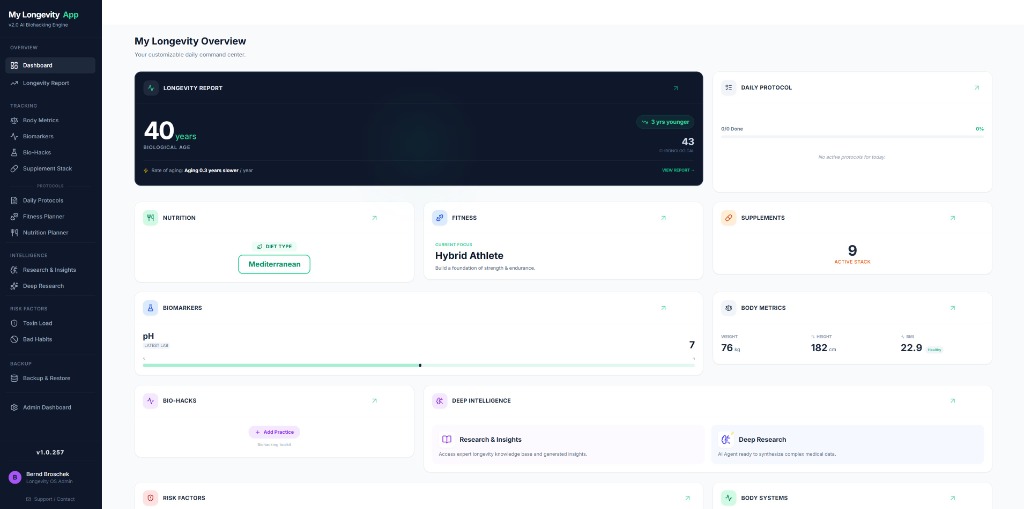
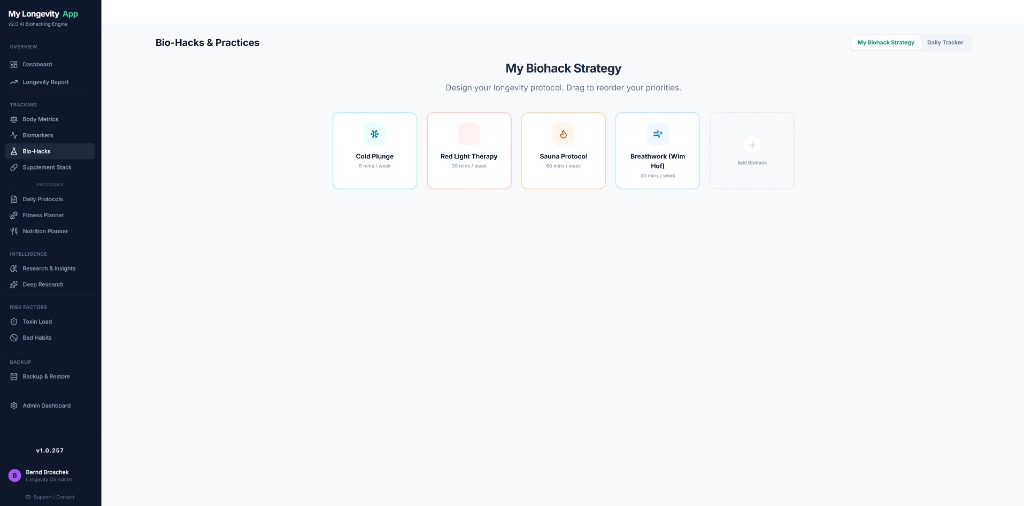
Advanced biohacking tools at your fingertips.
10 integrated modules working together.
Create your account in 30 seconds. No credit card required.
Upload blood work, track body metrics, or start with our AI questionnaire.
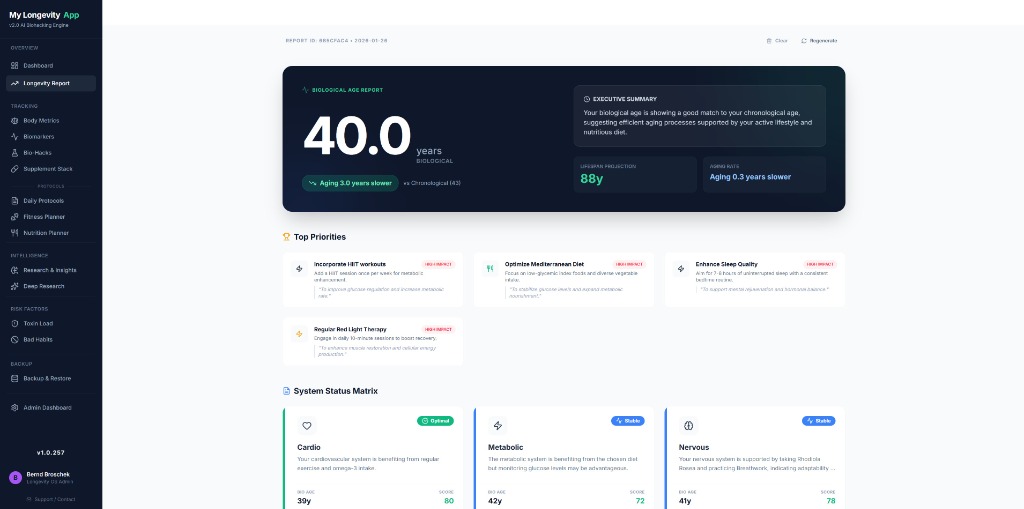
Receive your biological age score, personalized reports, and action plan.
Choose the plan that fits your biohacking journey.
Utilize the health app that calculates biological age from biomarkers data to receive tailored recommendations for improving your longevity.
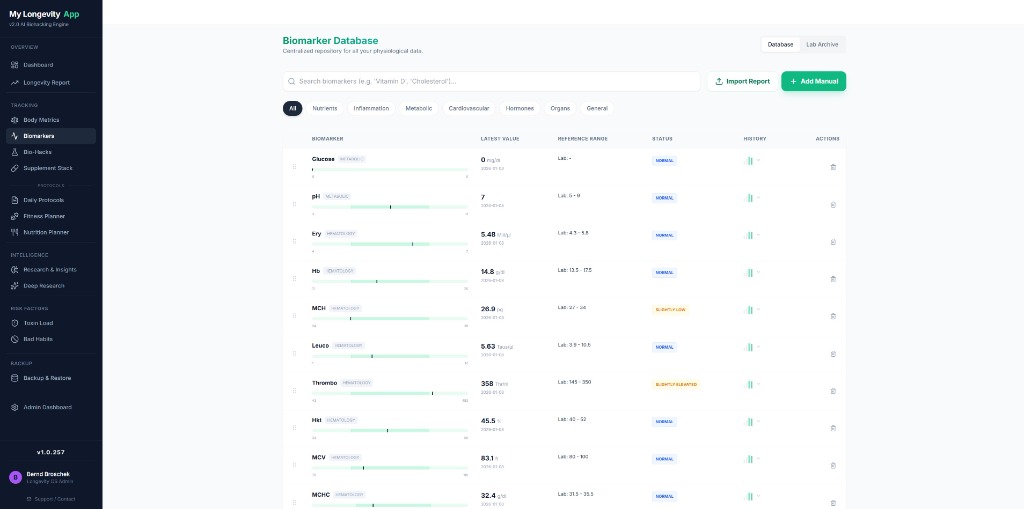
Make informed health choices by analyzing how specific biomarkers affect your biological age.
Monitor changes over time with the health app that calculates biological age from biomarkers data, ensuring you stay on track with your wellness goals.
Join thousands of biohackers optimizing their health.
"MyLongevityApp helped me lower my biological age by 5 years. The biomarker tracking is a game-changer."
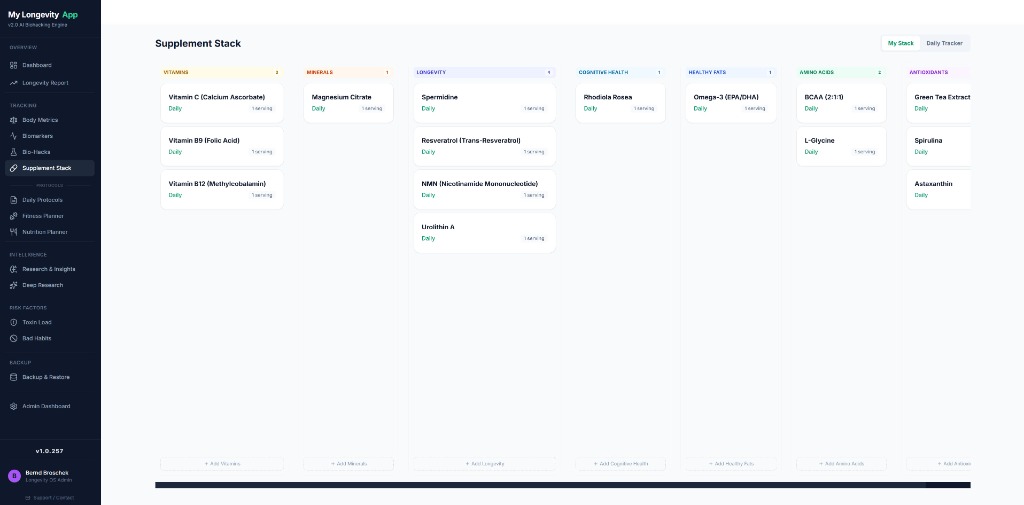
"Finally one app that combines supplements, blood work, and daily protocols. I love the weekly planner."
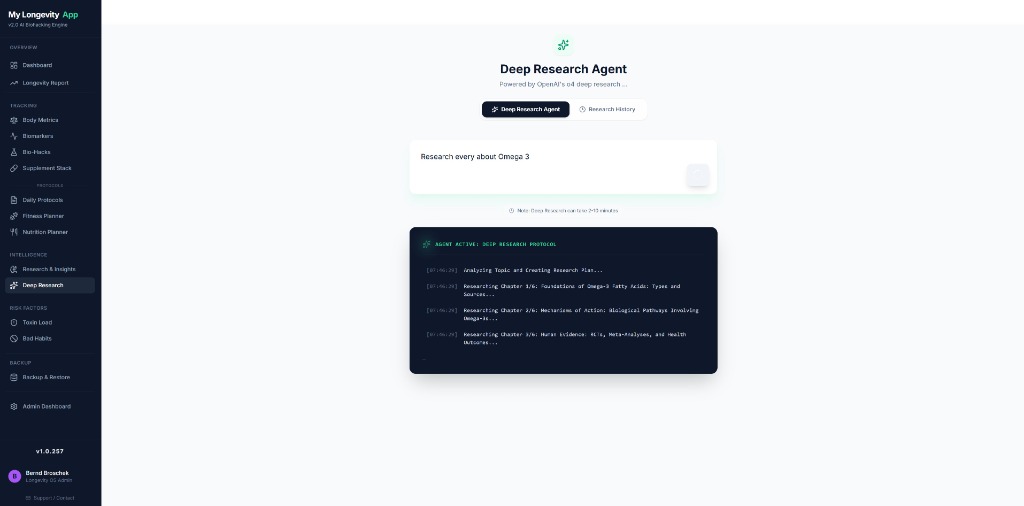
"The AI research agent alone is worth the subscription. It saves me hours of reading every week."
Health apps that calculate biological age from biomarkers data often focus on a range of specific indicators that can provide insights into an individual's overall health and potential longevity. Commonly utilized biomarkers include DNA methylation patterns, telomere length, and various metabolic and inflammatory markers such as C-reactive protein (CRP) and blood glucose levels.
DNA methylation is a key factor in the aging process and is often referred to as the "epigenetic clock." Research indicates that the patterns of methylation can predict biological age more accurately than chronological age. Telomere length, which shortens as cells divide, serves as another critical biomarker; shorter telomeres are associated with cellular aging and an increased risk of age-related diseases.
Inflammatory markers, such as CRP, provide insights into systemic inflammation, which is linked to numerous chronic conditions and age-related degeneration. Elevated blood glucose levels can indicate metabolic dysfunction, a common issue in aging populations that can lead to diabetes and other health complications.
MyLongevityApp utilizes these biomarkers to offer users a comprehensive understanding of their biological age, allowing for personalized health strategies that can promote longevity. By monitoring these indicators, users can make informed lifestyle changes, such as adjusting their diet, increasing physical activity, or managing stress, all of which can positively influence health outcomes.
For those interested in optimizing their health and extending their lifespan, regularly engaging with a health app that calculates biological age from biomarkers data can provide actionable insights. Regularly monitoring these biomarkers empowers individuals to proactively manage their health and make choices that support a longer, healthier life.
The accuracy of biological age calculations from health apps has garnered increasing interest as technology advances. Traditional methods of assessing biological age often involve comprehensive evaluations, including genetic testing, blood analyses, and various physiological assessments. These approaches can provide a highly detailed picture of an individual's biological state, but they are often invasive and time-consuming.
In contrast, a health app that calculates biological age from biomarkers data typically leverages algorithms that analyze user-inputted health metrics, lifestyle factors, and, in some cases, readily available biomarker data. While these apps can offer convenience and immediate feedback, their accuracy can vary significantly. Many rely on correlations established in scientific research, but the models may not account for all variables that influence biological age, such as environmental factors or specific health conditions.
Research indicates that while some health apps produce results that align closely with traditional assessments, others may deviate due to the simplification of complex biological processes. For instance, MyLongevityApp utilizes extensive data to refine its calculations and improve accuracy. However, users should remain cautious and consider these outputs as one piece of a larger health puzzle rather than definitive assessments.
For those interested in tracking their biological age, it is advisable to use health apps as complementary tools alongside traditional methods. Regular health check-ups and consultations with healthcare professionals can help validate app-generated data, providing a well-rounded perspective on one's longevity journey. By integrating both approaches, individuals can optimize their understanding of biological age and make more informed health decisions.
Tracking biological age through a health app that calculates biological age from biomarkers data is crucial for users seeking to understand their overall health and longevity. Unlike chronological age, biological age reflects how well your body is functioning based on various biological markers. These markers can include factors such as DNA methylation patterns, inflammation levels, and metabolic health, which provide a more nuanced view of an individual's health status.
By monitoring biological age, users can gain valuable insights into the impacts of their lifestyle choices. For example, if a user notices that their biological age is significantly older than their chronological age, it could indicate that their current habits—such as diet, exercise, or stress management—are not conducive to optimal health. This awareness can serve as a powerful motivator to make changes. Health apps like MyLongevityApp allow users to track these biomarkers over time, enabling them to see the effects of their lifestyle modifications quantitatively.
Additionally, tracking biological age can help users identify risk factors for age-related diseases. Data from health apps can highlight trends and changes in biomarkers, allowing users to take proactive steps towards improving their health. For instance, if a user sees a rise in inflammatory markers, they might consider adjusting their diet or increasing physical activity to mitigate potential health risks.
To maximize the benefits of tracking biological age, users should regularly engage with their health app, review their biomarker data, and make informed lifestyle adjustments based on the insights gained. This proactive approach not only fosters a deeper understanding of personal health but also promotes longevity and well-being.
When choosing a health app that calculates biological age from biomarkers data, users should prioritize several key features to ensure a thorough and dependable assessment. First and foremost, the app should offer a comprehensive set of biomarker inputs. This includes not only standard health metrics such as blood pressure and cholesterol levels but also advanced markers like inflammation levels, hormone profiles, and genetic factors. The more data the app can analyze, the more accurate the biological age assessment will be.
Another essential feature is the app's ability to provide personalized recommendations based on the biological age results. Users benefit from actionable insights that guide lifestyle changes, including diet, exercise, and stress management. An app that integrates these personalized suggestions not only helps in tracking progress but also fosters a proactive approach to longevity.
Additionally, a reliable health app should utilize robust algorithms and scientific research to calculate biological age. Look for apps that cite their sources and are validated by peer-reviewed studies, as this transparency adds credibility to the results. MyLongevityApp, for instance, prides itself on leveraging cutting-edge research to deliver accurate assessments.
Finally, consider the user experience. An intuitive interface with clear visualizations of data trends can enhance engagement and make it easier to understand complex information. It’s important that users feel empowered by the app, not overwhelmed.
As you explore health apps for biological age assessments, focus on those that offer comprehensive biomarker analysis, personalized recommendations, scientific validation, and an intuitive design. This will ensure you make informed decisions on your journey to improved longevity.
Interpreting biological age results from health apps can be a transformative experience for individuals seeking to enhance their health and wellness strategies. A health app that calculates biological age from biomarkers data provides insights that often contrast with chronological age, offering a more personalized view of one’s physiological state. This information can serve as a valuable tool for identifying potential health risks and tailoring lifestyle changes accordingly.
First, it’s essential to understand the underlying biomarkers that influence biological age, such as inflammation levels, oxidative stress, and metabolic function. By analyzing these factors, individuals can gain a clearer picture of their health status and areas that may require attention. For instance, if a health app indicates a higher biological age due to elevated inflammatory markers, this could prompt a user to adopt anti-inflammatory dietary choices or incorporate stress-reduction practices into their daily routine.
Moreover, users should utilize the trends observed in their biological age over time rather than fixate solely on the initial results. Regular monitoring through apps like MyLongevityApp can help individuals track the effectiveness of implemented strategies, such as exercise regimens and nutritional adjustments, and modify them based on real-time feedback.
To maximize the benefits of biological age data, individuals should engage in continuous learning about their health. This approach can involve consulting with healthcare professionals who can interpret the app’s findings in the context of overall health and wellness goals. Setting specific, measurable objectives based on biological age insights will also facilitate a proactive stance on health management—whether that means increasing physical activity, improving sleep quality, or enhancing nutritional intake.
Join 10,000+ biohackers optimizing their health with AI.
Start Your 7-Day Free TrialNo credit card required. Cancel anytime.