The Future of Health Optimization

Fitness Longevity

Unlock your potential for a longer, healthier life through optimized fitness and wellness practices.

Your Biological Age
47
↓ 9 years younger

The Problem Most People Face: Fitness Longevity

Many individuals seeking information on fitness longevity often grapple with a profound sense of uncertainty about how to maintain vitality as they age. The fear of declining health and losing independence can be overwhelming, leading to feelings of frustration and helplessness. They yearn for guidance on how to integrate effective fitness strategies into their lives, hoping to unlock not just a longer lifespan, but a richer, more fulfilling one.

We get it. That's exactly why we built MyLongevityApp.

Experience The Engine

Advanced biohacking tools at your fingertips.

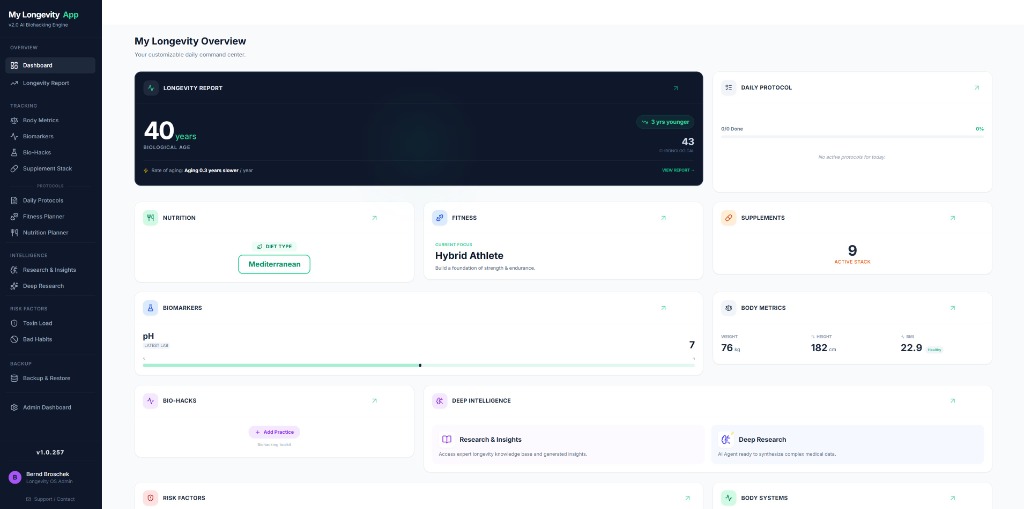
Fitness Longevity - Command Center Feature in MyLongevityApp
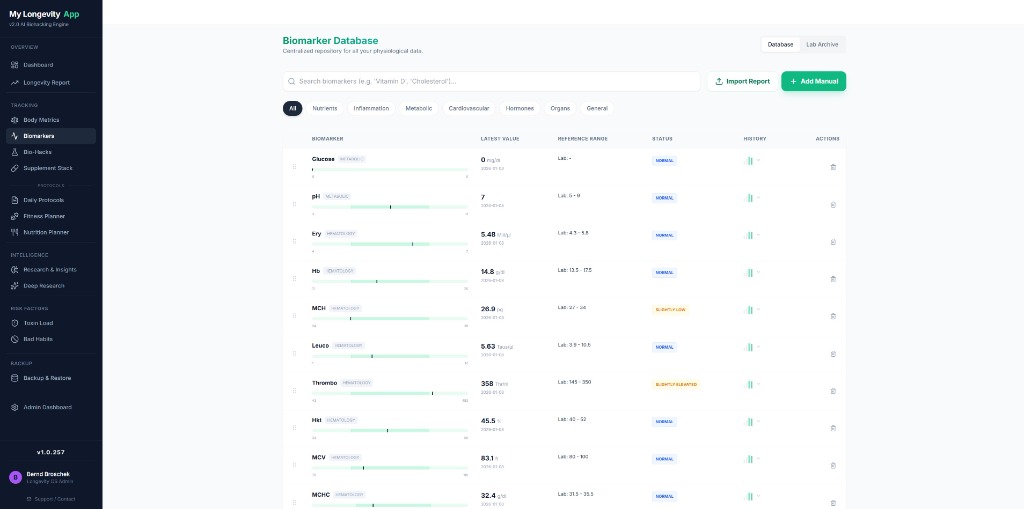
Fitness Longevity - Data Core Feature in MyLongevityApp
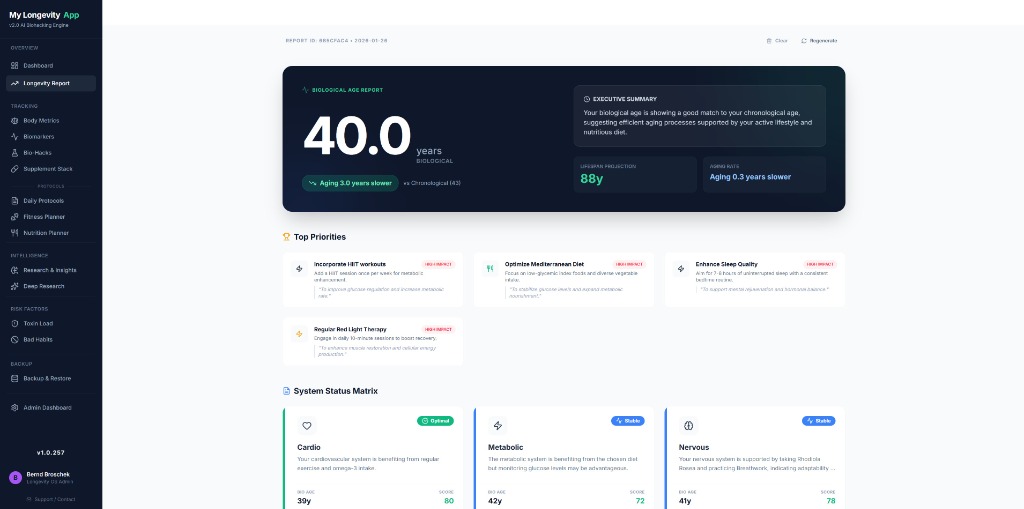
Fitness Longevity - Aging Assessment Feature in MyLongevityApp
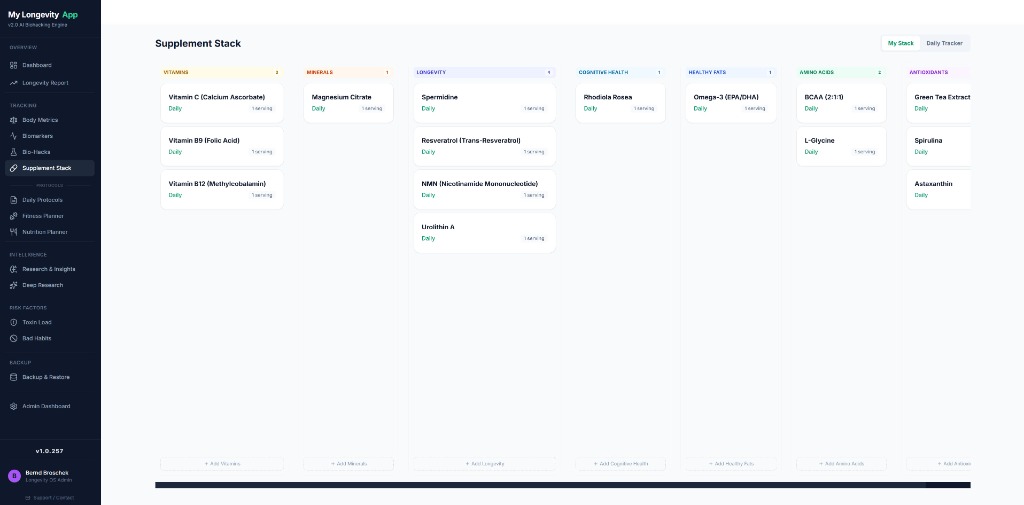
Fitness Longevity - Precision Stack Feature in MyLongevityApp
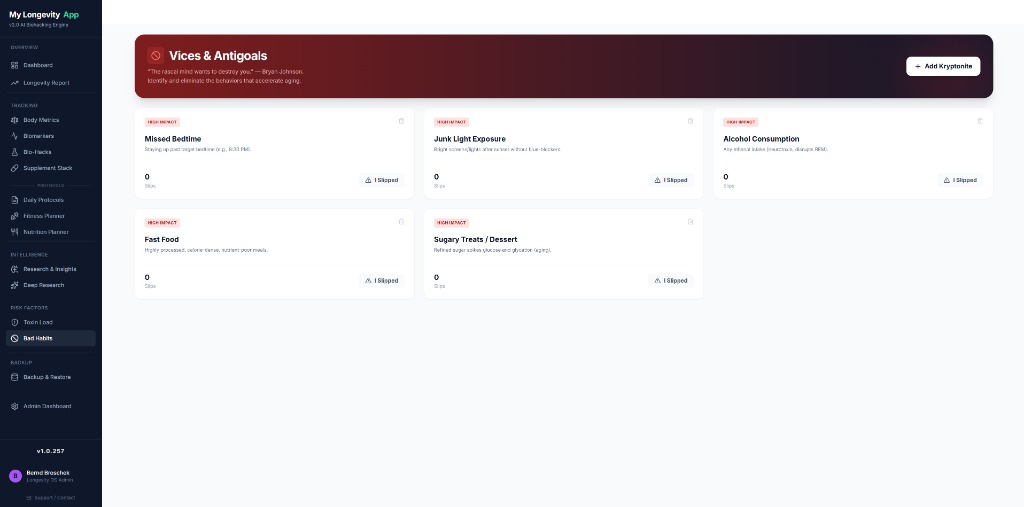
Fitness Longevity - Risk Radar Feature in MyLongevityApp
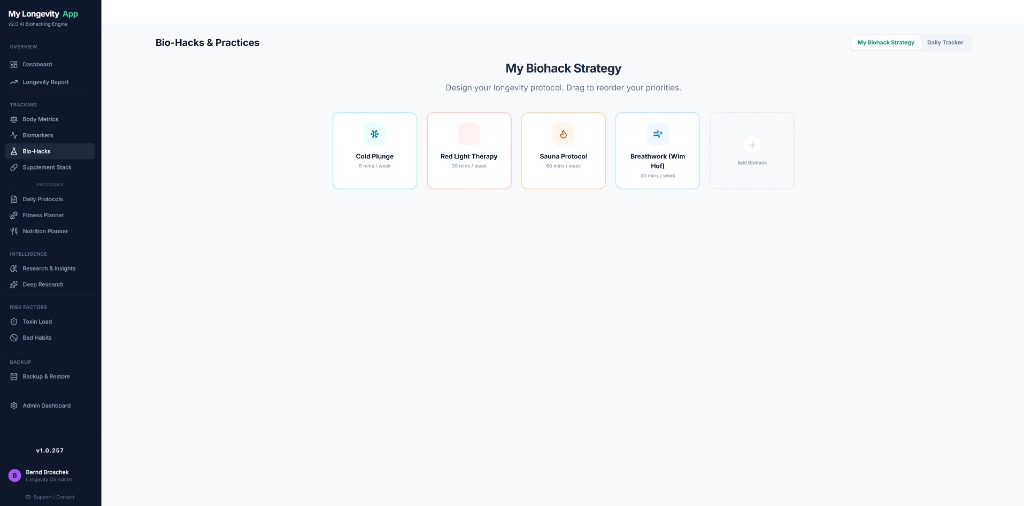
Fitness Longevity - Bio-Hacks Feature in MyLongevityApp
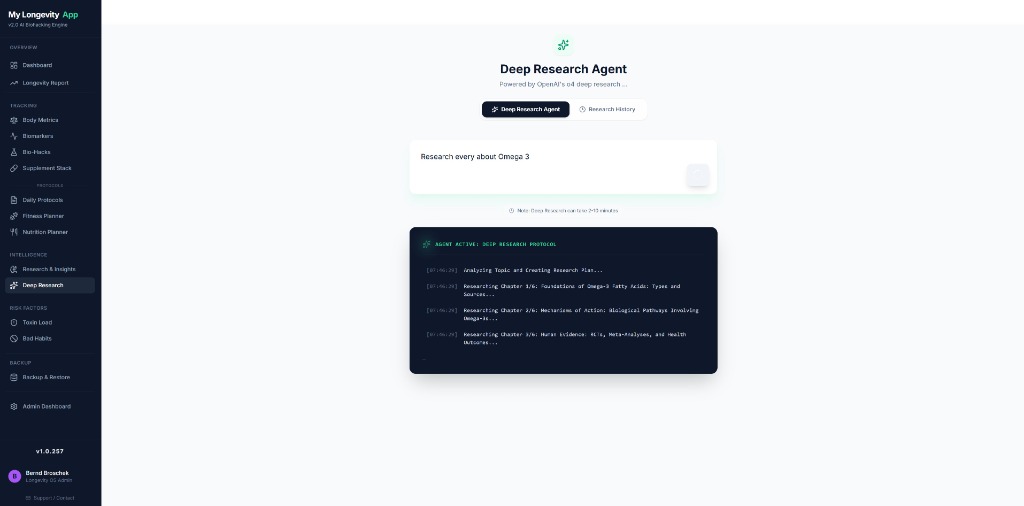
Fitness Longevity - Deep Research Agent Feature in MyLongevityApp
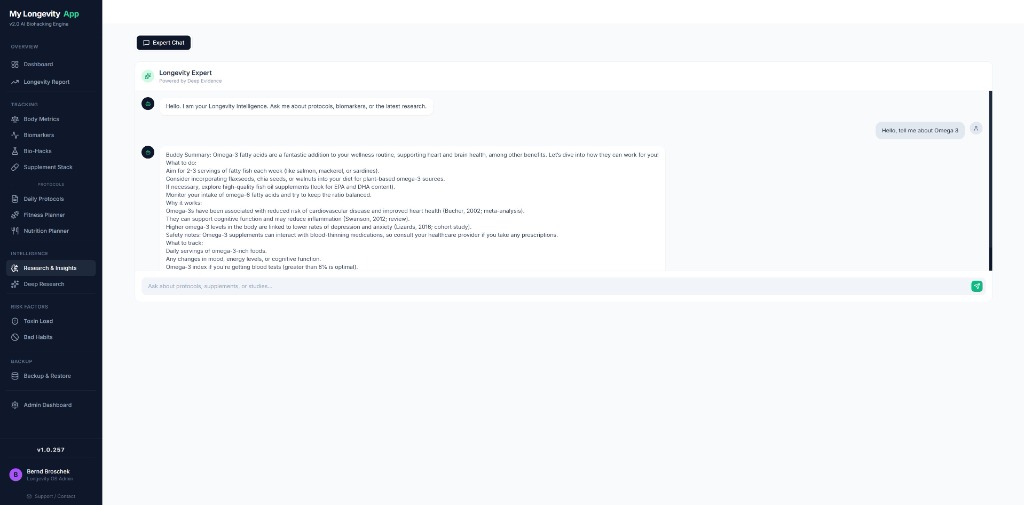
Fitness Longevity - AI Longevity Coach Feature in MyLongevityApp
Fitness Longevity - Protocol Designer Feature in MyLongevityApp

"Your central hub for life extension. Monitor every metric, protocol, and biological signal in one elite dashboard."

Total Control: Your Fitness Longevity Protocol

10 integrated modules working together.

Biomarkers

Visualize blood work trends and get AI-driven insights to bring values into optimal longevity ranges.

AI Lab Analysis

Upload lab reports for instant analysis, evaluation and automatic entry of your values.

Supplements

Build, track, and optimize your daily supplement stack with precision.

Biohacks

Manage and track your biohacking routines and experimental protocols.

Body Systems

Holistically monitor your biological systems from cardiovascular to hormonal health.

Fitness

Comprehensive training logs tailored to longevity and metabolic health goals.

Nutrition

Optimize your diet with precise macro and micronutrient tracking.

Body Metrics

Track essential measurements like weight, BMI, body fat, and sleep quality.

Toxin Load

Identify and eliminate environmental stressors to minimize your body's toxic burden.

Bad Habits

Identify and eliminate behaviors that accelerate aging.

Fitness Longevity in 3 Simple Steps

1

Sign Up Free

Create your account in 30 seconds. No credit card required.

2

Add Your Data

Upload blood work, track body metrics, or start with our AI questionnaire.

3

Get Your Insights

Receive your biological age score, personalized reports, and action plan.

Select Your Fitness Longevity Protocol

Choose the plan that fits your biohacking journey.

Guest / Demo

$0
  • Access to Dashboard
  • Symptom Tracking
  • No Data Persistence
Try Demo

Longevity Premium

$9.99/mo
  • Protocols & Habit Tracking
  • Biomarker Dashboard
  • Body Systems Analysis
  • Fitness & Training Logs
  • Nutrition & Macro Tracking
  • Body Metrics & Trends
  • Toxin Load Overview
  • Bad Habits Tracker
Start Premium

How Fitness Longevity Works For You

Regular Exercise Routine

Incorporate a mix of strength, flexibility, and aerobic exercises to support overall health and enhance fitness longevity.

Balanced Nutrition Plan

Focus on a diet rich in whole foods, antioxidants, and healthy fats to promote cellular health and boost fitness longevity.

Adequate Rest and Recovery

Prioritize sleep and recovery days to allow your body to repair and rejuvenate, crucial for maintaining fitness longevity.

What Our Users Say About Fitness Longevity

Join thousands of biohackers optimizing their health.

★★★★★

"MyLongevityApp helped me lower my biological age by 5 years. The biomarker tracking is a game-changer."

Dr. M. Reynolds
Physician & Biohacker
★★★★★

"Finally one app that combines supplements, blood work, and daily protocols. I love the weekly planner."

Sarah K.
Health Optimization Enthusiast
★★★★★

"The AI research agent alone is worth the subscription. It saves me hours of reading every week."

James T.
Biohacker & Podcast Host

Frequently Asked Questions About Fitness Longevity

As we age, maintaining fitness longevity becomes increasingly important for overall health and well-being. Certain types of exercise are particularly effective in promoting not just physical fitness but also functional longevity.

Strength training is one of the most vital components. It helps counteract the natural decline in muscle mass, which begins as early as our 30s. Engaging in resistance exercises two to three times a week can enhance muscle strength, improve bone density, and support metabolic health. This can be achieved through free weights, resistance bands, or even bodyweight exercises like squats and lunges.

Cardiovascular exercise also plays a crucial role in fitness longevity. Activities such as walking, swimming, or cycling improve heart health, increase endurance, and promote better oxygen utilization. Aim for at least 150 minutes of moderate-intensity aerobic activity each week to reap the benefits. High-Intensity Interval Training (HIIT) is another excellent option, as it can be adapted for various fitness levels and has been shown to improve cardiovascular health efficiently.

Flexibility and balance exercises, such as yoga or tai chi, are essential as they help prevent falls and maintain mobility. Incorporating these practices into your routine can enhance your range of motion and provide mental clarity, both of which are crucial for a longer, healthier life.

For those looking to track their progress and optimize their fitness journey, tools like MyLongevityApp can provide personalized insights and recommendations tailored to individual goals.

To achieve fitness longevity, focus on a balanced routine that includes strength training, cardiovascular exercise, and flexibility work. Prioritize consistency, and listen to your body to ensure a sustainable, enjoyable approach to fitness.

Nutrition plays a crucial role in fitness longevity, affecting not only physical performance but also the body's ability to recover and adapt over time. A well-balanced diet provides the essential nutrients that fuel workouts, support muscle repair, and maintain overall health. Key macronutrients—carbohydrates, proteins, and fats—must be optimized to sustain energy levels during exercise and enhance recovery. Carbohydrates serve as the primary energy source, while proteins are vital for muscle repair and growth. Healthy fats contribute to hormonal balance and sustained energy.

Incorporating a variety of nutrient-dense foods into your diet is essential for promoting fitness longevity. Antioxidant-rich fruits and vegetables help combat oxidative stress caused by intense exercise, while whole grains and legumes provide sustained energy and essential vitamins. Additionally, incorporating omega-3 fatty acids, found in fatty fish and flaxseeds, can reduce inflammation and improve joint health, which is critical for maintaining an active lifestyle over the years.

Dietary strategies that enhance physical performance include meal timing and hydration. Consuming a balanced meal or snack that includes protein and carbohydrates within 30 minutes after exercise can significantly aid recovery. Staying hydrated is equally important, as even mild dehydration can impair performance and recovery.

Using tools like MyLongevityApp can help track dietary intake and ensure you’re meeting your nutritional needs. By focusing on a diverse, balanced diet and implementing these strategies, you can maximize your fitness longevity and sustain high levels of physical performance as you age. Aim to establish a personalized nutrition plan that aligns with your fitness goals and lifestyle for the best results.

Recovery and rest are fundamental components of any effective fitness longevity regimen. Engaging in regular physical activity places significant stress on the body, which is essential for muscle growth and overall health. However, without adequate recovery periods, the body lacks the opportunity to repair itself, leading to fatigue, diminished performance, and increased risk of injury. In the context of fitness longevity, prioritizing recovery helps ensure that the body remains resilient and capable of sustaining physical activity over the long term.

To optimize the recovery process, several practices can be integrated into your routine. First, ensure you are getting sufficient sleep, as this is when the body undergoes critical repair and regeneration. Aim for 7-9 hours of quality sleep per night, and consider establishing a calming pre-sleep ritual to enhance restfulness. Additionally, incorporating active recovery days can be beneficial. Activities such as gentle yoga, walking, or swimming can promote blood flow and reduce muscle soreness without placing excessive strain on the body.

Nutrition also plays a pivotal role in recovery. Consuming a balanced diet rich in proteins, healthy fats, and complex carbohydrates post-exercise can replenish glycogen stores and aid in muscle repair. Hydration is equally important, as water supports various bodily functions, including nutrient transport and temperature regulation.

Using tools like MyLongevityApp can further enhance your recovery strategy by providing insights into your sleep patterns, nutrition, and overall wellness. By tracking these metrics, you can make informed adjustments to your regimen.

Incorporating dedicated recovery strategies into your fitness longevity plan will not only enhance your performance but also contribute to a healthier, more sustainable lifestyle. Prioritize rest as a key element of your fitness journey for optimal results.

Monitoring specific biomarkers is essential for individuals aiming to assess their fitness longevity and overall health status. These indicators provide insights into various physiological processes and can help guide lifestyle adjustments for improved well-being.

One critical biomarker to track is body composition, which includes metrics like body fat percentage and lean muscle mass. These figures can indicate how well your body is maintaining a healthy weight and muscle-to-fat ratio, which are crucial for longevity. Additionally, measuring your resting heart rate can give you a clear picture of your cardiovascular fitness. A lower resting heart rate typically signifies better heart health and improved fitness levels.

Another vital group of biomarkers is metabolic markers, such as blood glucose and insulin sensitivity. Regular monitoring of these can help identify potential metabolic issues early, allowing for timely interventions. Lipid profiles, including cholesterol levels, also play a significant role in assessing cardiovascular health and identifying risks for chronic diseases.

Inflammatory markers, such as C-reactive protein (CRP), are important as they can indicate underlying inflammation in the body, which is linked to various health conditions. Tracking these levels can help you make informed decisions about your diet and lifestyle to reduce inflammation.

For those deeply invested in optimizing their health, utilizing tools like MyLongevityApp can streamline the monitoring process, providing personalized insights and recommendations based on your biomarker readings.

Regularly assessing these biomarkers not only enhances your understanding of your current health status but also empowers you to make proactive choices that support your fitness longevity. Consider scheduling regular check-ups and utilizing at-home testing kits to keep your health metrics in check.

As we age, our physical capabilities naturally change due to various factors such as muscle mass decline, joint health, and overall energy levels. Recognizing the ideal time to adjust fitness routines and goals is essential for maintaining fitness longevity and ensuring a sustainable approach to health. Typically, individuals should consider reassessing their fitness strategies every few years, or when significant life changes occur, such as reaching a new decade, recovering from an injury, or experiencing a lifestyle shift.

In the early stages of adulthood, the focus may be on building strength and endurance. However, as we transition into our 30s and beyond, it becomes crucial to incorporate flexibility and balance training to prevent injuries and enhance overall functionality. Additionally, individuals should pay attention to their body’s signals and adapt their routines accordingly. For instance, if you notice increased fatigue or prolonged recovery times after workouts, it might be time to modify your regimen to include lower-impact activities or shorter sessions.

Utilizing tools like MyLongevityApp can provide personalized insights into your fitness journey, helping you track progress and adjust goals based on your evolving capabilities. This approach not only aligns with your physical state but also fosters a more enjoyable and engaging fitness experience.

An actionable takeaway is to schedule a fitness assessment every six months. This will allow you to evaluate your current fitness level, set realistic goals, and make necessary adjustments to your routine to promote longevity and well-being as you age.

Ready to Master Fitness Longevity?

Join 10,000+ biohackers optimizing their health with AI.

Start Your 7-Day Free Trial

No credit card required. Cancel anytime.