The Future of Health Optimization

Biomarkers

Unlock your health potential by understanding key biomarkers for personalized longevity and well-being.

Your Biological Age
47
↓ 9 years younger

The Problem Most People Face: Biomarkers

When individuals dive into the world of longevity and biohacking, the search for answers often leads them to the complex concept of biomarkers. It’s frustrating to feel overwhelmed by jargon and the sheer volume of information, as they yearn for clarity on how these indicators can truly impact their health journey. This struggle isn’t just about numbers; it’s about finding hope and understanding in a world that often seems chaotic and uncertain.

We get it. That's exactly why we built MyLongevityApp.

Experience The Engine

Advanced biohacking tools at your fingertips.

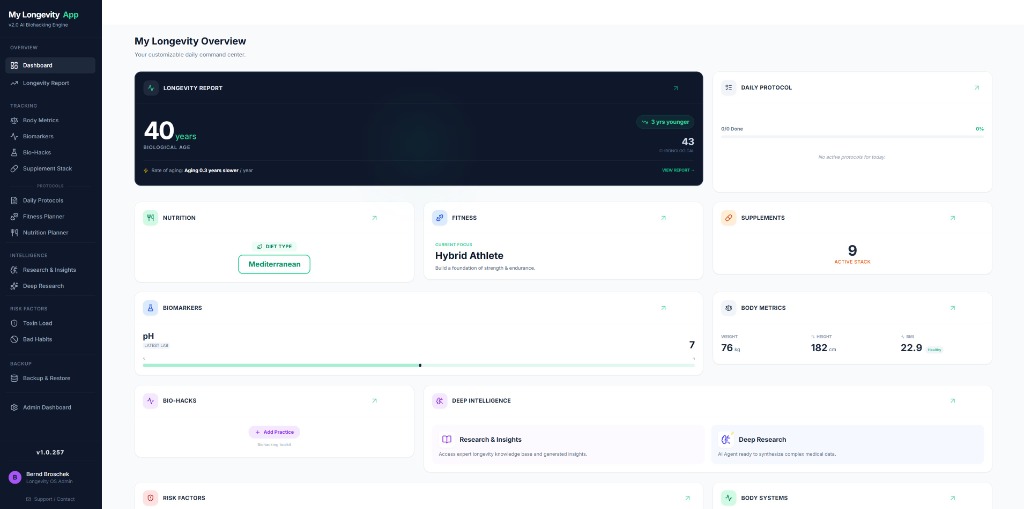
Biomarkers - Command Center Feature in MyLongevityApp
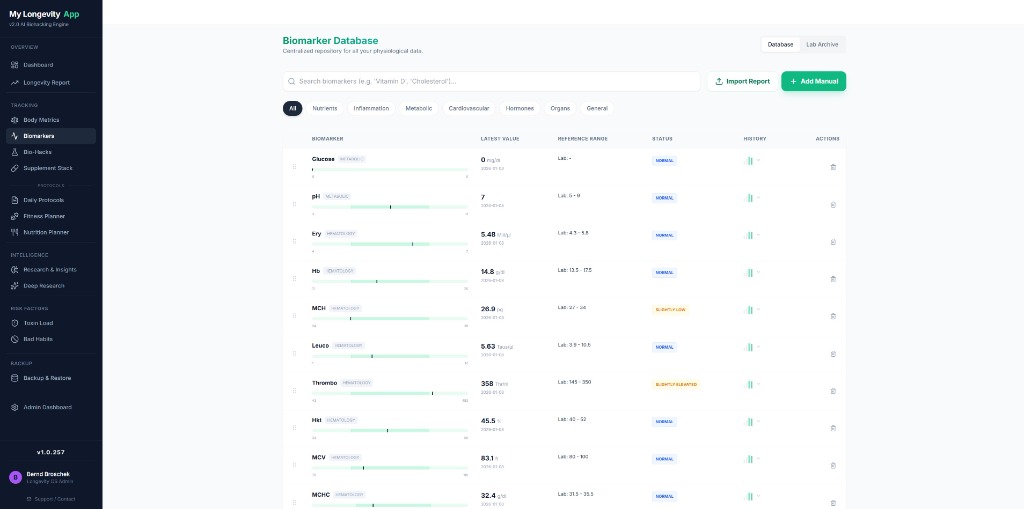
Biomarkers - Data Core Feature in MyLongevityApp
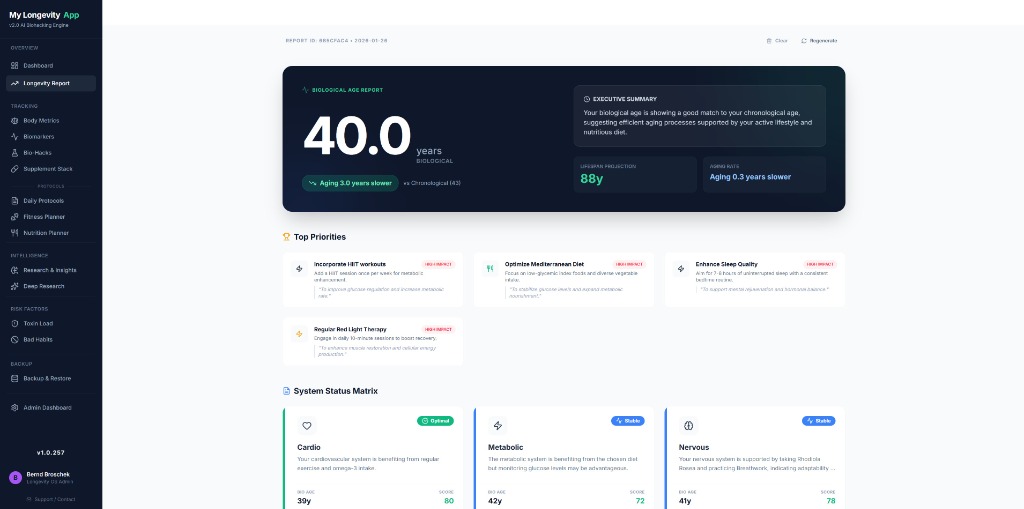
Biomarkers - Aging Assessment Feature in MyLongevityApp
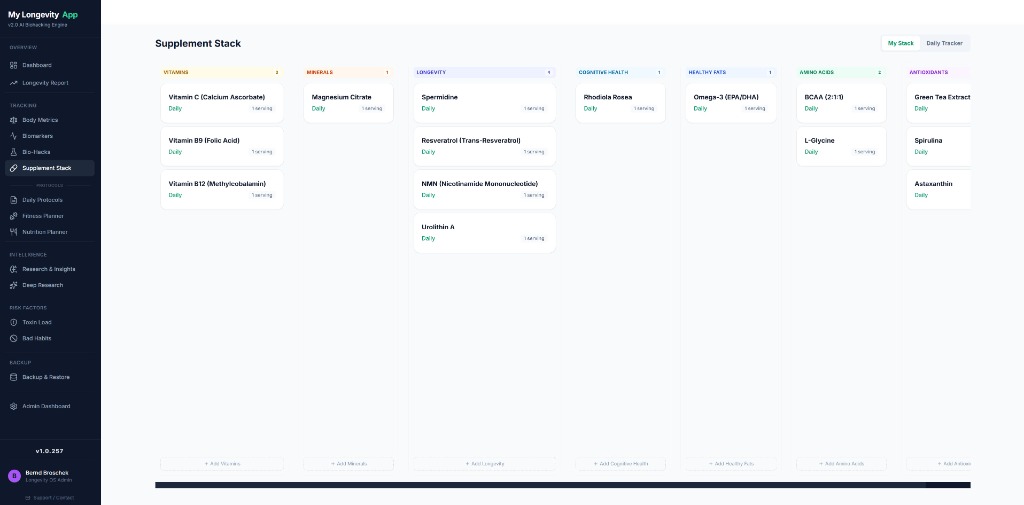
Biomarkers - Precision Stack Feature in MyLongevityApp
Biomarkers - Risk Radar Feature in MyLongevityApp
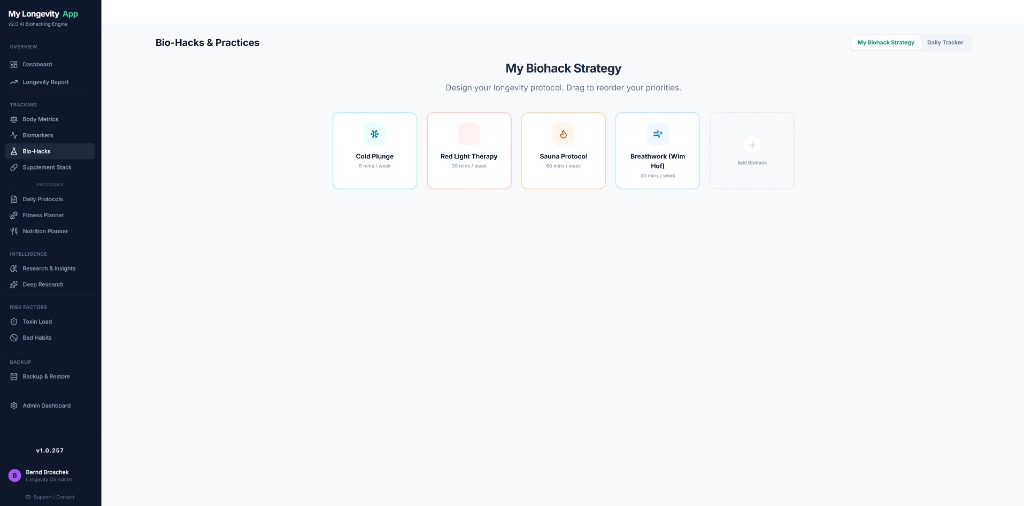
Biomarkers - Bio-Hacks Feature in MyLongevityApp
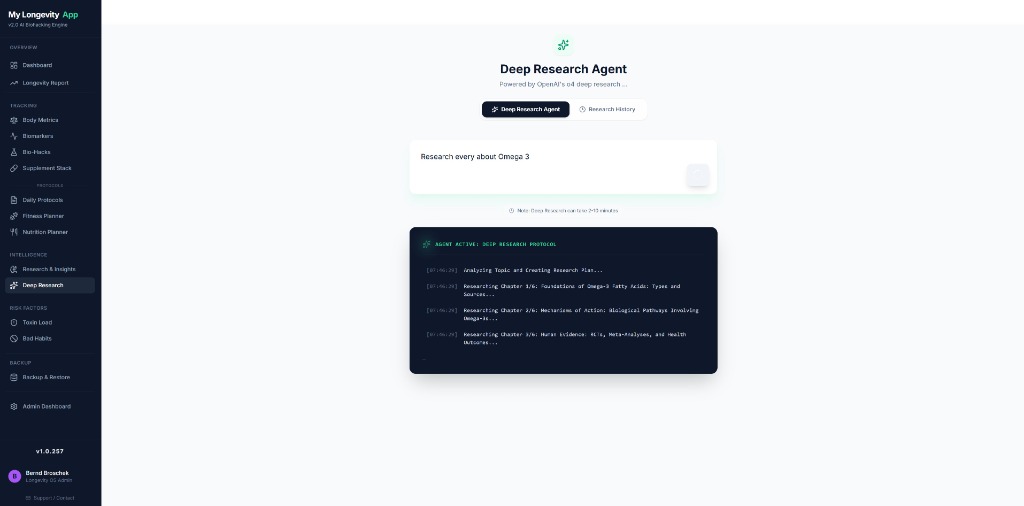
Biomarkers - Deep Research Agent Feature in MyLongevityApp
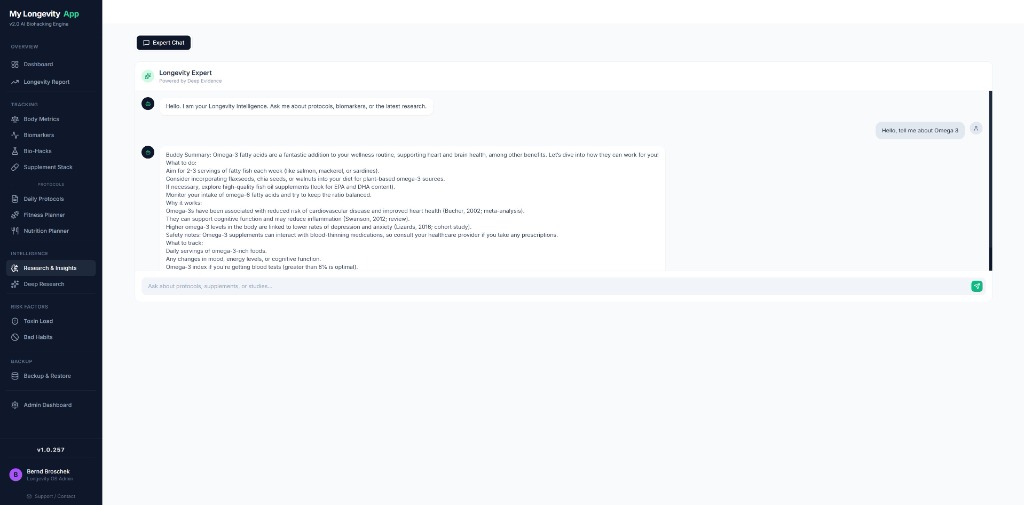
Biomarkers - AI Longevity Coach Feature in MyLongevityApp
Biomarkers - Protocol Designer Feature in MyLongevityApp

"Your central hub for life extension. Monitor every metric, protocol, and biological signal in one elite dashboard."

Total Control: Your Biomarkers Protocol

10 integrated modules working together.

Biomarkers

Visualize blood work trends and get AI-driven insights to bring values into optimal longevity ranges.

AI Lab Analysis

Upload lab reports for instant analysis, evaluation and automatic entry of your values.

Supplements

Build, track, and optimize your daily supplement stack with precision.

Biohacks

Manage and track your biohacking routines and experimental protocols.

Body Systems

Holistically monitor your biological systems from cardiovascular to hormonal health.

Fitness

Comprehensive training logs tailored to longevity and metabolic health goals.

Nutrition

Optimize your diet with precise macro and micronutrient tracking.

Body Metrics

Track essential measurements like weight, BMI, body fat, and sleep quality.

Toxin Load

Identify and eliminate environmental stressors to minimize your body's toxic burden.

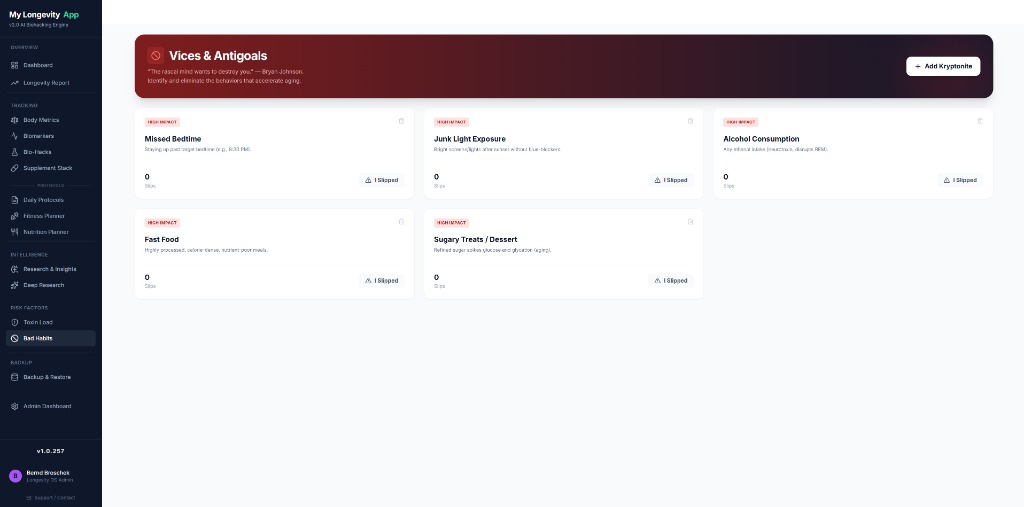
Bad Habits

Identify and eliminate behaviors that accelerate aging.

Biomarkers in 3 Simple Steps

1

Sign Up Free

Create your account in 30 seconds. No credit card required.

2

Add Your Data

Upload blood work, track body metrics, or start with our AI questionnaire.

3

Get Your Insights

Receive your biological age score, personalized reports, and action plan.

Select Your Biomarkers Protocol

Choose the plan that fits your biohacking journey.

Guest / Demo

$0
  • Access to Dashboard
  • Symptom Tracking
  • No Data Persistence
Try Demo

Longevity Premium

$9.99/mo
  • Protocols & Habit Tracking
  • Biomarker Dashboard
  • Body Systems Analysis
  • Fitness & Training Logs
  • Nutrition & Macro Tracking
  • Body Metrics & Trends
  • Toxin Load Overview
  • Bad Habits Tracker
Start Premium

How Biomarkers Works For You

Track Your Progress

Regularly monitor your biomarkers to evaluate the effectiveness of your longevity strategies and adjust them based on your health data.

Optimize Nutrition

Use biomarkers to identify nutrient deficiencies and tailor your diet, enhancing your overall health and longevity.

Personalize Fitness Plans

Assess biomarkers to create customized workout routines that align with your body's specific needs for improved longevity.

What Our Users Say About Biomarkers

Join thousands of biohackers optimizing their health.

★★★★★

"MyLongevityApp helped me lower my biological age by 5 years. The biomarker tracking is a game-changer."

Dr. M. Reynolds
Physician & Biohacker
★★★★★

"Finally one app that combines supplements, blood work, and daily protocols. I love the weekly planner."

Sarah K.
Health Optimization Enthusiast
★★★★★

"The AI research agent alone is worth the subscription. It saves me hours of reading every week."

James T.
Biohacker & Podcast Host

Frequently Asked Questions About Biomarkers

Biomarkers play a crucial role in longevity research, allowing scientists to gauge biological age and predict lifespan based on measurable biological processes. Among the most significant biomarkers are telomere length, senescent cell burden, and inflammatory markers.

Telomeres, the protective caps at the ends of chromosomes, shorten with each cell division. When telomeres become critically short, cells enter senescence or die, contributing to aging and age-related diseases. Measuring telomere length provides insights into cellular aging, making it a valuable biomarker in longevity studies.

Another important biomarker is the presence of senescent cells, which are dysfunctional and contribute to inflammation and tissue degradation. The accumulation of these cells can accelerate aging. Researchers are investigating therapies that target and eliminate senescent cells to improve healthspan, the period of life spent in good health.

Inflammatory markers, such as C-reactive protein (CRP) and interleukin-6 (IL-6), are also pivotal in longevity research. Chronic inflammation is linked to various age-related conditions, including heart disease and diabetes. By monitoring these markers, researchers can assess an individual’s inflammatory status and its impact on longevity.

Tools like MyLongevityApp can help individuals track these biomarkers, providing personalized insights into their health and potential lifespan. Understanding and monitoring these critical biomarkers can empower people to make informed lifestyle choices, potentially extending their healthspan and lifespan.

Regularly evaluating these biomarkers can guide individuals in optimizing their health strategies, leading to a more informed approach to longevity and well-being.

Tracking biomarkers is essential for individuals aiming to optimize their health and enhance their biohacking strategies. Biomarkers, which include various biological indicators such as blood glucose levels, cholesterol, and hormone levels, provide crucial insights into one’s physiological state. By systematically monitoring these markers, individuals can identify patterns and make informed decisions about their health interventions.

To effectively track biomarkers, individuals should start by defining their health goals. This could involve weight management, improved energy levels, or enhanced mental clarity. Once goals are established, selecting appropriate biomarker tests is key. Comprehensive blood panels, wearable devices that monitor heart rate variability, and continuous glucose monitors can provide valuable data. Regular testing is essential, as it allows for the detection of trends over time rather than relying on isolated readings.

Incorporating technology can further streamline the tracking process. Platforms like MyLongevityApp enable users to log their biomarker data and correlate it with lifestyle changes, such as diet, exercise, and sleep patterns. This integration not only simplifies data management but also enhances the ability to make real-time adjustments based on the insights gained.

An actionable takeaway for individuals is to set a regular schedule for biomarker testing, whether it’s quarterly or biannually, and to keep a detailed log of results alongside lifestyle modifications. This approach not only provides clarity on what strategies are effective but also empowers individuals to take charge of their health in a measurable way.

Considering genetic and epigenetic biomarkers is crucial when developing personalized longevity plans, as these indicators provide invaluable insights into an individual's health and aging process. Genetic biomarkers, inherited from our parents, can reveal predispositions to certain diseases and conditions that may affect longevity. By understanding these genetic factors, individuals can tailor their lifestyle choices—such as diet, exercise, and preventive healthcare—more effectively to reduce risks and enhance their overall well-being.

Epigenetic biomarkers, which reflect how environmental factors influence gene expression, add another layer of personalization. These markers can change over time and are often linked to lifestyle choices, stress, and exposure to toxins. By analyzing epigenetic changes, individuals can identify specific areas where intervention could lead to improved health outcomes. For example, someone with a genetic predisposition to a particular illness may benefit immensely from lifestyle modifications that counteract epigenetic risks, such as adopting a healthier diet or incorporating stress-reduction techniques.

Utilizing platforms like MyLongevityApp can facilitate this personalized approach by integrating genetic and epigenetic data to craft individualized longevity plans. Users can receive actionable recommendations based on their unique biomarkers, making it easier to implement strategies that promote a longer, healthier life.

To harness the full potential of a personalized longevity plan, individuals should invest time in understanding their genetic and epigenetic profiles. Consulting healthcare professionals or utilizing advanced apps can provide the necessary insights, empowering individuals to take proactive steps toward optimizing their health and extending their lifespan.

The measurement and analysis of biomarkers in the context of aging have seen significant advancements through various cutting-edge technologies. One of the most notable is the use of high-throughput genomics, which allows for the comprehensive sequencing of DNA and RNA. This technology enables researchers to identify genetic variants associated with aging and age-related diseases, providing insights into individual susceptibility and potential interventions.

Another promising approach is mass spectrometry, which is increasingly employed for proteomics—the study of proteins and their functions. This technology can quantify protein levels and modifications, revealing biological changes that occur with age. By analyzing specific protein biomarkers, scientists can better understand the mechanisms of aging and potentially identify therapeutic targets.

Additionally, metabolomics is gaining traction as a vital tool in aging research. This technology examines the metabolites present in biological samples, offering a snapshot of metabolic processes that may change over time. By profiling metabolites, researchers can discern patterns that correlate with aging and age-related health outcomes.

Wearable technology also plays a pivotal role in biomarker monitoring. Devices that track heart rate, activity levels, and sleep patterns provide continuous data that can be analyzed to assess overall health and wellness. Apps like MyLongevityApp leverage this data to deliver personalized insights, helping users make informed decisions about their lifestyle choices.

As these technologies continue to evolve, individuals can take proactive steps toward longevity by monitoring their biomarkers through available tools and resources. Engaging with these advancements can empower you to make informed health decisions that promote a longer, healthier life.

Monitoring biomarkers is a proactive approach to managing health as individuals age. Biomarkers, which are measurable indicators of biological processes, can provide valuable insights into one’s health status and potential risks for age-related diseases. It is advisable for individuals to start monitoring their biomarkers in their 30s or early 40s. At this stage, many begin to notice subtle changes in energy levels, metabolism, and overall well-being. Early detection can empower individuals to make informed lifestyle choices that may mitigate future health issues.

Regular monitoring becomes increasingly important as one transitions into middle age. This is when the risk of chronic conditions such as cardiovascular disease, diabetes, and metabolic syndrome rises. By tracking biomarkers like blood pressure, cholesterol levels, and glucose, individuals can identify patterns that may signal the need for intervention. Utilizing tools like MyLongevityApp can aid in organizing and analyzing this data, allowing for personalized health strategies.

Moreover, understanding genetic predispositions through biomarker analysis can be a game-changer for longevity. Individuals can tailor their diets, exercise regimens, and supplementation based on their unique biological makeup. This proactive stance can lead to better health outcomes, enhancing both quality and longevity of life.

An actionable takeaway is to schedule regular health check-ups that include biomarker assessments. Begin with a comprehensive evaluation in your 30s, and continue to track changes as you age. This not only helps in recognizing potential health risks early but also fosters a culture of self-care and informed decision-making as part of your longevity journey.

Ready to Master Biomarkers?

Join 10,000+ biohackers optimizing their health with AI.

Start Your 7-Day Free Trial

No credit card required. Cancel anytime.