Unlock your potential by mastering your biological age score for optimal health insights.
Many individuals grappling with the concept of biological age feel overwhelmed and confused, unsure of how to interpret the numbers that reflect their health and vitality. They may worry about their longevity and wonder if they are truly aging well or if there are hidden factors impacting their well-being. This emotional turmoil can lead to frustration, making a comprehensive resource like a biological age score understanding and interpretation guide essential for those seeking clarity and empowerment in their journey toward optimal health.
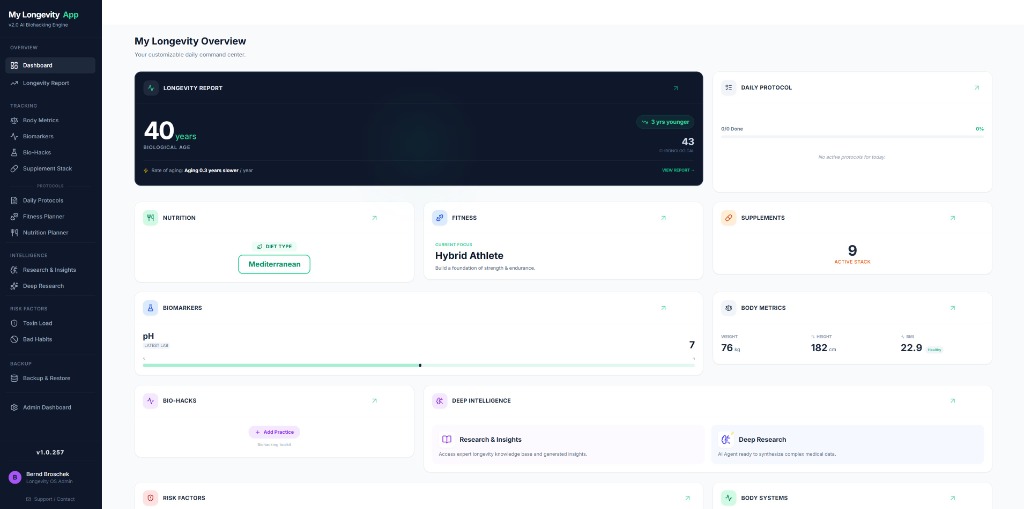
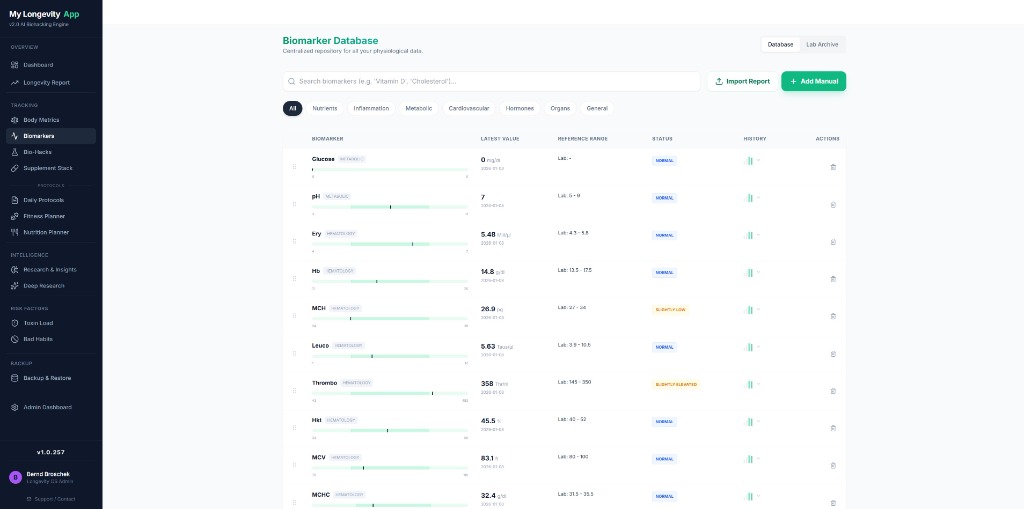
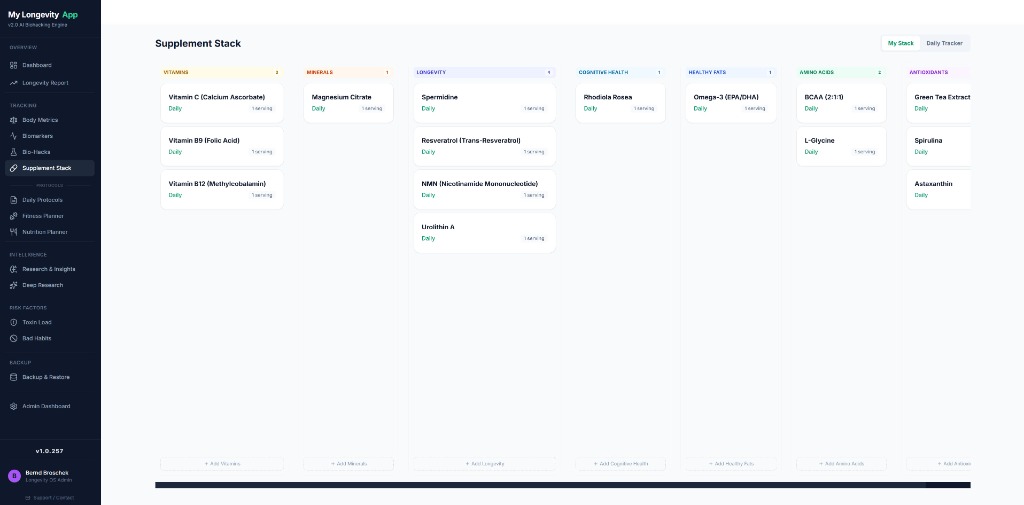
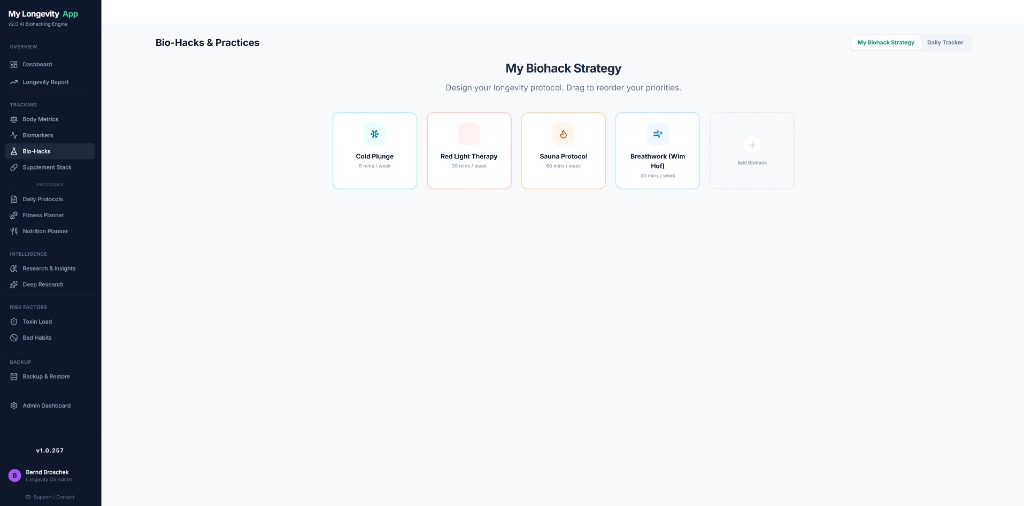
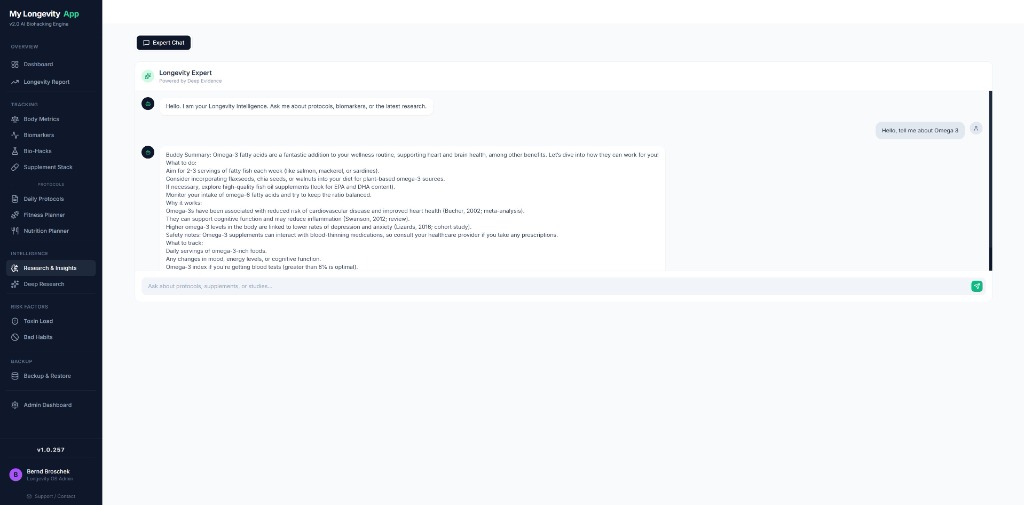
Advanced biohacking tools at your fingertips.
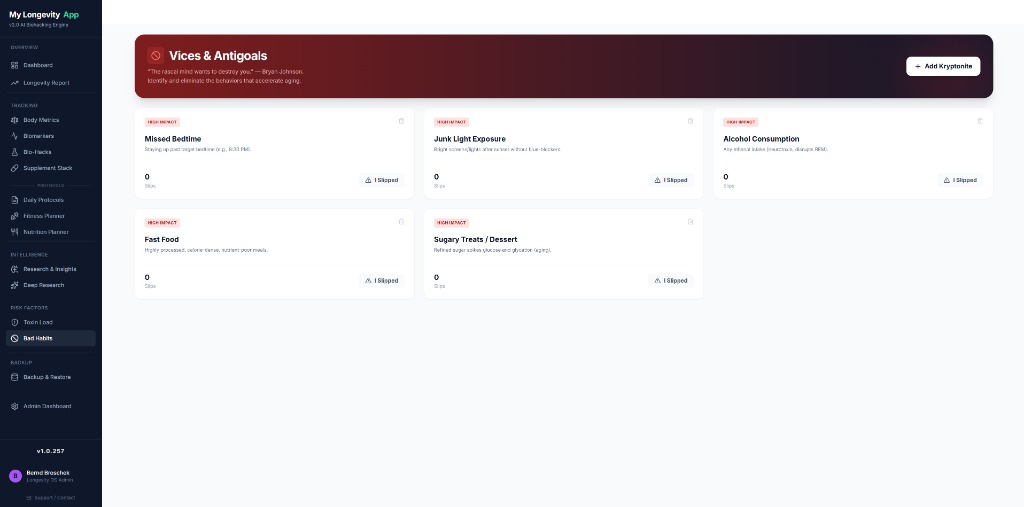
10 integrated modules working together.
Create your account in 30 seconds. No credit card required.
Upload blood work, track body metrics, or start with our AI questionnaire.
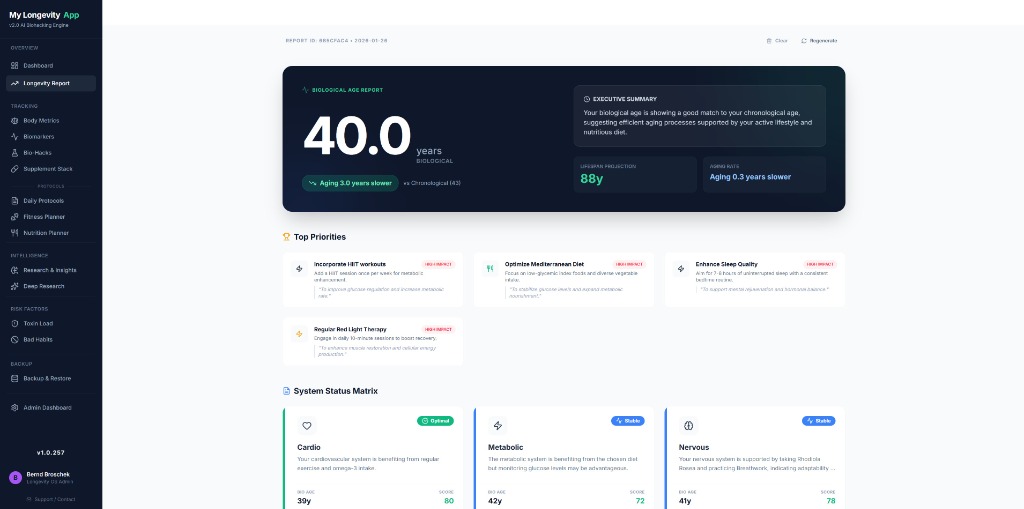
Receive your biological age score, personalized reports, and action plan.
Choose the plan that fits your biohacking journey.
Use reliable tools to determine your biological age score accurately and track changes over time.
Evaluate how diet, exercise, and sleep impact your biological age score for targeted improvements.
Seek guidance from health experts for a comprehensive biological age score understanding and interpretation guide tailored to your needs.
Join thousands of biohackers optimizing their health.
"MyLongevityApp helped me lower my biological age by 5 years. The biomarker tracking is a game-changer."
"Finally one app that combines supplements, blood work, and daily protocols. I love the weekly planner."
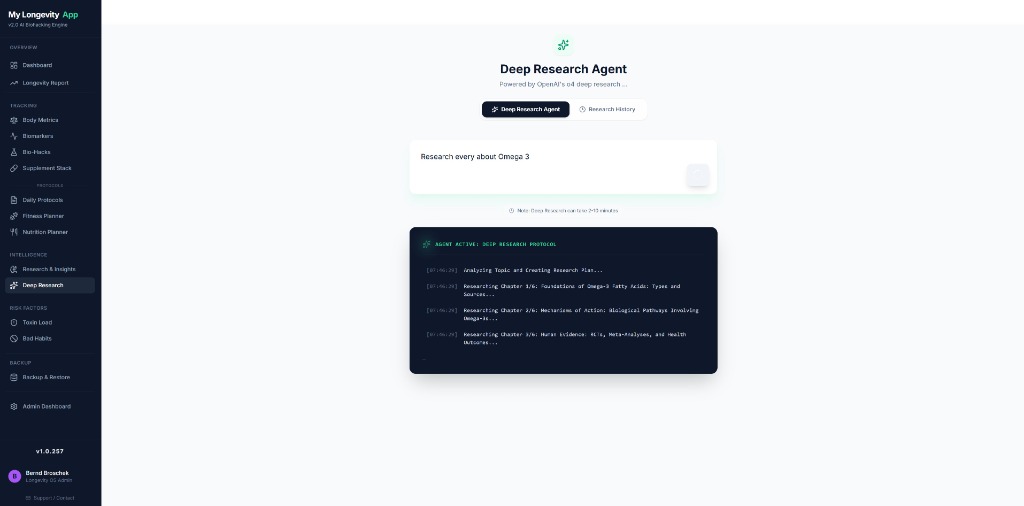
"The AI research agent alone is worth the subscription. It saves me hours of reading every week."
Calculating biological age scores involves a multifaceted approach that assesses various health markers, lifestyle factors, and genetic information. Unlike chronological age, which simply measures the passage of time since birth, biological age provides insight into an individual's physiological state and how well their body is functioning relative to their peers. This distinction is crucial for those interested in longevity and biohacking.
Key factors in determining biological age include biomarkers such as telomere length, DNA methylation patterns, and blood tests that measure inflammation, oxidative stress, and metabolic health. Lifestyle choices like diet, exercise, sleep quality, and stress management also play significant roles. For instance, regular physical activity and a nutrient-dense diet can lead to a lower biological age score, indicating a more youthful biological state despite a higher chronological age.
The biological age score understanding and interpretation guide offers insights into how these factors interconnect and affect overall health. For instance, an individual may have a chronological age of 50 but a biological age score that reflects a more youthful 40, suggesting they are managing their health effectively. Conversely, someone may be 45 chronologically yet have a biological age score of 55 due to poor lifestyle choices.
For those seeking to monitor and improve their biological age, MyLongevityApp provides tools and resources that can help track these vital metrics. By regularly assessing biological age and making targeted lifestyle changes, individuals can work toward optimizing their health and potentially extending their lifespan. Start by evaluating your current health markers and integrating practices that promote longevity, such as adopting a balanced diet and regular exercise.
Understanding your biological age score is a vital step towards optimizing health and wellness strategies. Unlike chronological age, which simply counts the years since birth, biological age reflects the actual physiological state of your body. This score can provide insights into how well your lifestyle choices, genetics, and environment are impacting your overall health.
To interpret your biological age score effectively, start by comparing it to your chronological age. A biological age that is younger than your chronological age may indicate that your lifestyle habits—such as diet, exercise, and stress management—are positively affecting your health. Conversely, a score that is older than your chronological age could signal areas for improvement. This disparity can serve as a wake-up call, prompting you to evaluate and adjust your wellness practices.
Utilizing a biological age score understanding and interpretation guide can further enhance your insights. Such a guide typically includes benchmarks for various lifestyle factors, helping you to pinpoint which areas may require more attention. For instance, if your score suggests that your cardiovascular health needs improvement, consider incorporating more aerobic exercises into your routine or adjusting your diet to include heart-healthy foods.
MyLongevityApp can assist in tracking your biological age score over time, enabling you to monitor the effectiveness of your health interventions. By regularly evaluating your score, you can make informed decisions, such as adjusting your supplement regimen or investing in stress-reduction techniques.
Take actionable steps by setting specific, measurable goals based on your biological age score. For instance, if your score suggests a need for improved metabolic health, aim to incorporate more whole foods into your diet or establish a consistent workout routine. These targeted actions can help bridge the gap between your biological and chronological age, ultimately enhancing your longevity and quality of life.
Understanding biological age scores is crucial in the realm of longevity because these scores provide insights beyond chronological age, reflecting how well your body is aging at the cellular level. Biological age can be influenced by factors such as lifestyle choices, genetics, and environmental exposures. By assessing biological age, individuals can gain a clearer picture of their overall health status and the effectiveness of their current lifestyle choices. This understanding enables more targeted and effective health interventions.
A biological age score understanding and interpretation guide can be instrumental in identifying specific areas where one might improve health outcomes. For instance, if a person's biological age score is significantly higher than their chronological age, it may indicate increased risk for age-related diseases. This information can prompt individuals to make informed changes—such as adopting a healthier diet, increasing physical activity, or managing stress—tailored to their unique biological makeup.
Moreover, tools like MyLongevityApp can help individuals track their biological age over time, providing data that informs personalized health interventions. By regularly monitoring biological age, users can adjust their health strategies based on real-time feedback, making it easier to optimize their longevity efforts.
An actionable takeaway is to assess your biological age through reliable platforms and utilize that information to guide your health decisions. This proactive approach empowers you to make lifestyle changes that can enhance your well-being and potentially extend your lifespan.
Biological age scores are increasingly recognized as vital indicators of an individual's overall health and longevity. Various lifestyle factors significantly influence these scores, with physical activity, nutrition, sleep quality, and stress management ranking among the most impactful. Regular exercise not only enhances cardiovascular health but also improves metabolic function, which can lead to younger biological age scores. A balanced diet rich in antioxidants and essential nutrients further supports cellular health, while adequate sleep contributes to recovery and hormonal balance, both essential for maintaining a youthful biological age.
Biomarkers also play a crucial role in understanding biological age. Key biomarkers include telomere length, DNA methylation patterns, and inflammation markers such as C-reactive protein (CRP). Tracking these biomarkers can provide insights into how lifestyle changes affect biological age. For instance, research has shown that shorter telomeres are associated with aging and chronic diseases, while improved DNA methylation patterns can indicate better health outcomes.
For effective tracking over time, utilizing tools like MyLongevityApp can be beneficial. This platform enables users to monitor their biological age scores alongside lifestyle modifications and biomarker changes. By consistently logging health metrics and lifestyle habits, individuals can gain a clearer picture of their biological age score, allowing for informed decisions about adjustments needed to promote longevity.
An actionable takeaway is to implement a holistic approach that combines regular exercise, a nutrient-dense diet, quality sleep, and stress reduction techniques. By prioritizing these elements, you can positively influence your biological age score and track your progress with a comprehensive understanding and interpretation guide.
Reassessing your biological age score is essential for tracking your health and longevity progress. Individuals should consider this evaluation when they make significant lifestyle changes, such as starting a new diet, implementing a fitness regimen, or adopting mindfulness practices. Additionally, after experiencing major life events, such as illness or significant stress, it may be beneficial to reassess your biological age score to understand how these factors have impacted your overall health.
For ongoing evaluation, various methods and tools can be employed. Home testing kits, like those offered by MyLongevityApp, allow users to measure biomarkers related to aging. These kits often provide insights into genetic, epigenetic, and physiological factors that contribute to biological age. Regularly using such tools can help you gauge the effectiveness of your biohacking strategies and lifestyle changes.
Moreover, keeping a health journal can enhance your biological age score understanding and interpretation guide. Documenting your daily habits, dietary choices, exercise routines, and stress levels can reveal patterns that influence your biological age. By analyzing this data over time, you will be better equipped to adjust your strategies and track improvements.
An actionable takeaway is to schedule a reassessment of your biological age score every six months, especially after implementing new health strategies. This regular check-in not only keeps you informed about your progress but also ensures that you remain proactive in your journey toward improved longevity and vitality.
Join 10,000+ biohackers optimizing their health with AI.
Start Your 7-Day Free TrialNo credit card required. Cancel anytime.