Unlock insights into your health with our biological age calculator from blood work.
As you navigate the complexities of aging, the quest for clarity can feel overwhelming. You may find yourself wondering how your lifestyle choices reflect your true biological age, leading to feelings of anxiety and uncertainty about your health. Searching for a "biological age calculator from blood work" reveals a deep desire to understand your body better and take control of your longevity journey, transforming the fear of aging into a proactive path towards vitality and well-being.
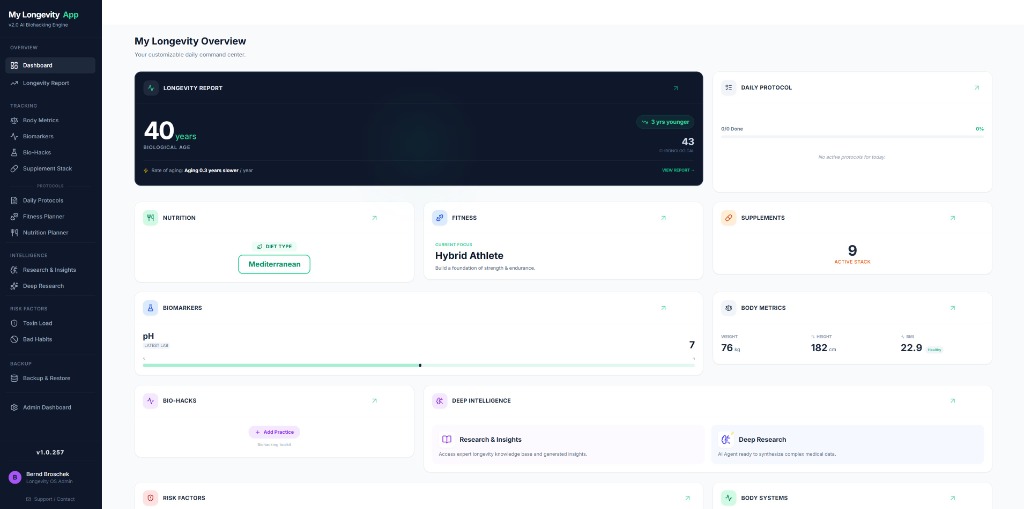
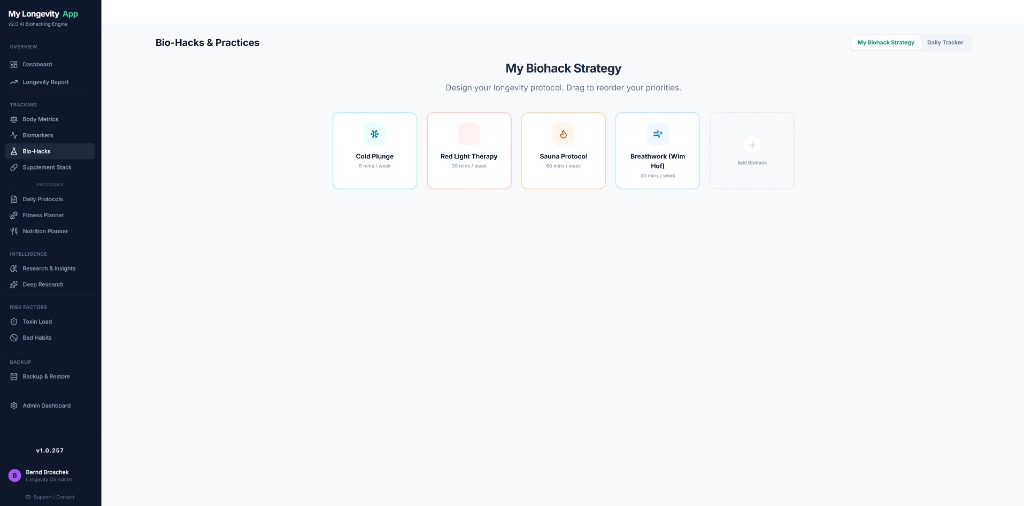
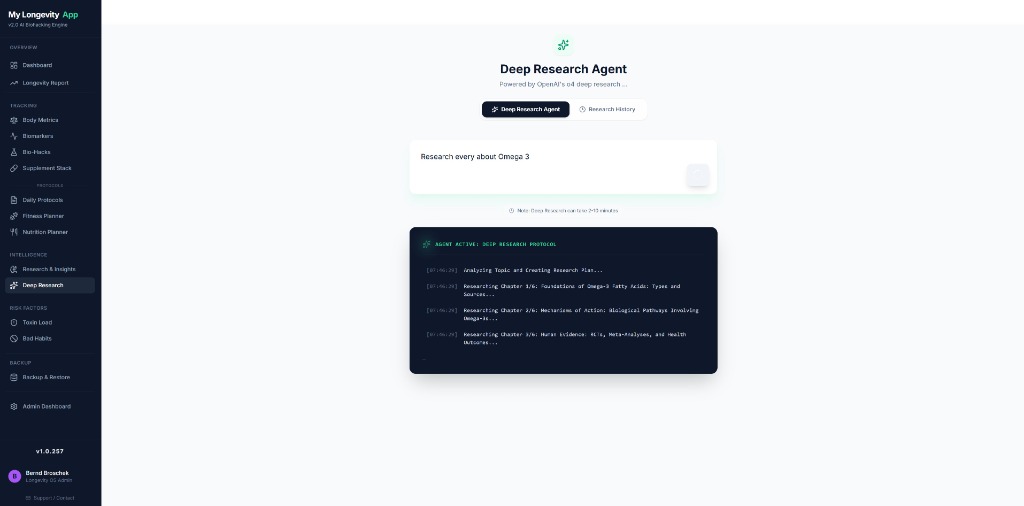
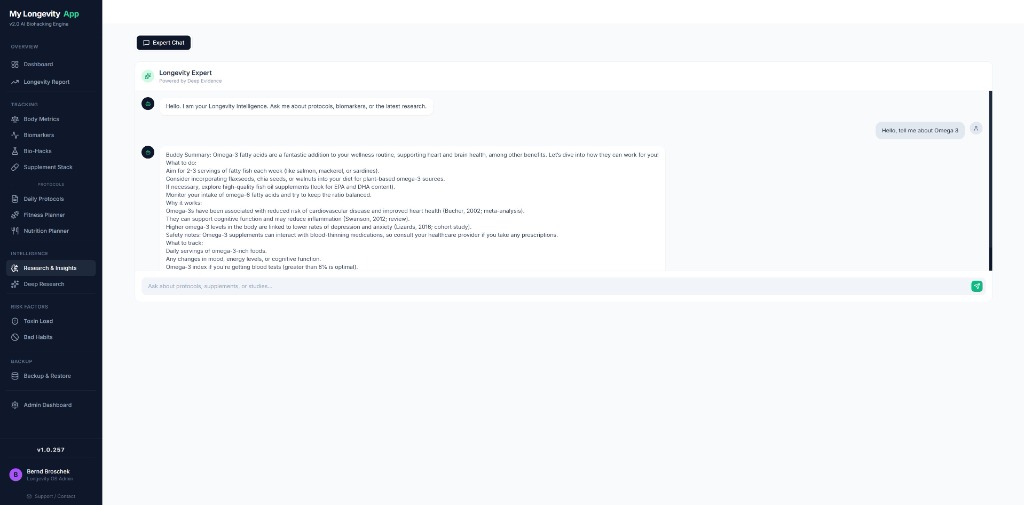
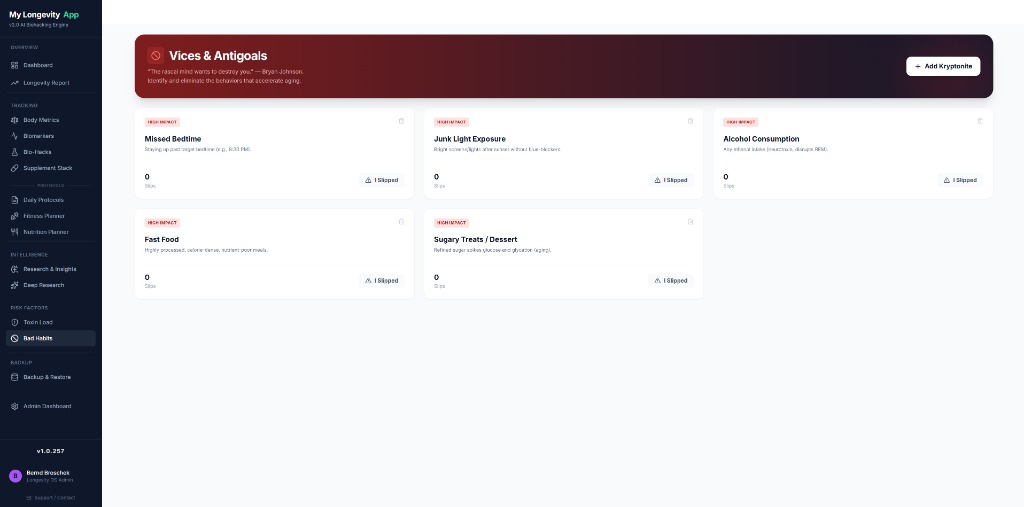
Advanced biohacking tools at your fingertips.
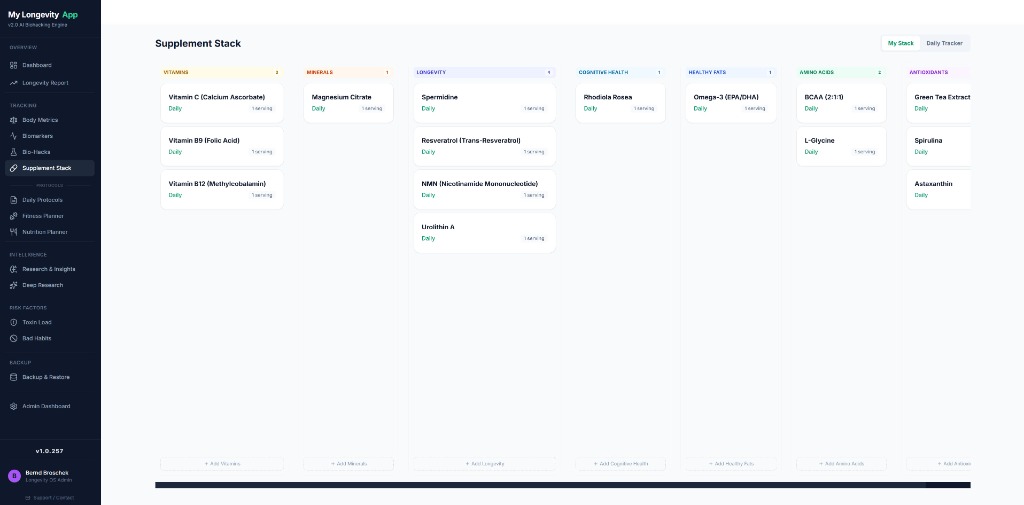
10 integrated modules working together.
Create your account in 30 seconds. No credit card required.
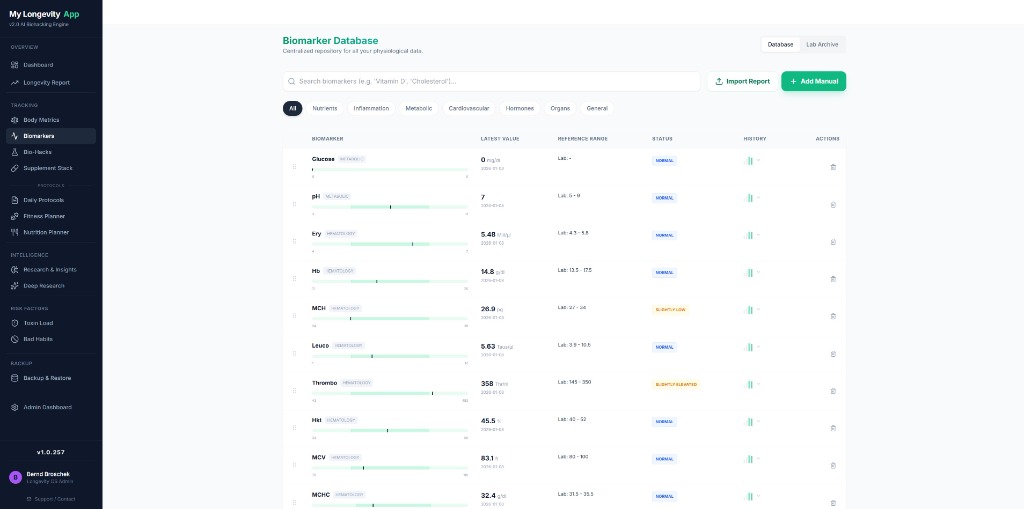
Upload blood work, track body metrics, or start with our AI questionnaire.
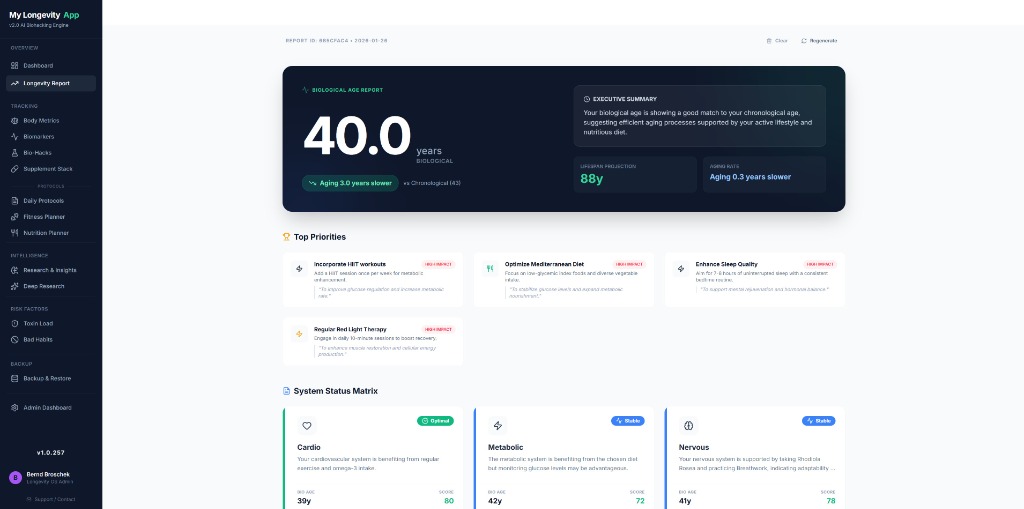
Receive your biological age score, personalized reports, and action plan.
Choose the plan that fits your biohacking journey.
Use a biological age calculator from blood work to assess key health indicators like inflammation and cholesterol levels.
Regularly utilize the biological age calculator from blood work to monitor your aging process and identify areas for improvement.
Leverage insights from the biological age calculator from blood work to make informed changes in diet, exercise, and stress management.
Join thousands of biohackers optimizing their health.
"MyLongevityApp helped me lower my biological age by 5 years. The biomarker tracking is a game-changer."
"Finally one app that combines supplements, blood work, and daily protocols. I love the weekly planner."
"The AI research agent alone is worth the subscription. It saves me hours of reading every week."
A biological age calculator from blood work typically assesses several key biomarkers that provide insights into an individual's physiological state and aging process. These biomarkers include inflammatory markers, lipid profiles, glucose levels, and hormonal balances, among others.
Inflammatory markers like C-reactive protein (CRP) indicate systemic inflammation, which is associated with various age-related diseases. A higher level of CRP can suggest an increased biological age and greater risk of chronic conditions. Lipid profiles, including cholesterol and triglycerides, help evaluate cardiovascular health, as imbalances can lead to heart disease, a leading cause of mortality in older adults.
Glucose levels, particularly fasting glucose and insulin sensitivity, are critical for assessing metabolic health. Elevated glucose levels can signal the beginning of insulin resistance, a condition that accelerates aging and increases the risk of Type 2 diabetes. Hormonal levels, such as testosterone, estrogen, and cortisol, also play a significant role in biological age assessments. For instance, declining testosterone in men can lead to muscle loss and increased fat accumulation, both of which are linked to aging.
MyLongevityApp incorporates these biomarkers into its biological age calculator from blood work, allowing users to gain a comprehensive understanding of their health status. By interpreting these markers, individuals can make informed lifestyle changes to improve their overall longevity.
To optimize your biological age, consider regular blood work to monitor these biomarkers. Pair this with a healthy diet, exercise, and stress management techniques to effectively slow down the aging process.
A biological age calculator from blood work provides valuable insights into your body’s physiological state compared to your chronological age. By analyzing various biomarkers, such as cholesterol levels, inflammation markers, and hormone profiles, this tool can reveal how lifestyle factors, including diet, exercise, and stress management, may be impacting your health.
Understanding your biological age allows for targeted lifestyle changes. For example, if the calculator indicates an accelerated biological age linked to high inflammation markers, you might consider adopting an anti-inflammatory diet rich in omega-3 fatty acids, antioxidants, and whole foods. Regular physical activity can also help mitigate inflammation and improve overall wellness.
Additionally, knowing your biological age can guide you in optimizing your health routine. If your results highlight deficiencies in critical nutrients, you might explore supplementation or dietary adjustments to support better health outcomes. Platforms like MyLongevityApp can offer personalized recommendations based on your unique biomarker profile, empowering you to take actionable steps toward longevity.
Monitoring changes over time can also be motivating. As you implement these lifestyle adjustments, re-evaluating your biological age through follow-up blood work can show progress, reinforcing positive behaviors and encouraging further optimization.
A concrete takeaway is to take the results from your biological age calculator seriously. Use them as a roadmap for personalized health strategies, from nutritional changes to fitness regimens, enabling you to make informed decisions that promote longevity and enhance your overall quality of life.
Discrepancies between chronological age and biological age can arise due to a variety of factors, leading to an insightful distinction between how old someone is in years versus how their body is functioning at a cellular level. Biological age can be assessed through various methods, including a biological age calculator from blood work, which evaluates biomarkers that reflect the physiological state of an individual. These biomarkers can reveal how lifestyle choices, genetics, and environmental factors impact health.
One significant factor influencing these differences is lifestyle. Diet, exercise, sleep quality, and stress management all contribute to how well the body ages. For instance, individuals who maintain a balanced diet rich in antioxidants and engage in regular physical activity may show a biological age that is younger than their chronological age. Conversely, chronic stress, poor nutrition, and sedentary behavior can accelerate aging at the biological level, resulting in a biological age that exceeds chronological age.
Genetics also play a crucial role. Some individuals may be genetically predisposed to certain health conditions, leading to a faster decline in biological age despite a relatively young chronological age. Additionally, environmental factors such as exposure to pollutants or toxins can impact biological aging processes.
To gain a clearer understanding of your own biological age, consider utilizing tools like MyLongevityApp, which can help interpret blood work data effectively. This insight can guide you in making informed lifestyle adjustments. Focusing on nutrition, exercise, and stress reduction can ultimately help align your biological age with your chronological age, promoting overall longevity and health.
The field of longevity and biohacking has seen significant advancements in the development of biological age calculators from blood work. These tools harness cutting-edge technologies and methodologies to provide a more accurate estimate of an individual's biological age, which can differ from chronological age due to various lifestyle and genetic factors.
One of the primary methodologies involves the analysis of epigenetic markers, specifically DNA methylation patterns. Researchers have identified that these patterns can indicate cellular aging more accurately than chronological age alone. By measuring the methylation levels across specific genes, biological age calculators can offer a nuanced understanding of an individual's health status and age.
In addition to epigenetics, machine learning algorithms are increasingly being employed to enhance the predictive capabilities of these calculators. By analyzing vast datasets from blood tests, these algorithms can identify complex patterns and correlations that might not be immediately apparent. This approach not only improves the precision of age estimation but also allows for personalized insights based on individual health profiles.
Furthermore, integrating multi-omics data—such as genomics, proteomics, and metabolomics—can significantly deepen the analysis. This holistic view of biological data enables calculators to consider various biological systems and their interactions, leading to more comprehensive age assessments.
MyLongevityApp is one platform that effectively utilizes these advanced technologies to provide users with actionable insights based on their biological age results. By leveraging comprehensive blood test analyses, it empowers individuals to make informed decisions about their health and longevity.
For those interested in optimizing their health, considering a biological age calculator from blood work can be a pivotal step. By understanding your biological age, you can tailor lifestyle changes—such as diet, exercise, and supplementation—to potentially slow down the aging process and enhance overall well-being.
Individuals should consider using a biological age calculator from blood work when they seek a more comprehensive understanding of their health beyond chronological age. Unlike chronological age, which is a simple count of years since birth, biological age reflects the physiological state of an individual’s body. Factors such as genetics, lifestyle, and environmental influences can accelerate or decelerate biological aging. By utilizing a biological age calculator derived from blood work, individuals can gain insights into how their habits—such as diet, exercise, and stress management—are impacting their health and aging process.
It's advisable to re-evaluate biological age at regular intervals, typically every six to twelve months. This timeframe allows for adequate observation of lifestyle changes and their effects on health markers. Frequent assessments can help in fine-tuning biohacking strategies, enabling individuals to adjust their diets, exercise routines, or supplementation based on the data collected. For those using platforms like MyLongevityApp, this periodic evaluation can serve as a benchmark for progress and motivation.
An actionable takeaway is to start by scheduling a comprehensive blood test that includes biomarkers relevant to aging, then input the results into a biological age calculator from blood work. After obtaining your initial biological age, set a reminder to reassess your biological age every six months. This proactive approach will help you stay aligned with your health goals and make informed decisions to enhance your longevity.
Join 10,000+ biohackers optimizing their health with AI.
Start Your 7-Day Free TrialNo credit card required. Cancel anytime.