Unlock your true potential by tracking and optimizing your biological age effortlessly.
As you search for a biological age app, you may feel a mix of confusion and concern about your health and vitality. The relentless passage of time can weigh heavily, leaving you to wonder if your body truly reflects your years or if there’s a way to reclaim your youthful energy. You’re not alone in seeking clarity and hope, yearning for a tool that not only measures your biological age but also empowers you to take charge of your longevity journey.
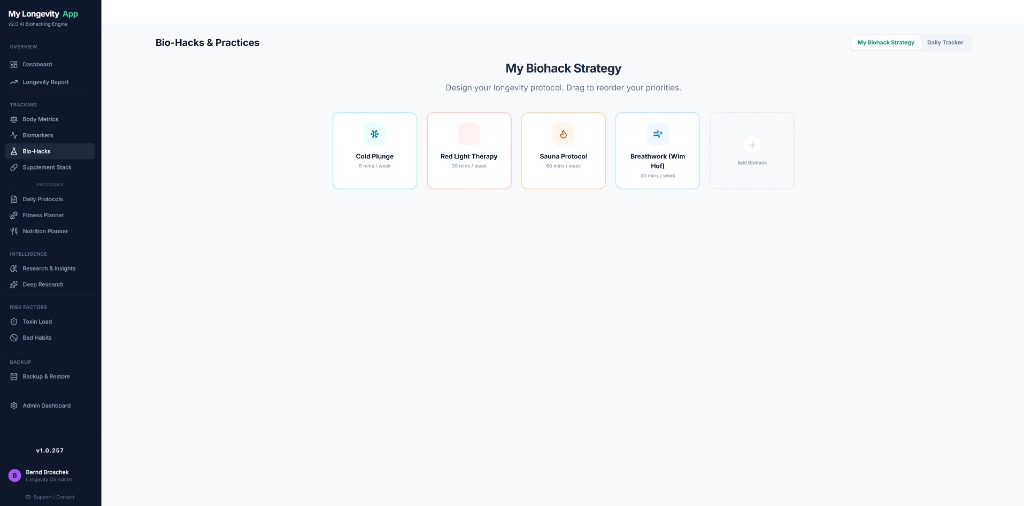
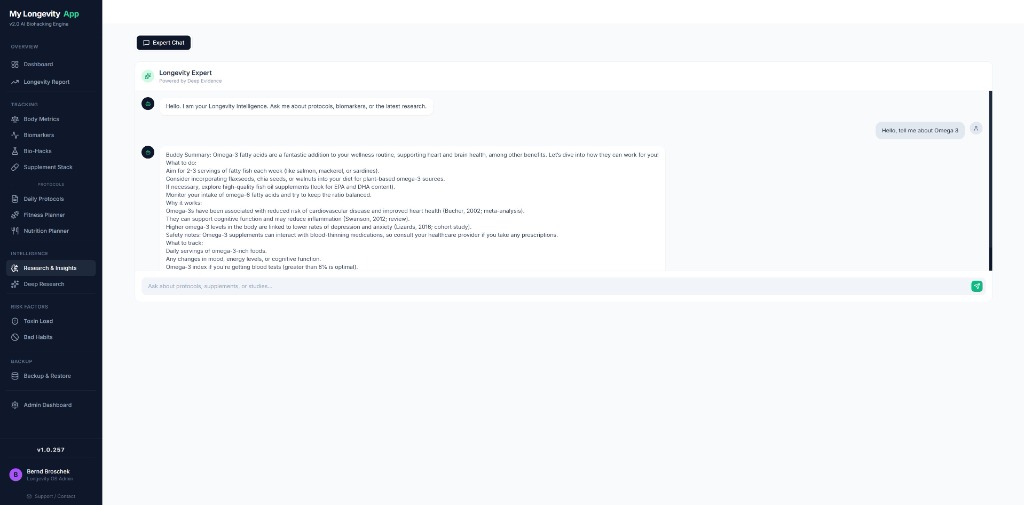
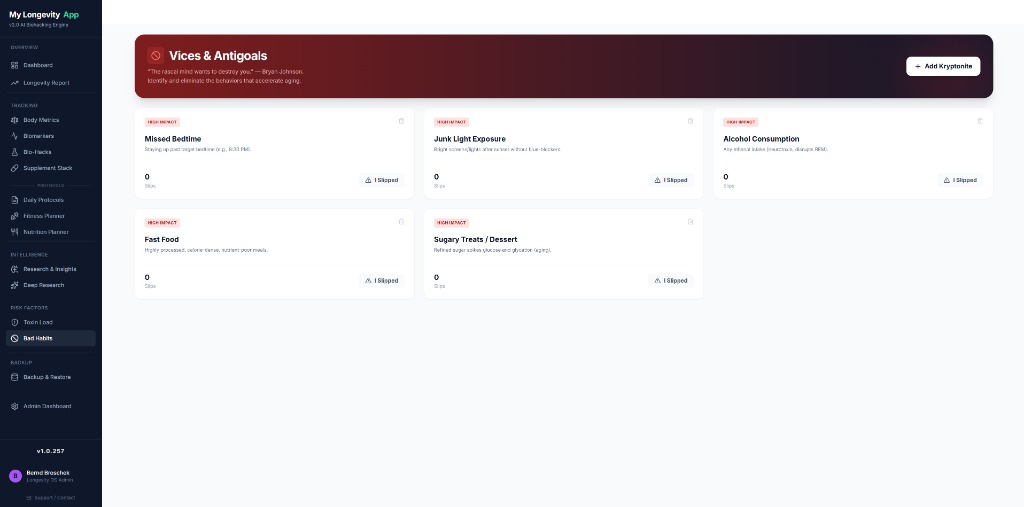
Advanced biohacking tools at your fingertips.
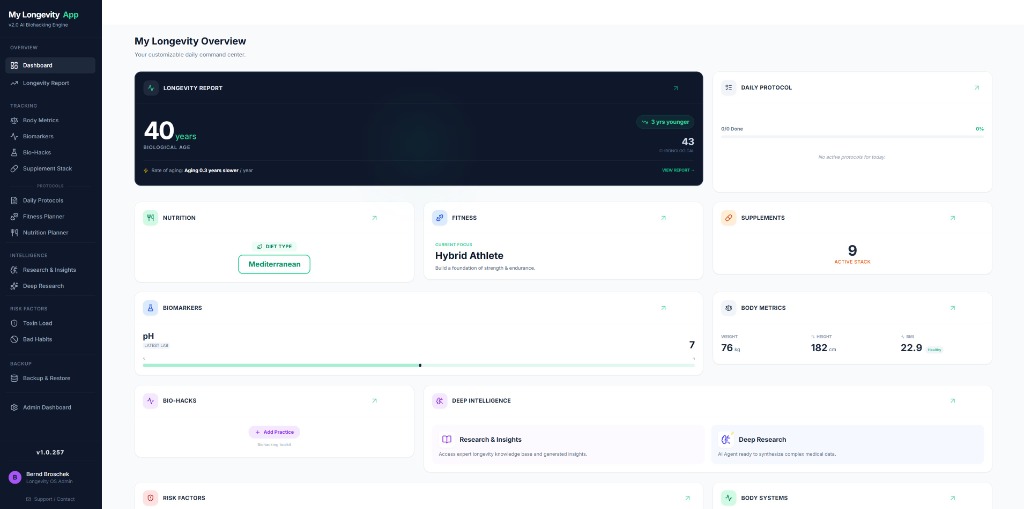
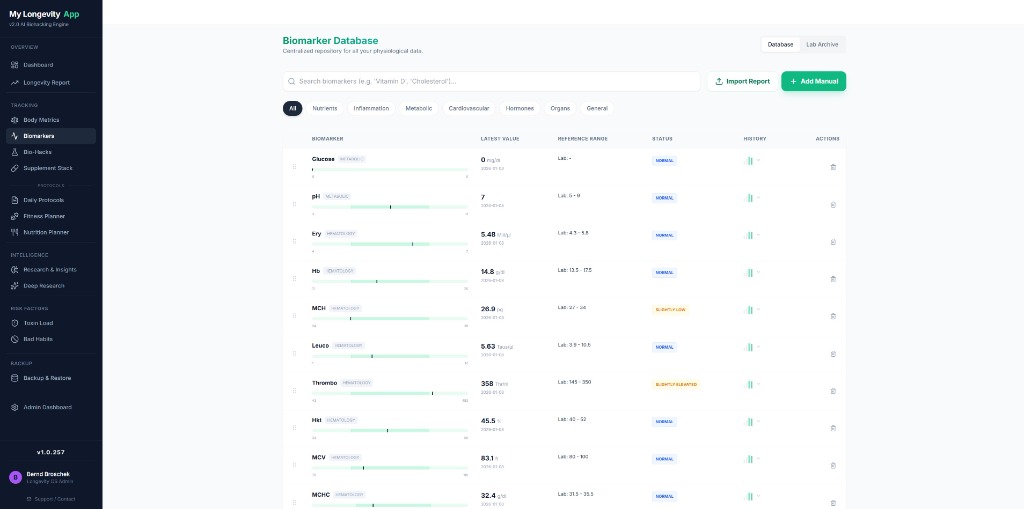
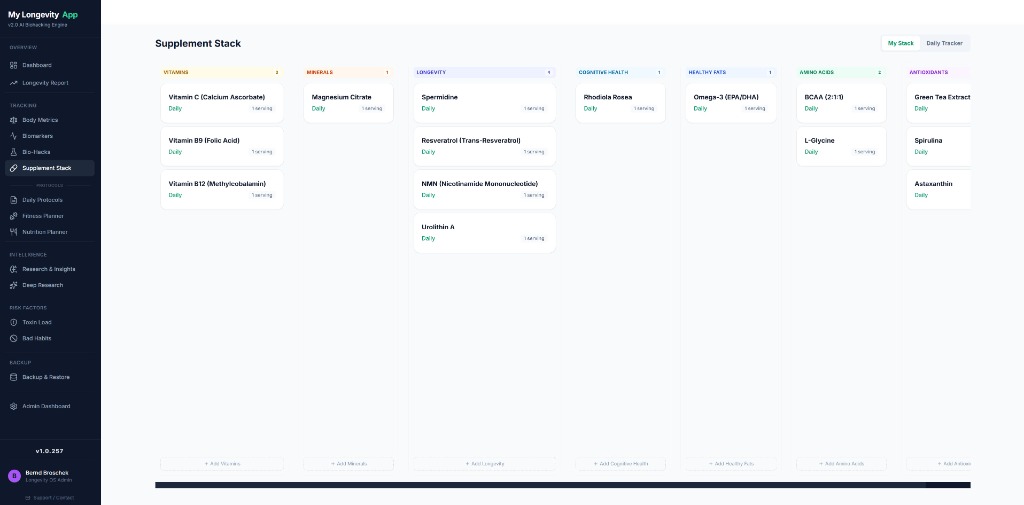
10 integrated modules working together.
Create your account in 30 seconds. No credit card required.
Upload blood work, track body metrics, or start with our AI questionnaire.
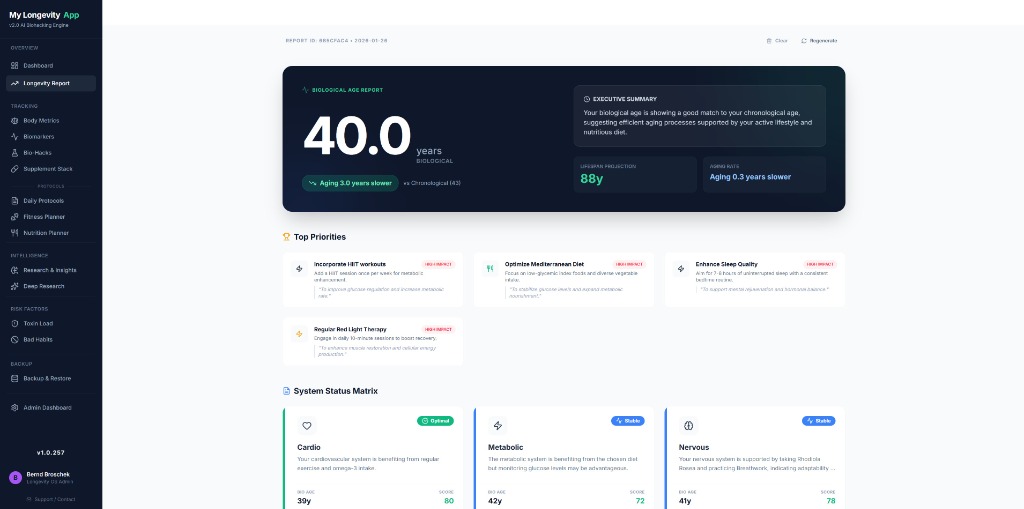
Receive your biological age score, personalized reports, and action plan.
Choose the plan that fits your biohacking journey.
Use a biological age app to monitor your health improvements over time, helping you adjust your lifestyle for optimal longevity.
Leverage data from a biological age app to receive tailored recommendations that suit your unique health needs.
Stay motivated by visualizing changes in your biological age app, encouraging consistent efforts towards healthier habits.
Join thousands of biohackers optimizing their health.
"MyLongevityApp helped me lower my biological age by 5 years. The biomarker tracking is a game-changer."
"Finally one app that combines supplements, blood work, and daily protocols. I love the weekly planner."
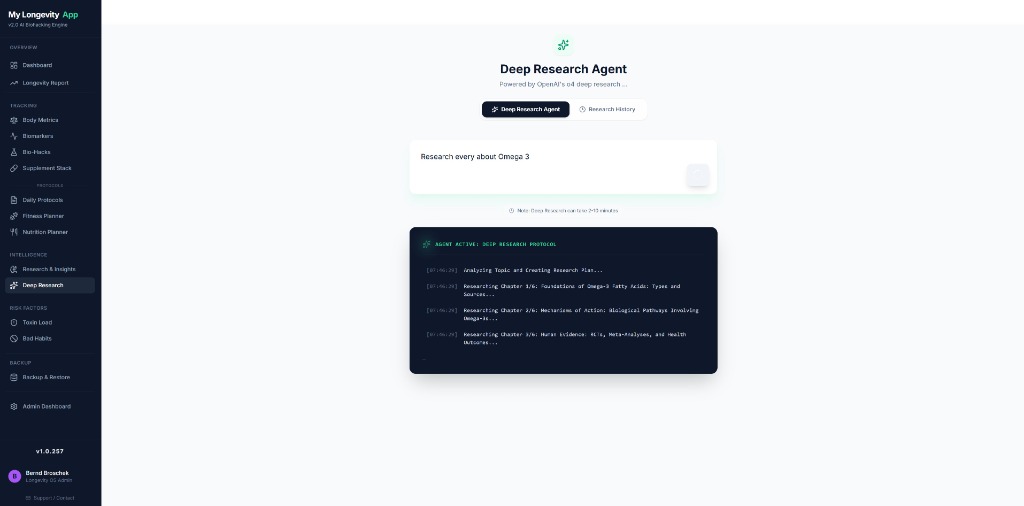
"The AI research agent alone is worth the subscription. It saves me hours of reading every week."
When selecting a biological age app, several key features are essential for ensuring it provides accurate and actionable insights about your health. First, look for an app that uses validated algorithms based on a comprehensive range of biomarkers. These can include genetic information, lifestyle factors, and physiological measurements. The more data points the app considers, the more accurate your biological age assessment will be.
User experience is another important aspect. The app should offer an intuitive interface that makes it easy to input data and track changes over time. A user-friendly design not only enhances usability but also encourages consistent engagement, which is vital for monitoring your health journey.
Additionally, consider whether the app provides personalized recommendations based on your biological age results. This feature should offer actionable insights, such as dietary adjustments, exercise routines, or stress management techniques tailored to your specific needs. For instance, MyLongevityApp offers personalized suggestions that help users implement lifestyle changes effectively.
Integration with wearable devices can further enhance the app's functionality. By syncing with smartwatches or fitness trackers, the app can continuously collect real-time data, providing a more dynamic view of your biological age and overall health status.
Finally, check for educational resources within the app. Access to articles, videos, and expert insights can deepen your understanding of biological age and its implications, empowering you to make informed decisions about your health.
When evaluating biological age apps, prioritize features that ensure accuracy and personalization, enabling you to take proactive steps toward a healthier future.
A biological age app calculates age by assessing various physiological metrics and biomarkers that reflect the body’s functional health rather than simply counting the years since birth. This approach provides a more nuanced understanding of an individual’s biological aging process. Unlike chronological age, which is a fixed number, biological age can fluctuate based on lifestyle, genetics, and environmental factors.
Key factors contributing to this assessment include genetic predispositions, metabolic health, physical fitness, and lifestyle choices such as diet, sleep, and stress levels. For instance, an app may analyze blood markers, such as inflammation levels, hormone balances, and metabolic rates, to determine how well your body is functioning at a cellular level. Additionally, lifestyle inputs, like exercise frequency and dietary habits, significantly influence biological age calculations.
MyLongevityApp, for instance, utilizes advanced algorithms to interpret this data, providing users with a comprehensive picture of their health status. It may offer insights into areas for improvement, such as enhancing cardiovascular fitness or optimizing nutrition, which can positively influence biological age.
By regularly monitoring these factors, users can make informed decisions that support healthier aging. Engaging with a biological age app empowers individuals to take proactive steps toward longevity, thereby encouraging a lifestyle that promotes optimal health and well-being.
Understanding your biological age is crucial for longevity as it provides a more accurate reflection of your health status than chronological age. While chronological age simply counts the years since your birth, biological age assesses the condition of your body based on various biomarkers, lifestyle choices, and genetic factors. This insight allows you to identify areas for improvement, tailor your wellness strategies, and make informed decisions that can enhance your lifespan and healthspan.
A biological age app can serve as a valuable tool in tracking your progress over time. By inputting data related to your lifestyle—such as diet, exercise, sleep patterns, and stress levels—the app can calculate your biological age and highlight changes as you adopt healthier habits. Some advanced apps, like MyLongevityApp, utilize cutting-edge algorithms to analyze your data, providing personalized recommendations to help you optimize your health.
Using a biological age app enables you to set specific goals and monitor your journey toward improved longevity. Regularly assessing your biological age can motivate you to maintain positive behaviors and make adjustments where necessary. For example, if you notice your biological age increasing despite your efforts, it may prompt you to reevaluate your diet or stress management techniques.
To make the most out of this technology, consider integrating regular health check-ins and adapting your lifestyle based on the feedback from the app. This proactive approach can empower you to take charge of your longevity journey, ensuring that you not only live longer but also enjoy a higher quality of life along the way.
The rise of biological age apps has sparked interest in their potential to influence healthier lifestyle choices and enhance longevity. A number of scientific studies provide evidence that tracking biological age can motivate users to adopt wellness-oriented behaviors. For instance, a study published in the journal *Nature Aging* highlighted how individuals who monitored their biological age reported significant improvements in diet, exercise, and overall health awareness. This suggests that the feedback provided by these apps can serve as a catalyst for positive lifestyle changes.
Further research published in *The Journals of Gerontology* found that participants who engaged with biological age assessments were more likely to set health-related goals and follow through with them. The concept of biological age, which may differ from chronological age, resonates with users, prompting them to reflect on their health status and make informed decisions. Such findings indicate that biological age apps fulfill an essential role in personalized health management, making the abstract concept of aging more tangible.
MyLongevityApp, for example, incorporates personalized insights that help users understand their biological age in relation to various health metrics. By providing actionable feedback, it encourages users to implement changes that could potentially extend their lifespan and improve their quality of life.
For those looking to leverage technology for better health outcomes, utilizing a biological age app can be a practical step. Regularly monitoring biological age not only serves as a motivational tool but also assists in tracking progress toward a healthier, longer life.
Integrating a biological age app into your wellness routine can provide valuable insights into your overall health and longevity. The optimal time to start using such an app is when you are ready to take a proactive approach to your well-being. This might be during a new health initiative, such as starting a fitness program, adopting a healthier diet, or after a significant lifestyle change. By establishing a baseline biological age at the outset, you can track how various interventions affect your health over time.
Monitoring your biological age should ideally be done every three to six months. This timeframe allows enough time to implement lifestyle changes, such as improved nutrition, regular exercise, and stress management techniques, while still providing frequent enough check-ins to see progress. More frequent monitoring could lead to unnecessary anxiety or confusion, as biological age can fluctuate based on numerous factors. Using the MyLongevityApp can aid in providing an accurate and consistent measure of your biological age, making it easier to align your health habits with your goals.
For optimal results, consider using the biological age app to set specific, measurable goals based on your readings. For example, if your biological age is higher than your chronological age, you might focus on stress reduction techniques or increasing physical activity. Regularly reviewing your progress in relation to these goals will help you stay motivated and informed about your health journey.
Join 10,000+ biohackers optimizing their health with AI.
Start Your 7-Day Free TrialNo credit card required. Cancel anytime.