Unlock your potential by harmonizing light exposure with your body's natural circadian rhythms.
In a world where artificial light floods our lives, many find themselves trapped in a cycle of fatigue and unrest, struggling to maintain a harmonious sleep-wake pattern. The quest for clarity and vitality often feels elusive, leaving individuals overwhelmed and yearning for balance. This is where the concept of biohacking light exposure and circadian rhythm optimization comes into play, offering a glimmer of hope for those desperate to reclaim their energy and well-being.
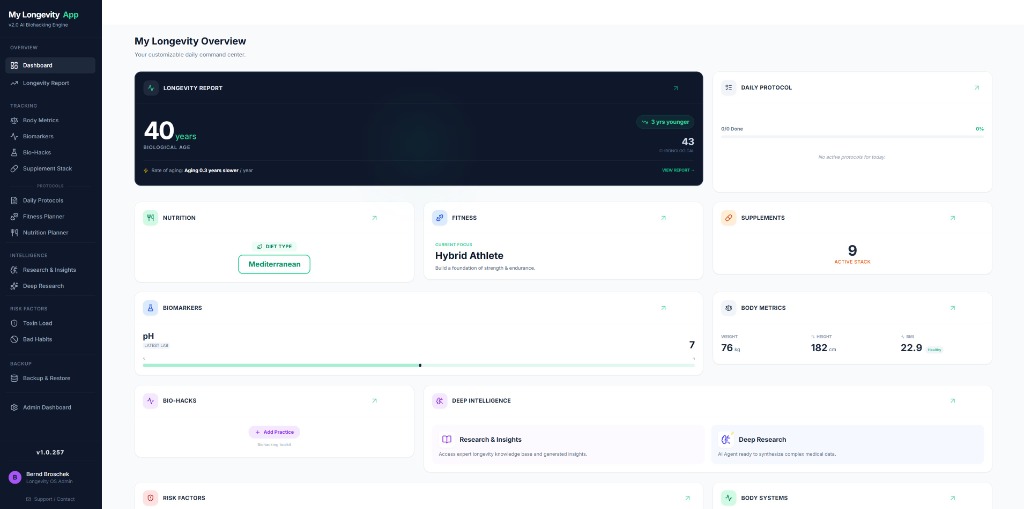
Advanced biohacking tools at your fingertips.
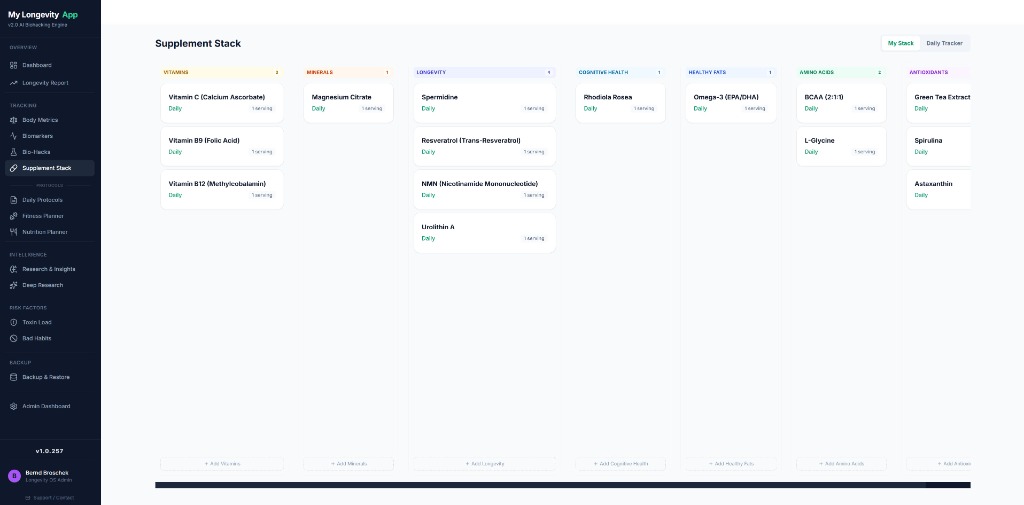
10 integrated modules working together.
Create your account in 30 seconds. No credit card required.
Upload blood work, track body metrics, or start with our AI questionnaire.
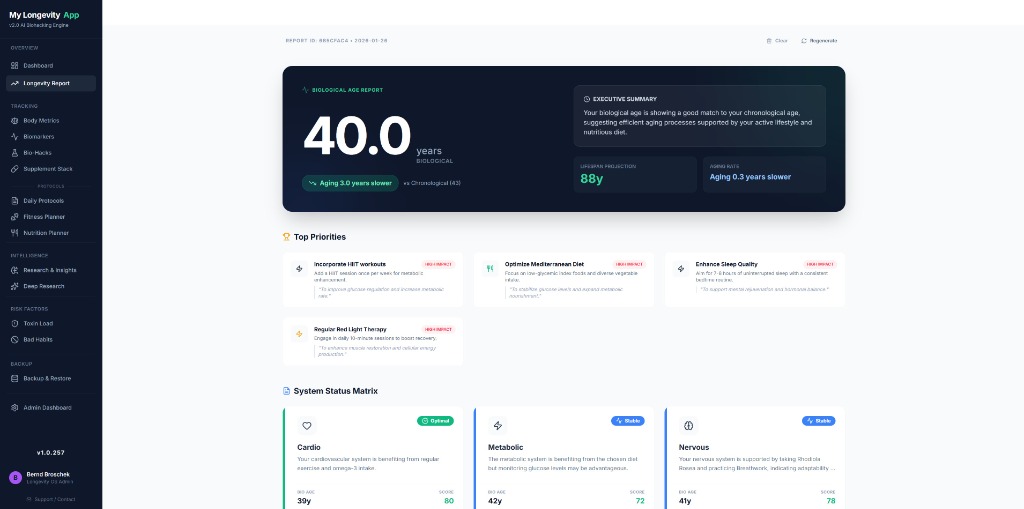
Receive your biological age score, personalized reports, and action plan.
Choose the plan that fits your biohacking journey.
Expose yourself to natural sunlight in the morning to enhance mood and support biohacking light exposure and circadian rhythm optimization.
Reduce blue light exposure in the evening by using blue light blocking glasses to improve sleep quality.
Maintain a consistent sleep schedule to reinforce your body's natural circadian rhythm and promote overall well-being.
Join thousands of biohackers optimizing their health.
"MyLongevityApp helped me lower my biological age by 5 years. The biomarker tracking is a game-changer."
"Finally one app that combines supplements, blood work, and daily protocols. I love the weekly planner."
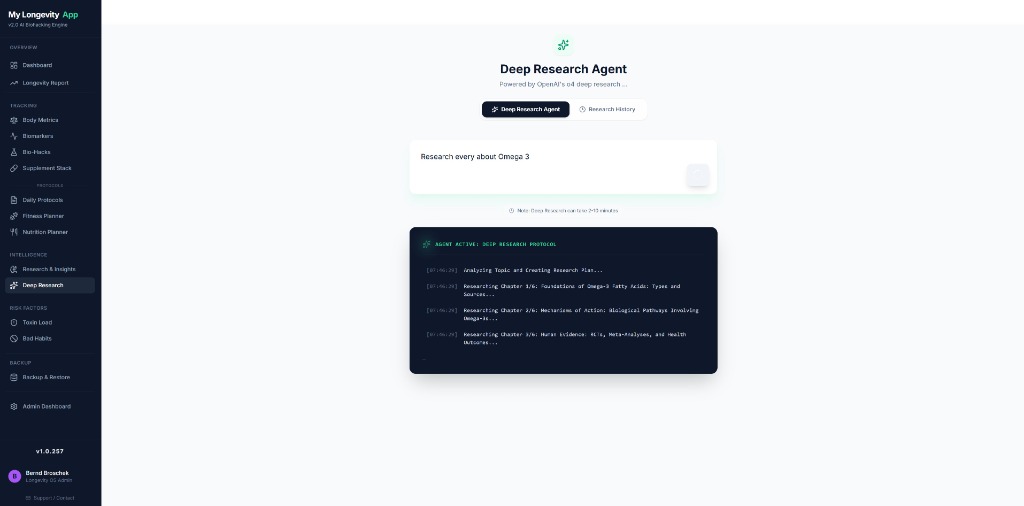
"The AI research agent alone is worth the subscription. It saves me hours of reading every week."
The optimization of circadian rhythms through light exposure is a crucial aspect of biohacking for enhanced well-being and longevity. Specific wavelengths of light, particularly blue light in the range of 480 to 500 nanometers, play a significant role in regulating our internal biological clock. This type of light is most effective during the day, as it helps promote alertness and cognitive function, aligning with our natural sleep-wake cycles.
Conversely, red and near-infrared light, typically ranging from 600 to 900 nanometers, can be beneficial in the evening. These wavelengths do not significantly inhibit melatonin production, which is essential for sleep quality. By minimizing exposure to blue light in the hours leading up to bedtime—especially from screens—individuals can support their circadian rhythms more effectively.
Incorporating these insights into daily routines involves deliberate planning around light exposure. During the day, individuals can maximize blue light exposure by spending time outdoors in natural sunlight or using light therapy devices designed to emit specific wavelengths. For evening routines, consider dimming overhead lights and utilizing red or warm-toned lighting to create a calming environment.
Additionally, apps like MyLongevityApp can assist users in tracking their light exposure patterns, helping them identify optimal times for both blue and red light exposure. By making these adjustments, individuals can significantly enhance their biohacking light exposure and circadian rhythm optimization, leading to improved sleep, mood, and overall health.
To implement these strategies effectively, aim to spend at least 30 minutes outside in natural light during the day and switch to warmer lighting options in the evening, fostering a healthier circadian rhythm.
The timing of light exposure plays a crucial role in regulating melatonin production, a hormone that influences sleep-wake cycles. Melatonin is secreted by the pineal gland in response to darkness, signaling to the body that it's time to prepare for sleep. Conversely, exposure to light, especially blue light from screens and artificial sources, can inhibit melatonin production. This disruption can lead to sleep disturbances, affecting not only sleep quality but also overall health.
Circadian rhythms, the body's internal clock that governs various biological processes over a 24-hour cycle, are closely tied to light exposure. A well-regulated circadian rhythm aids in optimizing hormone release, metabolism, and immune function. When light exposure aligns with natural day and night cycles, it promotes healthy melatonin levels, which can enhance sleep quality and improve mood. Disruptions to this rhythm, often seen in modern lifestyles, can contribute to chronic conditions such as obesity, diabetes, and even cardiovascular diseases.
Biohacking light exposure and circadian rhythm optimization is a practical approach to enhance health and longevity. Implementing strategies such as minimizing blue light exposure in the evening, utilizing blackout curtains, and spending time outdoors during daylight hours can significantly improve melatonin production and overall well-being. MyLongevityApp can support these practices by providing personalized insights into your light exposure patterns and suggesting adjustments for better circadian alignment.
To enhance melatonin production and support your health, prioritize natural light exposure during the day and limit artificial light in the evening, fostering a deeper connection with your body's natural rhythms.
Biohacking light exposure and circadian rhythm optimization is a crucial aspect of enhancing overall health and longevity. The human body operates on a natural circadian rhythm, which is heavily influenced by light. This internal clock regulates sleep-wake cycles, hormone production, and various metabolic processes. Both natural and artificial light sources play significant roles in this regulation, making it essential to consider their interplay when seeking to optimize these rhythms.
Natural light, especially in the morning, helps to reset the circadian clock and promotes the production of serotonin, a precursor to melatonin, which aids in sleep. Exposure to daylight during the day enhances mood and cognitive function, establishing a foundation for better sleep at night. Conversely, artificial light, particularly blue light emitted from screens, can disrupt this rhythm by tricking the brain into thinking it’s still daytime, leading to difficulties in falling asleep and diminished sleep quality.
To enhance the balance between natural and artificial light, consider implementing strategies such as using blue light filters on devices during evening hours or adopting a strict digital curfew. Additionally, maximizing morning light exposure by spending time outdoors or near windows can significantly improve your circadian alignment. MyLongevityApp can provide personalized recommendations based on your specific light exposure patterns, allowing you to make data-driven decisions for better health outcomes.
Incorporating these practices into your daily routine can lead to improved sleep quality, increased energy levels, and enhanced overall well-being. Prioritizing a harmonious balance of natural and artificial light is a fundamental step toward effective biohacking in the realm of circadian rhythm optimization.
Biohacking light exposure and circadian rhythm optimization are essential techniques for enhancing sleep quality. Scientific research highlights the critical role that light plays in regulating our internal biological clocks, or circadian rhythms, which govern sleep-wake cycles. Exposure to natural light during the day and minimizing artificial light exposure at night can significantly improve sleep quality.
One effective strategy is to increase morning light exposure. Studies suggest that spending at least 20-30 minutes outdoors shortly after waking can enhance mood and alertness, thanks to the natural light signaling your body to start the day. For those in less sunny climates or during winter months, light therapy lamps can be a beneficial alternative. These lamps emit bright light that mimics natural sunlight, helping to regulate circadian rhythms and improve overall well-being.
In the evening, it’s crucial to limit exposure to blue light emitted by screens. Using blue light-blocking glasses or enabling night mode on devices can help reduce this exposure, signaling to your body that it's time to wind down. Additionally, dimming lights in your home as bedtime approaches can create a more conducive environment for sleep.
For those looking to optimize their sleep patterns further, MyLongevityApp offers insights tailored to your lifestyle, helping to track light exposure and sleep quality. This data-driven approach can guide you in adjusting your habits to achieve better sleep.
Implementing these biohacking techniques—prioritizing natural light during the day and limiting artificial light at night—can effectively enhance sleep quality and support overall health. Aim to establish a consistent sleep routine that aligns with natural light patterns for optimal results.
Optimizing your circadian rhythm is crucial for overall health and longevity, and a key component of this process is managing light exposure throughout the day. For effective biohacking light exposure and circadian rhythm optimization, timing is everything.
Morning exposure to bright light is particularly important as it helps reset your internal clock. Ideally, aim to spend at least 20 to 30 minutes outside in natural sunlight shortly after waking. This exposure signals your body to suppress melatonin production, which enhances alertness and boosts mood. The blue light spectrum, prevalent in morning sunlight, plays a vital role in this process by promoting the release of serotonin and regulating sleep-wake cycles. If natural sunlight isn’t available, consider a light therapy lamp designed to mimic daylight.
Conversely, dim light exposure in the evening is essential for preparing your body for sleep. As the day winds down, reducing exposure to bright light—especially blue light from screens—helps facilitate melatonin production, signaling to your body that it’s time to rest. Aim to dim indoor lights and limit screen time at least an hour before bed. Activities such as reading under soft light or using blue light filters on devices can support this process.
For those looking to fine-tune their daily routines, tools like MyLongevityApp can assist in tracking light exposure and sleep patterns, aiding in the optimization of circadian rhythms.
Prioritizing bright light in the morning and dim light in the evening can be a simple yet powerful strategy. Start implementing this practice today to leverage the benefits for your health and longevity.
Join 10,000+ biohackers optimizing their health with AI.
Start Your 7-Day Free TrialNo credit card required. Cancel anytime.