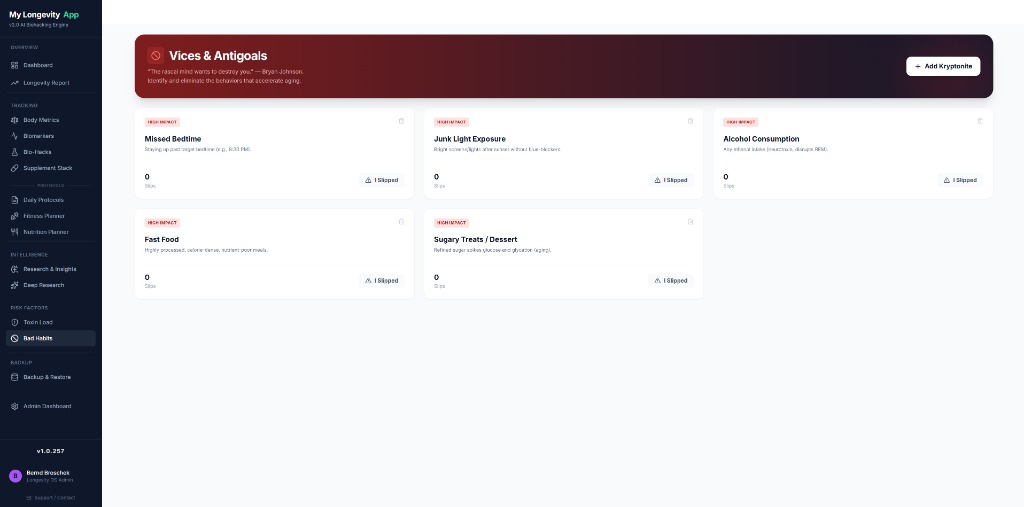
Transform your life by identifying and overcoming your bad habits with our intuitive tracker.
Many individuals struggle with the weight of their bad habits, feeling trapped in cycles that hinder their quest for a healthier, longer life. The emotional toll can be overwhelming, as they grapple with guilt and frustration, recognizing that these habits are sabotaging their well-being. A bad habits tracker can be a vital tool in this journey, offering a compassionate way to identify, understand, and ultimately transform these behaviors into positive actions.
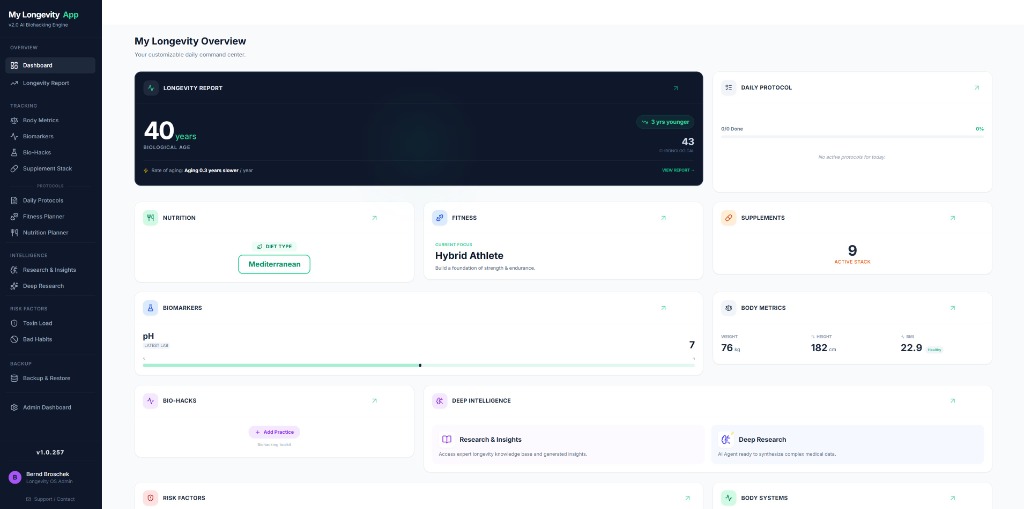
Advanced biohacking tools at your fingertips.
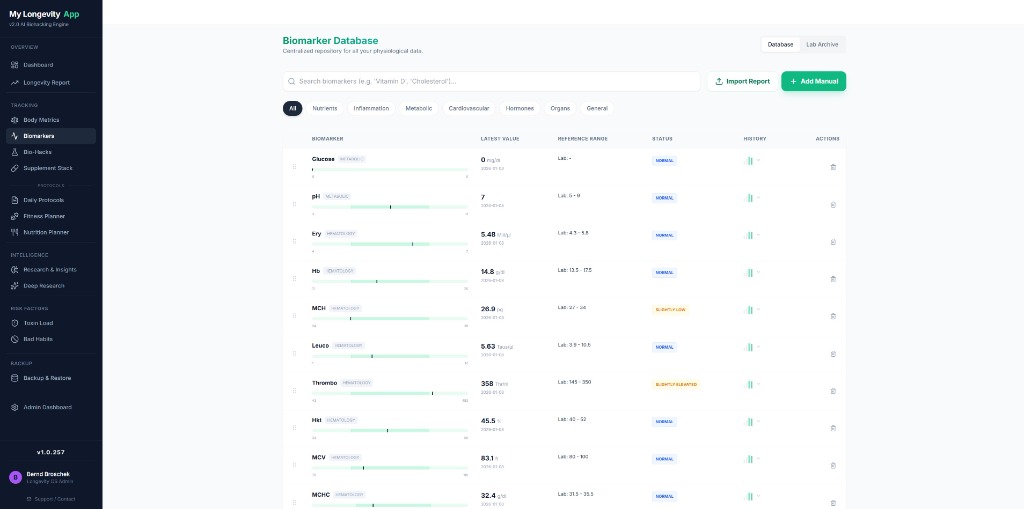
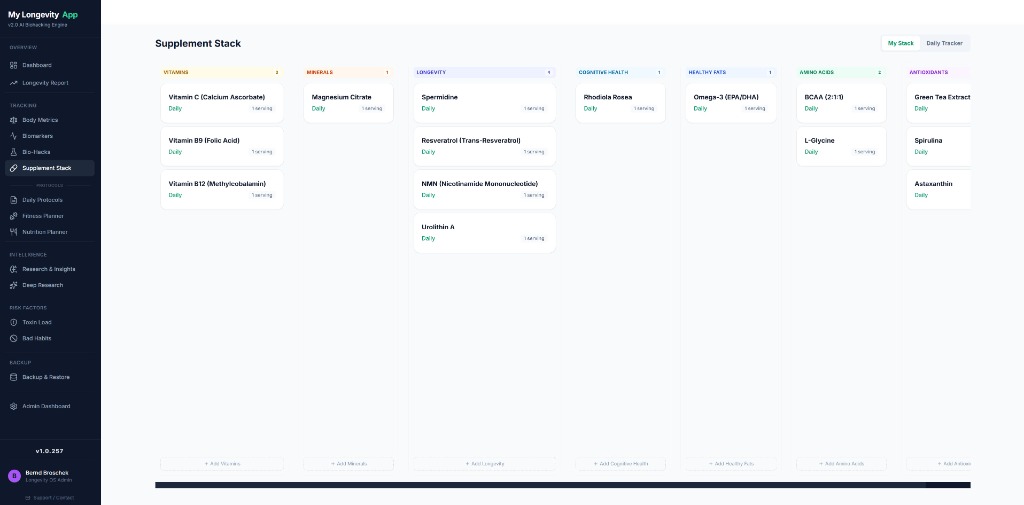
10 integrated modules working together.
Create your account in 30 seconds. No credit card required.
Upload blood work, track body metrics, or start with our AI questionnaire.
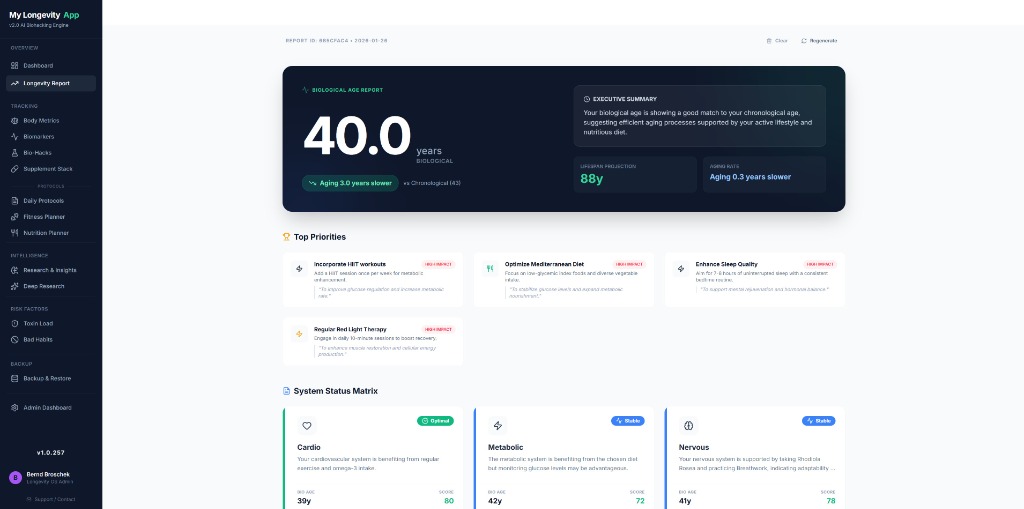
Receive your biological age score, personalized reports, and action plan.
Choose the plan that fits your biohacking journey.
Use a bad habits tracker to pinpoint situations or emotions that lead to unhealthy behaviors, enabling targeted interventions.
Establish specific, measurable goals within your bad habits tracker to monitor progress and stay motivated on your journey to better health.
Regularly review your bad habits tracker to assess improvements and adjust strategies, ensuring long-term success in overcoming detrimental habits.
Join thousands of biohackers optimizing their health.
"MyLongevityApp helped me lower my biological age by 5 years. The biomarker tracking is a game-changer."
"Finally one app that combines supplements, blood work, and daily protocols. I love the weekly planner."
"The AI research agent alone is worth the subscription. It saves me hours of reading every week."
A bad habits tracker is an essential tool for anyone looking to enhance their longevity and overall well-being. By systematically logging behaviors that detract from healthy living, individuals can gain valuable insights into their daily patterns. This self-awareness is the first step toward initiating meaningful change.
When using a bad habits tracker, users can identify specific habits that may be contributing to stress, unhealthy eating, or sedentary lifestyles. For example, tracking late-night snacking may reveal a correlation between poor sleep quality and weight gain. Recognizing these patterns allows individuals to make informed decisions about their lifestyle choices, promoting healthier alternatives that align more closely with their longevity goals.
Moreover, a bad habits tracker can highlight triggers that lead to negative behaviors. For instance, tracking instances of excessive screen time may uncover that stress from work leads to mindless scrolling. Understanding these triggers can empower individuals to establish healthier coping mechanisms, such as engaging in physical activity or mindfulness practices instead.
MyLongevityApp offers a user-friendly platform that can enhance this tracking experience, providing data visualization and trends that make it easier to see progress over time. By regularly reviewing the data, users can hold themselves accountable and set specific, achievable goals to replace detrimental habits with positive ones.
Taking the time to regularly reflect on tracked habits fosters a proactive mindset. Individuals can start by dedicating just a few minutes each day to log their habits and reflect on their impact. This practice not only cultivates mindfulness but also lays the groundwork for a healthier, longer life.
A comprehensive bad habits tracker should encompass several key features to effectively support users in breaking detrimental behaviors. First and foremost, a robust tracking system is essential. Users should be able to log their habits easily, noting frequency, context, and triggers. This data collection enables them to identify patterns and understand the circumstances that lead to their undesirable behaviors.
Another critical feature is goal setting. A bad habits tracker should allow users to set specific, measurable, achievable, relevant, and time-bound (SMART) goals. This framework not only gives users a clear target but also fosters motivation as they see progress over time. Coupled with this, reminders and notifications can serve as gentle nudges, helping users stay accountable and engaged with their goals.
Incorporating a reflection component is also beneficial. Users should have the option to journal or note their feelings and thoughts related to their habits. This reflective practice can enhance self-awareness and provide insights into emotional triggers or underlying causes of their habits. Additionally, visual analytics can provide users with a snapshot of their progress, making it easier to celebrate small wins and stay motivated.
MyLongevityApp stands out by integrating these features with personalized insights and recommendations tailored to individual user profiles. This customization enhances the effectiveness of the tracking process, making it more relevant to each user’s unique journey.
For those looking to break bad habits, start by identifying a single behavior you want to change. Use a bad habits tracker to monitor it closely for a week. This initial step can lay the groundwork for deeper self-reflection and lasting change.
Differentiating between bad habits and mere lifestyle choices is crucial when utilizing a bad habits tracker for biohacking purposes. Understanding this distinction allows individuals to focus on behaviors that genuinely hinder their health and longevity, rather than simply labeling all choices as detrimental.
Bad habits are often automatic behaviors that negatively impact physical and mental well-being, such as excessive screen time, poor dietary choices, or sedentary living. These habits can lead to adverse health outcomes, including obesity, cardiovascular issues, and decreased mental acuity. In contrast, lifestyle choices encompass a broader range of behaviors that may not necessarily be harmful. For instance, choosing to enjoy a glass of wine occasionally or skipping the gym for a relaxing day off can reflect personal preferences rather than negative habits.
When using a bad habits tracker, like the one integrated in MyLongevityApp, it becomes essential to accurately identify which patterns require change. Misclassifying lifestyle choices as bad habits can lead to unnecessary guilt and stress, potentially causing individuals to abandon positive practices altogether. Conversely, recognizing true bad habits empowers users to create targeted strategies for improvement, fostering a more effective biohacking journey.
An actionable takeaway is to maintain a reflective journal alongside your bad habits tracker. Document not only your habits but also the context and feelings associated with them. This practice will help clarify whether certain behaviors are harmful habits or simply personal lifestyle choices, guiding more effective interventions for a healthier, longer life.
Integrating psychological strategies into a bad habits tracker can significantly enhance motivation and promote lasting change. One effective approach is the implementation of goal setting. By setting specific, measurable, achievable, relevant, and time-bound (SMART) goals, users can clarify their intentions and maintain focus. A bad habits tracker that allows for the customization of these goals can help individuals see their progress in real-time, reinforcing their commitment to change.
Another powerful strategy is the use of positive reinforcement. Incorporating rewards for achieving milestones can create a sense of accomplishment and encourage continued progress. A bad habits tracker can feature a reward system that allows users to earn points or badges for each small victory. This not only enhances motivation but also helps build a positive association with the process of breaking bad habits.
Social support is another critical element. Including a community feature within a bad habits tracker can provide users with encouragement and accountability. Engaging with others who share similar goals fosters a sense of belonging and can significantly boost motivation. Platforms like MyLongevityApp facilitate this by allowing users to connect and share experiences, creating an environment of mutual support.
Lastly, mindfulness techniques can improve awareness of triggers and cravings related to bad habits. A tracker that prompts users to reflect on their feelings and thoughts during relapse moments can help them identify patterns and develop healthier coping strategies.
An actionable takeaway is to customize your bad habits tracker by incorporating these psychological strategies. Set SMART goals, implement a reward system, engage with a supportive community, and practice mindfulness to enhance your journey toward breaking bad habits.
The timing of data reviews from a bad habits tracker is crucial for achieving personal health goals. Ideally, these reviews should occur regularly—weekly or biweekly—allowing for timely adjustments to habits and behaviors. This frequency keeps you engaged and accountable, providing a clearer picture of your progress over time.
Weekly reviews can be particularly beneficial because they create a structured opportunity to reflect on your habits. During these sessions, you can analyze patterns, identify triggers for negative behaviors, and assess the effectiveness of any strategies you've implemented. For example, if you notice that certain habits consistently derail your progress, a weekly check-in allows you to address these issues promptly rather than letting them accumulate.
Biweekly reviews can also be effective, especially for those who might feel overwhelmed by weekly assessments. This slightly longer interval allows for more significant changes to manifest, giving you a better understanding of how your adjustments impact your overall health. It can also provide a broader perspective on your journey, helping to identify long-term trends that may not be visible in a shorter timeframe.
Incorporating a bad habits tracker into this routine can enhance your insights. Tools like MyLongevityApp can streamline the data collection process, making it easier to visualize trends and outcomes.
As you plan your reviews, set specific goals for each session. Ask yourself what you want to learn from the data and how you can apply these insights to refine your approach. This focused strategy ensures that each review brings you closer to your health objectives.
Join 10,000+ biohackers optimizing their health with AI.
Start Your 7-Day Free TrialNo credit card required. Cancel anytime.